

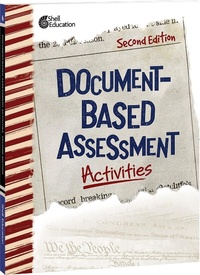
Document-Based Assessment Activities
Beschreibung

Today's students need to know how to evaluate sources and use evidence to support their conclusions. This K-12 resource for teachers provides instructional support as well as a variety of learning opportunities for students. Through the activities in this book, students will ask and answer compelling questions, analyze primary sources, approach learning through an inquiry lens, and hone their historical thinking skills. The lessons teach skills and strategies for analyzing historical documents, partnered with document-based assessments. Graphic organizer templates help students structure their analyses. This resource written by Marc Pioch and Jodene Smith prepares students for standardized tests and engages students with inquiry. The scaffolded approach to teaching analysis skills can be applied across grades K-12.
Weitere Details
Weitere Ausgaben
Andere Ausgaben
Vorauflage

Inhalt
- Cover
- Page 2 - Credits
- Page 3 - Table of Contents
- Page 5 - Introduction
- Page 5 - Building Bridges with Document-Based Assessments
- Page 7 - Thinking Like a Historian
- Page 14 - How to Use This Resource
- Page 22 - Standards Correlations
- Page 28 - Ask Questions Like a Historian Lesson
- Page 30 - Discussing Historical Documents
- Page 31 - Preliminary Document-Based Assessments
- Page 31 - Unit 1: Families Then and Now
- Page 41 - Unit 2: Communities Then and Now
- Page 51 - Unit 3: Our Country Then and Now
- Page 61 - Beginning Document-Based Assessments
- Page 61 - Unit 4: Our Government
- Page 73 - Unit 5: Around the World
- Page 85 - Unit 6: People in the Past
- Page 97 - Unit 7: Money
- Page 109 - Intermediate Document-Based Assessments
- Page 109 - Unit 8: Life in the Colonies
- Page 117 - Unit 9: Causes of the American Revolution
- Page 127 - Unit 10: American Indians
- Page 137 - Unit 11: Civil War
- Page 151 - Unit 12: World Cultures
- Page 165 - Advanced Document-Based Assessments
- Page 165 - Unit 13: Ancient Egypt
- Page 181 - Unit 14: The Renaissance
- Page 197 - Unit 15: Constitution and New Government
- Page 215 - Unit 16: Industrial Revolution
- Page 233 - Unit 17: World War I .
- Page 251 - Unit 18: World War II .
- Page 271 - Unit 19: Civil Rights Movement
- Page 291 - Teacher Resource Appendix
- Page 292 - Document-Analysis Sheets
- Page 302 - DBQ Essay Planner
- Page 306 - DBQ Rubrics
- Page 308 - Historical-Thinking Skills
- Page 309 - Online Resources Suggestions
- Page 310 - References Cited
- Page 311 - Digital Resources
- Thank You
