

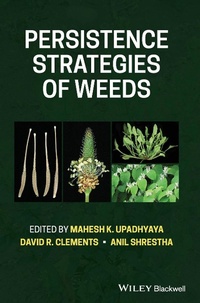
Persistence Strategies of Weeds in Agriculture
1. Auflage
Erschienen am 28. Oktober 2021
Buch
Hardcover
400 Seiten
978-1-119-52560-8 (ISBN)
Beschreibung
Persistence Strategies of Weeds will cover various aspects of how weeds persist in agroecosystems.
Topics covered will include seed banks and seed dormancy, seed predation and avoidance of same, effects of cropping systems on weed persistence, interactions with weeds and the soil microbiota, the influence of climate change on weed persistence, genetic aspects of persistence and weed evolution, weed and crop allelopathy, disturbance dynamics (e.g., shading vs. sun exposure) and weed persistence, resistance to herbicides, the results of modelling weed population dynamics, and the overall picture of weed evolution versus attempts by weed managers to prevent the pervasive impacts of weeds on agroecosystems and other related ecosystems.
This book will be a comprehensive source of information for weed scientists, weed mangers, and plant ecologists interested in the persistence of weeds.
Weitere Details
Weitere Ausgaben
Andere Ausgaben
Mahesh K. Upadhyaya | David R. Clements | Anil Shrestha
Persistence Strategies of Weeds
E-Book
02/2022
1. Auflage
Wiley-ISTE
166,99 €
Als Download verfügbar
Mahesh K. Upadhyaya | David R. Clements | Anil Shrestha
Persistence Strategies of Weeds
E-Book
02/2022
1. Auflage
Wiley-ISTE
166,99 €
Als Download verfügbar
Personen
Inhalt
1 Persistence strategies of weeds: Introduction
Anil Shrestha, David R. Clements, and Mahesh K. Upadhyaya
1.1 Introduction
1.2 Persistence of weeds
1.3 Current approaches to managing weeds and persistence
1.4 Conclusions
1.5 References
2 Seed production, dissemination, and weed seed banks
Acácio Gonçalves Netto, Pedro Christoffoleti, Mark VanGessel, Saul Jorge Pinto de Carvalho, Marcelo Nicolai, and Caio Brunharo
2.1 Introduction
2.2 Seed production
2.3 Seed dissemination
2.4 Weed seedbank and seedbank dynamics
2.5 Weed management and seed banks
2.6 Use of chemicals to deplete soil seedbanks - Potential and limitations
2.7 Weed seed destruction or devitalization of seeds
2.8 Soil seed bank research methodology
2.9 Conclusions
2.10 References
3 Weed seed dormancy and persistence of weeds
Mahesh K. Upadhyaya, Steve Adkins, and Li Ma
3.1 Introduction - Seed dormancy and persistence of weeds
3.2 Seed dormancy and germination
3.3 Types of seed dormancy and some terminology
3.4 Dormancy polymorphism
3.5 Mechanisms of seed dormancy
3.6 Co-adaptation of seed dormancy and hormonal regulation of seed reserve mobilization
3.7 Duration of seed dormancy and depletion of seed banks during summer-fallow
3.8 Dormancy cycling
3.9 Conclusions
3.10 References
4 Seed dormancy genes and their associated adaptive traits underlie weed persistence: A case study in weedy rice
Xing-You Gu
4.1 Introduction
4.2 Weedy rice
4.3 Genetics of primary seed dormancy
4.4 Genes/QTLs responsible for associations of wild-like traits with seed dormancy
4.5 Genes/QTLs responsible for associations of crop-mimic traits with seed dormancy
4.6 Conclusions and implications
4.7 References
5 Environmental regulation of weed seed banks and seedling emergence
Roberto L. Benech-Arnold and Diego Batlla
5.1 Introduction
5.2 Germination
5.3 Predation
5.4 Loss of viability as a result of physiological deterioration
5.5 Dormancy in seed banks and its control by the environment
5.6 Germination as affected by temperature and water availability
5.7 The functional ecology of weed seed banks: concluding remarks
5.8 References
6 Longevity of weed seeds in seedbanks
Ali A. Bajwa, Fernanda C. Beveridge, Mahesh Upadhyaya, and Steve W. Adkins
6.1 Introduction
6.2 Seeds and seedbanks as survival mechanisms
6.3 Role of seed longevity in seedbank regulation
6.4 Classical ecological experiments on weed seed longevity
6.5 Factors affecting weed seed longevity
6.6 Implications of seedbank longevity for weed management
6.7 Conclusions and future research directions
6.8 References
7 Evolution and persistence of herbicide-resistance of weeds
Hugh J. Beckie, Linda M. Hall, Roberto Busi, and Michael B. Ashworth
7.1 Introduction
7.2 How evolution of herbicide resistance influences persistence of weed populations
7.3 Case studies
7.4 Conclusion
7.5 References
8 Seed predation and weed seed banks
Pavel Saska and Alois Honik
8.1 Introduction
8.2 Predators and seed predation windows in the life cycle of a weed
8.3 Seed defence versus seed selection by predators
8.4 Spatio-temporal variation in seed predation
8.5 The significance of seed predation for the population dynamics of weeds
8.6 Field and crop management effects on weed seed predation
8.7 Methodological aspects of studying seed predation
8.8 Directions for future research and conclusions
8.9 References
9 Modelling the persistence of weed populations
Jonathan Storkey, Antoine Gardarin, Nathalie Colbach, Helen Metcalfe, and Alice Milne
9.1. Why do we need models to predict weed persistence?
9.2 'Broad-brush' ecological approaches to modelling weed persistence
9.3 A process-based approach to modelling weed persistence
9.4 Integrating seedbank processes into the multi-annual weed dynamics model
9.5 The weed seed traits selected by management practices
9.6 Conclusions
9.7 References
10 Influence of agronomic practices on the persistence of weed seedbanks
Clarence Swanton and Saeed Vazan
10.1 Introduction
10.2 Tillage: Vertical distribution of seeds within the weed seedbank influences weed seed persistence
10.3 Light penetration and soil disturbance can reduce seed persistence
10.4 Diverse crop rotations do not consistently reduce weed persistence
10.5 Control of weed seed at harvest has potential to reduce seed persistence
10.6 Role of cover crops and microbial populations
10.7 Livestock, pasture and manure management can reduce weed seed persistence
10.8 Conclusions
10.9 References
11 Clonal growth, resprouting, and vegetative propagation of weeds
Jitka Klimesová and Jana Martínková
11.1 Introduction
11.2 Weeding as a disturbance regime
11.3 Plant strategies under recurrent disturbance
11.4 Plant traits typical for tolerance strategies and resprouting limitations
11.5 Tolerance strategy in an evolutionary perspective
11.6 Conclusions
11.7 References
12 Climate change and the persistence of weeds
David R. Clements and Antonio DiTommaso
12.1 Introduction
12.2 Weed ecophysiological responses to climate change
12.3 Predicted changes in weed distribution
12.4 Impacts of climate change on weed interactions with crops
12.5 Evolutionary impacts of climate change on weeds
12.6 Conclusions
12.7 References
13 Soil microbial effects on weed seed bank persistence: current knowledge and applications for weed management
Markus Wagner and Nadine Mitschunas
13.1 Introduction
13.2 Mechanisms of microbial attack
13.3 Abiotic environmental factors
13.4 Biotic interactions
13.5 Seed defences
13.6 Weed management applications
13.7 Future Prospects
13.8 References
14 The potential role of allelopathy in the persistence of invasive weeds
Sajid Latif, Saliya Gurusinghe, and Leslie A. Weston
14.1 Introduction
14.2 Classification of allelochemicals
14.3 Allelochemical modes of action
14.4 Synthesis, localization and release of allelochemicals from donor plants
14.5 Factors affecting biosynthesis and release of allelochemicals
14.6 The role of soil microorganisms in the release and transformation of allelochemicals
14.7 Metabolic profiling of allelochemicals
14.8 Case studies of invasive plant species exhibiting allelopathic interactions
14.9 Conclusions
14.10 References
15 Weed adaptation as a driving force for weed persistence in agroecosystems
Paul Neve and Ana L. Caicedo
15.1 Introduction
15.2 Modes of weed evolution
15.3 The genetic basis of phenotypic variation in weedy and fitness-related traits
15.4 The contemporary evolution of weeds in agroecosystems: evidence and case-studies
15.5 Applying evolutionary thinking to weed biology and management
15.6 Weed adaptation: a key determinant of weed persistence in agroecosystems
15.7 References
16 Persistence strategies of weeds: Synopsis and the future
Mahesh K. Upadhyaya, David R. Clements, and Anil Shrestha
16.1 Introduction
16.2 Weed propagation, dissemination and seed propagule banks
16.3 Weed seed dormancy and longevity
16.4 Agronomic practices
16.5 Predation, microbial effects, and allelopathy
16.6 Climate change and environmental influences
16.7 Weed adaptation and evolution and persistence of herbicide-resistant weeds
16.8 Modelling the persistence of weed populations
16.9 Conclusions
16.10 References
Index