

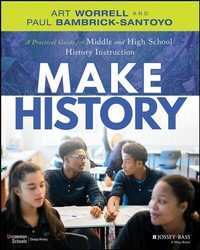
Make History
A Practical Guide for Middle and High School History Instruction (Grades 5-12)
1. Auflage
Erschienen am 3. Mai 2023
272 Seiten
978-1-119-98987-5 (ISBN)
Beschreibung

Make History with Your Students
From bestselling author Paul Bambrick-Santoyo and Art Worrell, Uncommon Schools' Director of History Instruction, comes Make History, an inspiring book on how educators can take history instruction to the next level. History teachers face unique challenges in introducing history lessons to students, and they are under increasing pressure to get it "right" in an age of social progress and social divisiveness. This book is a guide to bring the past to life while teaching students how to make sense of history.
Use the ideas and techniques to turn your history students into writers, readers, and thinkers who are ready not only to succeed in college, but also to become leaders and change agents. By showing how to teach rigorous, engaging lessons that center student thinking and voice, Make History turns history class into the most exciting part of a student's day.
* Reimagine history education to help students build their own unique arguments about the past
* Ask tough questions to help students grapple with difficult historical periods
* Set the stage for authentic discourse that students remember long past the bell
* Give students the tools to become socially aware, build their own identity, and think and write like historians
Teachers and instructional coaches in grades 5-12 will love this new, insightful approach to history--one that works for today's classrooms.
From bestselling author Paul Bambrick-Santoyo and Art Worrell, Uncommon Schools' Director of History Instruction, comes Make History, an inspiring book on how educators can take history instruction to the next level. History teachers face unique challenges in introducing history lessons to students, and they are under increasing pressure to get it "right" in an age of social progress and social divisiveness. This book is a guide to bring the past to life while teaching students how to make sense of history.
Use the ideas and techniques to turn your history students into writers, readers, and thinkers who are ready not only to succeed in college, but also to become leaders and change agents. By showing how to teach rigorous, engaging lessons that center student thinking and voice, Make History turns history class into the most exciting part of a student's day.
* Reimagine history education to help students build their own unique arguments about the past
* Ask tough questions to help students grapple with difficult historical periods
* Set the stage for authentic discourse that students remember long past the bell
* Give students the tools to become socially aware, build their own identity, and think and write like historians
Teachers and instructional coaches in grades 5-12 will love this new, insightful approach to history--one that works for today's classrooms.
Weitere Details
Weitere Ausgaben
Andere Ausgaben
Worrell
Make History: A Practical Guide for Middle and Hig h School History Instruction (Grades 5-12)
A Practical Guide for Middle and High School History Instruction (Grades 5-12)
Buch
07/2023
1. Auflage
Jossey-Bass
30,50 €
Versand in 15-20 Tagen
Personen
ART WORRELL is the Director of 5-12 History Instruction at Uncommon Schools and has 20 years of experience as a teacher, instructional leader, and curriculum writer.
PAUL BAMBRICK-SANTOYO is a bestselling author and founder and Dean of the Leverage Leadership Institute, as well as Chief Schools Officer of Uncommon Schools.
PAUL BAMBRICK-SANTOYO is a bestselling author and founder and Dean of the Leverage Leadership Institute, as well as Chief Schools Officer of Uncommon Schools.
Inhalt
Online Content xiii
Print- Ready Materials xiii
Videos xiv
Acknowledgments xix
About the Authors xxiii
Introduction: Make History 1
Art's Story 5
Paul's Story 6
Our Story 7
A "Practical Guide": What You'll Find in This Book 8
Turning on the Light: Making Good Teaching Visible 8
See It: Videos and Work Samples 9
Name It: Core Ideas and One- Pagers 10
Do It: Materials to Make It Happen 11
Who Should Use This Book and How? 13
Making History-- Starting the Journey 15
1 Define the Destination 17
Learn More-- Enrich Your History Map 21
Craft Initial Questions 21
Seek Sources with Multiple Perspectives 23
Finalize the Destination 28
Craft a Class Prompt 28
Create Exemplar Responses 32
Chart the Path 33
Choose Your Sources 33
Identify the Historical Thinking Skills 38
"Source" Your Sources 39
Put It All Together--Know-Show 47
Conclusion 51
Key Takeaways 51
Planning Template-- Intellectual Preparation for Instruction 52
Self- Assessment 53
Planning for Action 53
2 Build Knowledge 55
Activate Knowledge 58
Do Nows 60
Class Oral Review 65
Supply (or Create) a Resource 68
Frontload Knowledge-- Tell a Story 72
Hook Them 75
Tell the Story-- Make It Memorable 82
Hold onto the Story-- Solidify the Understanding 84
Conclusion 88
Key Takeaways 89
Build Knowledge Lesson-- One- Pager 90
Self- Assessment 92
Planning for Action 92
3 Grapple with Evidence 93
Plan for Productive Struggle 96
Set the Stage-- Activate What They Need 100
Build Skill with Guided Practice 100
Activate Skill-- Break Down the Prompt 102
Activate Knowledge 104
Let Them Grapple-- Guide Sensemaking 106
Monitor Reading and Address the Trend 106
Conclusion 114
Key Takeaways 115
Grapple with Evidence-- One- Pager 115
Self- Assessment 118
Planning for Action 119
4 Make Sense of It Through Discourse 121
Give Students Habits 124
Name the Desired Habits 124
Build and Maintain Habits 128
Set the Stage for Discourse 132
Launch the Discourse Cycle 135
Facilitate Large- Group Discourse 137
Deepen Discourse 143
Conclusion 149
Key Takeaways 149
Inquiry Lesson One- Pager 150
Self- Assessment 151
Planning for Action 152
5 Stamp and Measure the Learning 153
Stamp in Student Voice 155
Stamp in Writing 157
Stamp the Thinking (Go Meta) 159
Apply It-- Assess 160
Conclusion 162
Key Takeaways 163
Self- Assessment 163
Planning for Action 163
6 Put It All Together 165
Implementation Rubric-- Make History 166
Sample Lesson Plans-- Reconstruction (AP US History) 168
Build Knowledge Lesson Plan 170
Grapple with Evidence and Inquiry Lesson Plans 176
Sample Lesson Plans-- Westernization or Southernization? (AP World History) 187
Build Knowledge Lesson 188
Grapple with Evidence and Inquiry Lessons 196
Conclusion 205
Notes 209
Index 215
Print- Ready Materials xiii
Videos xiv
Acknowledgments xix
About the Authors xxiii
Introduction: Make History 1
Art's Story 5
Paul's Story 6
Our Story 7
A "Practical Guide": What You'll Find in This Book 8
Turning on the Light: Making Good Teaching Visible 8
See It: Videos and Work Samples 9
Name It: Core Ideas and One- Pagers 10
Do It: Materials to Make It Happen 11
Who Should Use This Book and How? 13
Making History-- Starting the Journey 15
1 Define the Destination 17
Learn More-- Enrich Your History Map 21
Craft Initial Questions 21
Seek Sources with Multiple Perspectives 23
Finalize the Destination 28
Craft a Class Prompt 28
Create Exemplar Responses 32
Chart the Path 33
Choose Your Sources 33
Identify the Historical Thinking Skills 38
"Source" Your Sources 39
Put It All Together--Know-Show 47
Conclusion 51
Key Takeaways 51
Planning Template-- Intellectual Preparation for Instruction 52
Self- Assessment 53
Planning for Action 53
2 Build Knowledge 55
Activate Knowledge 58
Do Nows 60
Class Oral Review 65
Supply (or Create) a Resource 68
Frontload Knowledge-- Tell a Story 72
Hook Them 75
Tell the Story-- Make It Memorable 82
Hold onto the Story-- Solidify the Understanding 84
Conclusion 88
Key Takeaways 89
Build Knowledge Lesson-- One- Pager 90
Self- Assessment 92
Planning for Action 92
3 Grapple with Evidence 93
Plan for Productive Struggle 96
Set the Stage-- Activate What They Need 100
Build Skill with Guided Practice 100
Activate Skill-- Break Down the Prompt 102
Activate Knowledge 104
Let Them Grapple-- Guide Sensemaking 106
Monitor Reading and Address the Trend 106
Conclusion 114
Key Takeaways 115
Grapple with Evidence-- One- Pager 115
Self- Assessment 118
Planning for Action 119
4 Make Sense of It Through Discourse 121
Give Students Habits 124
Name the Desired Habits 124
Build and Maintain Habits 128
Set the Stage for Discourse 132
Launch the Discourse Cycle 135
Facilitate Large- Group Discourse 137
Deepen Discourse 143
Conclusion 149
Key Takeaways 149
Inquiry Lesson One- Pager 150
Self- Assessment 151
Planning for Action 152
5 Stamp and Measure the Learning 153
Stamp in Student Voice 155
Stamp in Writing 157
Stamp the Thinking (Go Meta) 159
Apply It-- Assess 160
Conclusion 162
Key Takeaways 163
Self- Assessment 163
Planning for Action 163
6 Put It All Together 165
Implementation Rubric-- Make History 166
Sample Lesson Plans-- Reconstruction (AP US History) 168
Build Knowledge Lesson Plan 170
Grapple with Evidence and Inquiry Lesson Plans 176
Sample Lesson Plans-- Westernization or Southernization? (AP World History) 187
Build Knowledge Lesson 188
Grapple with Evidence and Inquiry Lessons 196
Conclusion 205
Notes 209
Index 215
