

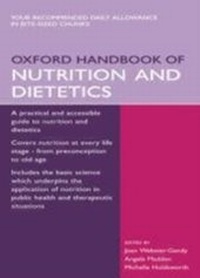
Oxford Handbook of Nutrition and Dietetics
1. Auflage
Erschienen am 5. Oktober 2006
773 Seiten
978-0-19-158544-9 (ISBN)
Beschreibung

The importance of nutrition in the prevention and treatment of disease and the maintenance of good health is being increasingly recognised. Nutrition is an area that all health professionals need to be aware of and yet one in which few are specifically trained. Nutrition is also becoming a valued topic in many curricula. It is a vast subject and textbooks are by necessity large and can stay stuck on the bookshelf. The Oxford Handbook of Nutrition and Dietetics makesthis information more accessible to dietitians, doctors, nurses, nutritionists and other healthcare professionals by providing a practical, easily accessible, concise and up to date evidence-based guide in a user-friendly portable handbook. The health professional who encounters nutritional problems will findthe necessary information in this book on either how to respond to patient queries, or when to refer to a more specialised practitioner.The handbook covers the entire life cycle from preconception to old age and is arranged in 36 chapters which include nutrition assessment, food labelling, functional foods and food supplements, non-nutrient components of food, drug-nutrient interactions and prescription of nutritional products, nutrition in systems-based diseases, nutrition in special groups, such as the very young and older people, and popular diets. Links between chapters are clear and easy to follow. For example a clinicianlooking for advice on obesity will find practical information on classification and treatment, including an easy to use calculator for BMI (body mass index), with background information on energy in the diet and management in population groups such as children. Topical areas, such as metabolicsyndrome, and rarer conditions, such as dietary management of phenylketonuria are also covered. Lists of foods rich in certain nutrients are included as quick reference guides to be used by busy practitioners. The contents reflect the changing structure of the NHS, hence, equal emphasis is given to nutritional science, therapeutic dietetics, and nutrition and dietetics in the community including developing nutrition prevention programmes.This holistic approach is innovative and recognises the demand by health care professionals for nutritional and dietetic information to be able to carry out their evolving roles effectively. As the general public is increasingly aware of the food they eat and the role nutrition plays in health and disease, it is essential that health professionals have the kind of knowledge in this book at their fingertips.
Weitere Details
Weitere Ausgaben
Andere Ausgaben
Joan Webster-Gandy | Angela Madden | Michelle Holdsworth
Oxford Handbook of Nutrition and Dietetics
Buch
10/2006
Oxford University Press
37,03 €
Artikel ist vergriffen; siehe andere Ausgabe
Inhalt
- Intro
- Contents
- Contributors
- Abbreviations
- 1 Introduction to nutrition
- Definitions and titles
- Components of the diet
- Food composition tables
- Digestion
- 2 Dietary reference values (DRVs) and food-based dietary guidelines
- Dietary reference values (DRVs)
- Food-based dietary guidelines (FBDG)
- 3 Current dietary patterns in the UK
- Current dietary patterns
- 4 Nutrition assessment
- Dietary assessment
- Individual assessment
- Body composition
- Anthropometry
- 5 Nutrients
- Macronutrients: introduction
- Protein
- Fats
- Carbohydrate
- Energy balance
- Vitamins: introduction
- Vitamin A (retinol) and carotenoids
- Vitamin E
- Vitamin D (calciferols)
- Vitamin K
- Vitamin C (ascorbic acid)
- Riboflavin (vitamin B[sub(2)])
- Niacin (nicotinamide, nicotinic acid)
- Thiamin
- Folate (folic acid)
- Vitamin B[sub(6)]
- Cobalamin B[sub(12)]
- Biotin
- Pantothenic acid
- Minerals and trace elements: introduction
- Calcium
- Phosphorus
- Iron
- Zinc
- Copper
- Iodine
- Selenium
- Magnesium
- Manganese
- Molybdenum
- Chromium
- Fluorine
- Electrolytes: introduction
- Sodium
- Potassium
- Chlorine
- Fluid balance
- 6 Food labelling, functional foods, and food supplements
- Food labelling
- Functional foods and nutraceuticals
- Food supplements
- 7 Non-nutrient components of food
- Alcohol
- Biologically active dietary constituents
- Food additives
- 8 Drug-nutrient interactions and prescription of nutritional products
- Drug-nutrient interactions
- Prescription of nutritional products
- 9 Diet before and during pregnancy
- Pre- and periconceptional nutrition in women
- DRVs and dietary guidelines during pregnancy
- Food safety in pregnancy and maternal weight gain
- Dietary problems in pregnancy
- Vulnerable groups in pregnancy
- Useful websites
- 10 Infants and preschool children
- Infant growth and development
- Breast versus bottle feeding
- Promoting and establishing breastfeeding
- Dietary recommendations for lactating mothers
- Establishing bottle-feeding
- Weaning
- Iron deficiency anaemia
- Faltering growth
- Constipation, toddler's diarrhoea, and milk intolerance
- Nutritionally vulnerable groups
- Fussy eaters
- Websites and literature for parents
- 11 School-aged children and adolescents
- Why diet is important in childhood and adolescence
- What children and adolescents are eating
- Dietary recommendations for children and adolescents
- Nutritional problems of children and adolescents
- Influences on children's food choice
- 12 Older people
- Older people: introduction
- Dietary recommendations for older people
- Undernutrition in older people
- Other nutritional problems
- Community support strategies for promoting a healthy diet for older people
- Further information
- 13 Nutrition in special groups
- Minority ethnic communities
- Vegetarians
- Eating on a low income
- Refugees, asylum seekers, and homeless people
- Policy options for reducing food poverty
- Useful websites
- 14 Nutrition intervention with individuals
- Influences on food choice
- Nutrition education techniques
- Designing nutrition education materials
- Communication skills and behaviour change on a one to one level
- 15 Nutrition intervention with populations
- National food and nutrition policy
- Local food and nutrition policy
- Case study of a local food and health policy
- Examples of nutrition policy in different settings
- Definitions in health promotion
- 16 Nutrition support
- Nutrition in the 'non-healthy state'
- Nutritional screening
- Malnutrition Universal Screening Tool (MUST)
- Undernutrition
- Treatment of undernutrition
- Enteral feeding: introduction
- Routes for enteral feeding
- Enteral feeding regimes
- Monitoring enteral feeding
- Complications of enteral feeding
- Enteral feeding and drugs
- Parenteral nutrition (PN)
- Estimating requirements in disease states
- Metabolic response to injury
- Re-feeding syndrome (RS)
- Critical care
- Surgery
- Spinal cord injury (SCI)
- Head injury
- Burn injury
- Clinically functional nutrients
- 17 Obesity
- Classification and prevalence
- Contributing causes and clinical consequences
- Treatment: dietary management
- Treatment: physical activity and behavioural therapy
- Pharmacotherapy for obesity
- Role of the dietitian in weight management
- Bariatric surgery and alternative treatment
- Conditions associated with obesity
- 18 Diabetes
- Classification and prevalence
- Contributing causes and clinical consequences
- Goals and principles of dietary management
- Diet and insulin
- Diet and oral hypoglycaemic drugs
- New approaches to diabetes education
- Weight management and monitoring glycaemic control
- Gestational diabetes and diabetes in children and adolescents
- Further information on diabetes
- Metabolic syndrome
- 19 Cardiovascular disease
- Classification, prevalence, and contributing causes
- Cardioprotective diet
- Congestive cardiac failure
- Dyslipidaemia
- Refsum's disease (RDis)
- Cerebrovascular accident/stroke
- Hypertension
- 20 Cancer and leukaemia
- Cancer: Introduction and dietary guidelines to minimize cancer risk
- Effects of cancer on nutritional status
- Nutrition goals in anticancer treatment
- Other dietary approaches to cancer treatment
- Leukaemia
- 21 Nutrition in gastrointestinal diseases
- Mouth disorders
- Dental health
- Oesophageal disorders
- Stomach disorders
- Gastrectomy and stomach surgery
- Small intestine disorders: introduction
- Malabsorption: introduction
- Steatorrhoea
- Lactose intolerance
- Inflammatory bowel disease
- Coeliac disease
- Intestinal failure and short bowel syndrome
- Fistulae
- Gastrointestinal stoma
- Intestinal transplantation
- Disorders of the colon
- Irritable bowel syndrome (IBS)
- Gall bladder disorders
- 22 Pancreatic disease
- Pancreatic disorders
- Pancreatic enzyme replacement therapy (PERT)
- 23 Liver disease
- Introduction and nutritional assessment
- Hepatitis and cirrhosis
- Ascites and oedema
- Portal systemic encephalopathy
- Steatorrhoea, fatty liver, and oesophageal varices
- Liver transplantation
- 24 Renal disease
- Introduction
- Nutritional assessment
- Dietetic treatment plan for pre-dialysis patients
- Nutritional requirements in CRF, ARF, and during dialysis
- Strategies for achieving nutritional aims
- Nutrition support in renal patients
- Cardiovascular disease in renal patients
- Dietary issues specific to ethnic minority patients with renal disease
- Nephrotic syndrome (NS)
- Renal transplantation
- Renal stone disease (nephrolithiasis/renal calculi)
- Useful websites
- 25 Respiratory disease and cystic fibrosis
- Respiratory disease
- Cystic fibrosis (CF)
- 26 Human immunodeficiency virus (HIV) infection
- Introduction
- Lipodystrophy associated with HAART
- Additional dietary issues
- Further information
- 27 Nutrition in mental health
- Introduction, pharmacotherapy, and care in the community
- Eating disorders
- Dementia
- 28 Nutrition in neurological conditions
- Multiple sclerosis (MS)
- Motor neurone disease (MND)
- Parkinson's disease (PDis)
- 29 Palliative care
- Palliative care
- 30 Inherited metabolic disorders
- Definitions and management
- Phenylketonuria (PKU)
- 31 Epilepsy and ketogenic diets
- 32 Food hypersensitivity
- Classification and diagnosis
- Management
- 33 Rheumatology and bone health
- Osteoarthritis (OA)
- Rheumatoid arthritis (RA)
- Gout
- Systemic lupus erythematosus (SLE)
- Osteoporosis
- 34 Hospital catering
- 35 Popular diets
- Appendices
- 1 Weights and measures
- 2 Anthropometrics
- Length/height conversions
- Mass/weight conversions
- Body mass index (BMI)
- Waist circumference cut-offs for risk of metabolic complications and mindex and demiquet measures of adiposity
- Upper arm anthropometry
- Child Growth Foundation charts
- 3 Conversion factors
- 4 Energy expenditure prediction equations
- 5 Clinical chemistry reference ranges
- 6 Dietary reference values (DRVs)
- Estimated average requirements (EARs)
- Reference nutrient intakes (RNIs)
- 7 Nutritional composition of common foods
- Protein exchanges
- Carbohydrate exchanges
- Examples of household measures of food
- 8 Useful contacts
- Manufacturers' contact details
- Websites
- 9 The National Statistics Socio-economic Classification (UK)
- 10 Bibliography and further reading
- Index
- A
- B
- C
- D
- E
- F
- G
- H
- I
- J
- K
- L
- M
- N
- O
- P
- Q
- R
- S
- T
- U
- V
- W
- Z
- Adult BMI ready reckoner
- MUST screening tool
