

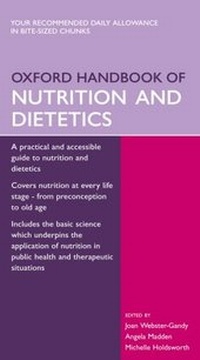
Oxford Handbook of Nutrition and Dietetics
Erschienen am 5. Oktober 2006
Buch
Softcover
776 Seiten
978-0-19-856725-7 (ISBN)
Beschreibung
The importance of nutrition in the prevention and treatment of disease and the maintenance of good health is being increasingly recognised. Nutrition is an area that all health professionals need to be aware of and yet one in which few are specifically trained. Nutrition is also becoming a valued topic in many curricula. It is a vast subject and textbooks are by necessity large and can stay stuck on the bookshelf. The Oxford Handbook of Nutrition and Dietetics makes this information more accessible to dietitians, doctors, nurses, nutritionists and other healthcare professionals by providing a practical, easily accessible, concise and up to date evidence-based guide in a user-friendly portable handbook. The health professional who encounters nutritional problems will find the necessary information in this book on either how to respond to patient queries, or when to refer to a more specialised practitioner.The handbook covers the entire life cycle from preconception to old age and is arranged in 36 chapters which include nutrition assessment, food labelling, functional foods and food supplements, non-nutrient components of food, drug-nutrient interactions and prescription of nutritional products, nutrition in systems-based diseases, nutrition in special groups, such as the very young and older people, and popular diets.
Links between chapters are clear and easy to follow. For example a clinician looking for advice on obesity will find practical information on classification and treatment, including an easy to use calculator for BMI (body mass index), with background information on energy in the diet and management in population groups such as children. Topical areas, such as metabolic syndrome, and rarer conditions, such as dietary management of phenylketonuria are also covered. Lists of foods rich in certain nutrients are included as quick reference guides to be used by busy practitioners.The contents reflect the changing structure of the NHS, hence, equal emphasis is given to nutritional science, therapeutic dietetics, and nutrition and dietetics in the community including developing nutrition prevention programmes. This holistic approach is innovative and recognises the demand by health care professionals for nutritional and dietetic information to be able to carry out their evolving roles effectively.
As the general public is increasingly aware of the food they eat and the role nutrition plays in health and disease, it is essential that health professionals have the kind of knowledge in this book at their fingertips.
Links between chapters are clear and easy to follow. For example a clinician looking for advice on obesity will find practical information on classification and treatment, including an easy to use calculator for BMI (body mass index), with background information on energy in the diet and management in population groups such as children. Topical areas, such as metabolic syndrome, and rarer conditions, such as dietary management of phenylketonuria are also covered. Lists of foods rich in certain nutrients are included as quick reference guides to be used by busy practitioners.The contents reflect the changing structure of the NHS, hence, equal emphasis is given to nutritional science, therapeutic dietetics, and nutrition and dietetics in the community including developing nutrition prevention programmes. This holistic approach is innovative and recognises the demand by health care professionals for nutritional and dietetic information to be able to carry out their evolving roles effectively.
As the general public is increasingly aware of the food they eat and the role nutrition plays in health and disease, it is essential that health professionals have the kind of knowledge in this book at their fingertips.
Rezensionen / Stimmen
This book fills an important gap...ideal for the busy practitioner or scholar of other disciplines who is eager to learn more about nutrition but hasn't the time to do a lot of reading. Quick, concise and accurate information...highly recommended. European Journal of Clinical Nutrition ...730 pages worthy of a place in the clinician's library of practical information. It enunciates the principles and contemporary science on which clinical (and, in large measure, public health) nutrition should be based. Asia Pacific Journal of Clinical Nutrition it is well structured...[and] any health professional working in the area of nutrition would find it a useful quick reference. British Journal of Hospital MedicineWeitere Details
Reihe
Sprache
Englisch
Verlagsort
Oxford
Großbritannien
Zielgruppe
Für höhere Schule und Studium
Für Beruf und Forschung
Illustrationen
25 line illustrations
Maße
Höhe: 186 mm
Breite: 105 mm
Dicke: 30 mm
Gewicht
387 gr
ISBN-13
978-0-19-856725-7 (9780198567257)
Copyright in bibliographic data and cover images is held by Nielsen Book Services Limited or by the publishers or by their respective licensors: all rights reserved.
Schweitzer Klassifikation
Weitere Ausgaben
Andere Ausgaben
Joan Webster-Gandy | Angela Madden | Michelle Holdsworth
Oxford Handbook of Nutrition and Dietetics
E-Book
10/2006
1. Auflage
Oxford University Press
161,62 €
Als Download verfügbar
Inhalt
1. Introduction to nutrition; 2. Dietary reference values (DRVs)and food-based dietary guidelines; 3. Current dietary patterns in the UK; 4. Nutrition assessment; 5. Nutrients; 6. Food labelling, functional foods and food supplements; 7. Non-nutrient components of food; 8. Drug-nutrient interactions and prescription of nutritional products; 9. Diet before and during pregnancy; 10. Infants and preschool children; 11. School-aged children and adolescents; 12. Older people; 13. Nutrition in special groups; 14. Nutrition intervention with individuals; 15. Nutrition intervention with populations; 16. Nutrition support; 17. Obesity; 18. Diabetes; 19. Cardiovascular disease; 20. Cancer and leukaemia; 21. Nutrition in gastrointestinal diseases; 22. Pancreatic disease; 23. Liver disease; 24. Renal disease; 25. Respiratory disease and cystic fibrosis; 26. Human immunodeficiency virus (HIV) infection; 27. Nutrition in mental health; 28. Nutrition in neurological conditions; 29. Palliative care; 30. Inherited metabolic disorders; 31. Epilepsy and ketogenic diets; 32. Food hypersensitivity; 33. Rheumatology and bone health; 34. Hospital catering; 35. Popular diets