

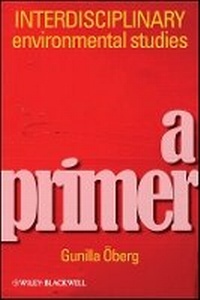
Interdisciplinary Work in the Environmental Field - A Primer
Erschienen am 1. Dezember 2010
Software
Software-Medium
184 Seiten
978-1-4443-2848-6 (ISBN)
Beschreibung
Environmental issues are inherently interdisciplinary, and environmental academic programs increasingly use an interdisciplinary approach. This timely book presents a core framework for conducting high quality interdisciplinary research. It focuses on the opportunities rather than the challenges of interdisciplinary work and is written for those doing interdisciplinary work (rather than those studying it). It is designed to facilitate high quality interdisciplinary work and the author uses illustrative examples from student work and papers published in the environmental literature. This book's lucid, problem-solving approach is framed in an accessible easy-to-read style and will be indispensable for anyone embarking on a research project involving interdisciplinary collaboration. Readership: graduate students, advanced undergraduates, and researchers involved in the interface between human and natural environmental systems
Rezensionen / Stimmen
Although it does not reveal a prescriptive path for interdisciplinary work, for our group, this volume served as a valuable catalyst for thinking about interdisciplinary research. We look forward to future conversations that build on Oberg s examples of how to navigate problem-oriented, interdisciplinary research. (The Quarterly Review of Biology, 1 September 2012)Weitere Details
Sprache
Englisch
Verlagsort
Chicester
Großbritannien
Verlagsgruppe
John Wiley and Sons Ltd
Zielgruppe
Für höhere Schule und Studium
Für Beruf und Forschung
Maße
Höhe: 239 mm
Breite: 164 mm
Dicke: 16 mm
Gewicht
496 gr
ISBN-13
978-1-4443-2848-6 (9781444328486)
Copyright in bibliographic data and cover images is held by Nielsen Book Services Limited or by the publishers or by their respective licensors: all rights reserved.
Schweitzer Klassifikation
Weitere Ausgaben
Andere Ausgaben
E-Book
06/2011
Wiley-Blackwell
43,99 €
Als Download verfügbar
E-Book
11/2010
Wiley-Blackwell
43,99 €
Als Download verfügbar
Person
Gunilla Oberg, Professor and Director of the Institute for Resources, Environment and Sustainability at the University of British Columbia, is a scholar recognized for her groundbreaking research on chlorine biogeochemistry, her work on interdisciplinary research and higher education, as well as for her leadership of interdisciplinary environmental programs.
Inhalt
Foreword x Preface xi Chapter 1: Introduction 1 Challenges and opportunities 3 On quality 4 Background 5 A note on terminology 7 Notes 9 Chapter 2: Beyond CP Snow 11 Quantitative and qualitative studies 12 Improved understanding and quality 13 Drawing on commonalities 14 Context dependence and quantifi cation 18 Interpretation and context 21 Notes 23 Chapter 3: Questioning to learn and learning to question 24 Part I: Interdisciplinary expectations (Questions 1 to 3) 25 Part II: Transacademic aspirations (Questions 4 and 5) 26 Part III: Academic rigour (Questions 6 to 10) 27 Notes 29 Chapter 4: Why do you conduct interdisciplinary work? 30 Where do you position yourself on the refl ection scale? (Question 1) 30 To what end are you using knowledge from different disciplines? (Question 2) 37 What makes your work interdisciplinary? (Question 3) 42 Notes 46 Chapter 5: Why do you interact with society? 48 Academic knowledge and decision-making 48 Who participates in which part of the study and how? (Question 4) 51 Why do you interact with society? (Question 5) 56 A word of warning: Don t be snobbish 58 Notes 59 Chapter 6: Rigorous but not rigid 61 On quality assessment 63 Confusing form and credibility an example 64 Communication 67 Notes 73 Chapter 7: Marking your playground 74 Framing 75 Aim 79 Operationalizing the aim 82 Confusing interdisciplinarity with "Everything" 84 Notes 85 Chapter 8: Evidence that holds for scrutiny 86 How or why? 87 Common procedures 90 Mixing various types of empirical evidence 100 Notes 100 Chapter 9: Anchoring your canoe 101 Clarifying your sources 102 Anchoring your frame 103 Anchoring your method 106 Notes 110 Chapter 10: Analysis 111 Defi ning analysis 112 Clarifying the own, the new 115 Relevant literature your canon 116 Common knowledge 119 Original research 119 Textbooks 122 The style of recognized scholars 124 Passive and active voice 126 Notes 129 Contents ix Chapter 11: Beauty is in the eye of the beholder 131 Headings 132 Where do I place the refl ections? 135 Where do I describe the context? 136 References 137 Notes 141 Chapter 12: Being interdisciplinary 142 Creating an open and respectful climate 143 Hierarchies that impair 144 Humbleness and courage 147 Outstanding studies 148 Dialogue, feedback and how to manage supervisors 149 Notes 150 References 152 Primary sources 152 Secondary sources 154 Index 158