

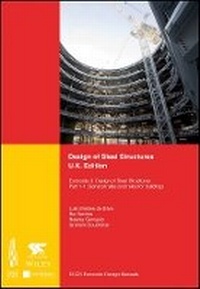
Design of Steel Structures
Eurocode 3: Design of Steel Structures, Part 1-1: General Rules and Rules for Buildings
Erschienen am 25. Dezember 2015
Software
Software-Medium
462 Seiten
978-3-433-60648-3 (ISBN)
Beschreibung
This book introduces the design concept of Eurocode 3 for steel structures in building construction, and their practical application. It especially comments on the regulations of the british National Annexes.
Following a discussion of the basis of design, including the limit state approach, the material standards and their use are detailed. The fundamentals of structural analysis and modeling are presented, followed by the design criteria and approaches for various types of structural members. The following chapters expand on the principles and applications of elastic and plastic design, each exemplified by the step-by-step design calculation of a braced steel-framed building and an industrial building, respectively.
Besides providing the necessary theoretical concepts for a good understanding, this manual intends to be a supporting tool for the use of practicing engineers. In order of this purpose, throughout the book, numerous worked examples are provided, concerning the analysis of steel structures and the design of elements under several types of actions. These examples will provide for a smooth transition from earlier national codes to the Eurocode.
Following a discussion of the basis of design, including the limit state approach, the material standards and their use are detailed. The fundamentals of structural analysis and modeling are presented, followed by the design criteria and approaches for various types of structural members. The following chapters expand on the principles and applications of elastic and plastic design, each exemplified by the step-by-step design calculation of a braced steel-framed building and an industrial building, respectively.
Besides providing the necessary theoretical concepts for a good understanding, this manual intends to be a supporting tool for the use of practicing engineers. In order of this purpose, throughout the book, numerous worked examples are provided, concerning the analysis of steel structures and the design of elements under several types of actions. These examples will provide for a smooth transition from earlier national codes to the Eurocode.
Weitere Details
Auflage
UK Edition
Sprache
Englisch
Verlagsort
Berlin
Deutschland
Verlagsgruppe
Wiley-VCH Verlag GmbH
Zielgruppe
Für Beruf und Forschung
Maße
Höhe: 250 mm
Breite: 150 mm
Dicke: 15 mm
Gewicht
666 gr
ISBN-13
978-3-433-60648-3 (9783433606483)
Copyright in bibliographic data and cover images is held by Nielsen Book Services Limited or by the publishers or by their respective licensors: all rights reserved.
Schweitzer Klassifikation
Weitere Ausgaben
Andere Ausgaben
ECCS - European Convention for Constructional Steelwork
Design of Steel Structures - UK edition
Eurocode 3: Design of steel structures. Part 1-1: General rules and rules for buildings.
E-Book
08/2015
1. Auflage
Ernst & Sohn
62,99 €
Als Download verfügbar
ECCS - European Convention for Constructional Steelwork
Design of Steel Structures - UK edition
Eurocode 3: Design of steel structures. Part 1-1: General rules and rules for buildings.
E-Book
08/2015
1. Auflage
Ernst & Sohn
62,99 €
Als Download verfügbar
Person
Luis Sim?es da Silva ist Professor fuer Stahlbau im Fachbereich Bauwesen der Universitaet Coimbra, Portugal, und Leiter des Forschungszentrum fuer Stahl- und Mischbautechnologie. Er ist Praesident des portugiesischen Stahlbauverbandes (CMM), Vorstandsmitglied und Vorsitzender des Technical Management Board der EKS und Autor von ueber 300 wissenschaftlichen Abhandlungen in seinem Fachgebiet.
Rui A. D. Sim?es ist Professor im Fachbereich Bauwesen der Universitaet Coimbra, Portugal. Im Jahr 1990 machte er dort seinen Abschluss als Bachelor of Science. Der Master-Grad wurde ihm 1995 verliehen und er promovierte im Jahr 2000. Professor Sim?es ist vornehmlich in der experimentellen Forschung taetig. Als Dozent unterrichtet er Studenten in Bachelor- und Master-Studiengaengen und betreut Doktoranden. Weiterhin ist er fuer die Weiterentwicklung von Ausbildungsprogrammen zustaendig.
Helena Gervasio ist Gastprofessorin im Fachbereich Bauwesen der Universitaet Coimbra, Portugal, technische Direktorin von GIPAC Lda, ein Ingenieurbuero mit Spezialisierung auf Beratungsleistungen im Bereich Stahlbautechnik. Sie ist Mitglied des technischen Ausschusses TC14 "Sustainability and Eco-Efficiency of Steel Construction" der EKS.
Graham Couchman ist Geschaeftsfuehrer des Steel Construction Institute (SCI), der fuehrenden unabhaengigen technischen Institution im Stahlbausektor in Grossbritannien. Graham Couchman studierte bis zum Masterabschluss 1985 an der Cambridge University und promovierte 1994 an der ETH Lausanne. Er ist Autor zahlreicher Publikationen und ist Vorsitzender des Ausschusses CEN/TC250/SCA Composite Construction.
Rui A. D. Sim?es ist Professor im Fachbereich Bauwesen der Universitaet Coimbra, Portugal. Im Jahr 1990 machte er dort seinen Abschluss als Bachelor of Science. Der Master-Grad wurde ihm 1995 verliehen und er promovierte im Jahr 2000. Professor Sim?es ist vornehmlich in der experimentellen Forschung taetig. Als Dozent unterrichtet er Studenten in Bachelor- und Master-Studiengaengen und betreut Doktoranden. Weiterhin ist er fuer die Weiterentwicklung von Ausbildungsprogrammen zustaendig.
Helena Gervasio ist Gastprofessorin im Fachbereich Bauwesen der Universitaet Coimbra, Portugal, technische Direktorin von GIPAC Lda, ein Ingenieurbuero mit Spezialisierung auf Beratungsleistungen im Bereich Stahlbautechnik. Sie ist Mitglied des technischen Ausschusses TC14 "Sustainability and Eco-Efficiency of Steel Construction" der EKS.
Graham Couchman ist Geschaeftsfuehrer des Steel Construction Institute (SCI), der fuehrenden unabhaengigen technischen Institution im Stahlbausektor in Grossbritannien. Graham Couchman studierte bis zum Masterabschluss 1985 an der Cambridge University und promovierte 1994 an der ETH Lausanne. Er ist Autor zahlreicher Publikationen und ist Vorsitzender des Ausschusses CEN/TC250/SCA Composite Construction.
Inhalt
FOREWORD xiii
PREFACE xv
U.K. FOREWORD xvii
Chapter 1 INTRODUCTION 1
1.1. General Observations 1
1.2. Codes of Practice and Normalization 3
1.3. Basis of Design 8
1.4. Materials 21
1.5. Geometric Characteristics and Tolerances 28
Chapter 2 STRUCTURAL ANALYSIS 35
2.1. Introduction 35
2.2. Structural Modelling 36
2.3. Global Analysis of Steel Structures 77
2.4. Classification of Cross Sections 110
Chapter 3 DESIGN OF MEMBERS 117
3.1. Introduction 117
3.2. Tension 123
3.3. Laterally Restrained Beams 136
3.4. Torsion 154
3.5. Compression 172
3.6. Laterally Unrestrained Beams 196
3.7. Beam-Columns 224
Chapter 4 ELASTIC DESIGN OF STEEL STRUCTURES 271
4.1. Introduction 271
4.2. Simplified Methods of Analysis 274
4.3. Member Stability of Non-prismatic Members and Components 288
4.4. Design Example 1: Elastic Design of Braced Steel-Framed Building 316
Chapter 5 PLASTIC DESIGN OF STEEL STRUCTURES 343
5.1. General Principles for Plastic Design 343
5.2. Methods of Analysis 352
5.3. Member Stability and Buckling Resistance 385
5.4. Design Example 2: Plastic Design of Industrial Building 407
REFERENCES 431
Annex A ABACUS TO CALCULATE THE COEFFICIENTS C1, C2 AND C3 441
A.1. Elastic critical moment in beams submitted to end moments simultaneously with transverse loads 441
A.2. Elastic critical moment of unbraced cantilevers 445
PREFACE xv
U.K. FOREWORD xvii
Chapter 1 INTRODUCTION 1
1.1. General Observations 1
1.2. Codes of Practice and Normalization 3
1.3. Basis of Design 8
1.4. Materials 21
1.5. Geometric Characteristics and Tolerances 28
Chapter 2 STRUCTURAL ANALYSIS 35
2.1. Introduction 35
2.2. Structural Modelling 36
2.3. Global Analysis of Steel Structures 77
2.4. Classification of Cross Sections 110
Chapter 3 DESIGN OF MEMBERS 117
3.1. Introduction 117
3.2. Tension 123
3.3. Laterally Restrained Beams 136
3.4. Torsion 154
3.5. Compression 172
3.6. Laterally Unrestrained Beams 196
3.7. Beam-Columns 224
Chapter 4 ELASTIC DESIGN OF STEEL STRUCTURES 271
4.1. Introduction 271
4.2. Simplified Methods of Analysis 274
4.3. Member Stability of Non-prismatic Members and Components 288
4.4. Design Example 1: Elastic Design of Braced Steel-Framed Building 316
Chapter 5 PLASTIC DESIGN OF STEEL STRUCTURES 343
5.1. General Principles for Plastic Design 343
5.2. Methods of Analysis 352
5.3. Member Stability and Buckling Resistance 385
5.4. Design Example 2: Plastic Design of Industrial Building 407
REFERENCES 431
Annex A ABACUS TO CALCULATE THE COEFFICIENTS C1, C2 AND C3 441
A.1. Elastic critical moment in beams submitted to end moments simultaneously with transverse loads 441
A.2. Elastic critical moment of unbraced cantilevers 445