

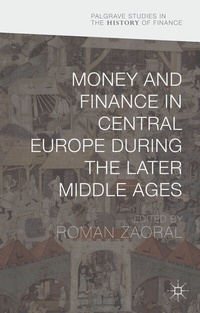
Money and Finance in Central Europe during the Later Middle Ages
Erschienen am 29. April 2016
XVIII, 269 Seiten
978-1-137-46023-3 (ISBN)
Beschreibung

The wealth of the Central European archives, particularly in urban records, has not been fully realised by Western European historians. However, the records are not always straightforward to use and many studies tackle the methodological problems inherent in gathering and analysing medieval sources. This book presents an original review of past and present research of national historiographies on medieval financial history from Central Europe. Covering material ranging from the thirteenth to the sixteenth centuries, it explores the eastern regions of the Holy Roman Empire, including Bohemia, Silesia, Austria and Germany, and extending to Poland and Hungary. The authors firstly discuss the monetary policy of the Holy Roman emperors during the Middle Ages, before moving on to wider aspects of state finance, including credit mechanisms used by rulers. The book then investigates civic records and what they reveal about urban life and trade. It lastly investigates the financial activitiesof the church, from papacy to the cathedral chapters in Prague. Using numismatic and documentary evidence, Money and Finance in Central Europe during the Later Middle Ages provides an invaluable point of comparison with the financial conditions in Western Europe during the Middle Ages.
Rezensionen / Stimmen
"This is a valuable collection of essays which demonstrates admirably the willingness of Central European historians to tackle major issues of kingship, finance, minting and money and the pre-Hussite Church, and to arrive at some surprising answers." (J. L. Bolton,English Historical Review, Vol. 133 (560), February, 2018)Weitere Details
Reihe
Auflage
1st ed. 2016
Sprache
Englisch
Verlagsort
London
Großbritannien
Verlagsgruppe
Palgrave Macmillan UK
Zielgruppe
Für Beruf und Forschung
Produkt-Hinweis
Reflowable
Illustrationen
XVIII, 269 p.
Dateigröße
1,20 MB
ISBN-13
978-1-137-46023-3 (9781137460233)
DOI
10.1057/9781137460233
Schweitzer Klassifikation
Weitere Ausgaben
Andere Ausgaben
Buch
11/2015
Palgrave Macmillan
128,39 €
Versand in 10-20 Tagen
Person
Roman Zaoral is Senior Lecturer in the Faculty of Humanities, Charles University, Czech Republic, where he also obtained an MA in History and PhD in Medieval History. His research interests centre on the economic, financial and numismatic history of central Europe during the Middle Ages.
Inhalt
1 - Cover [Seite 1]
2 - Half-Title [Seite 2]
3 - Title [Seite 4]
4 - Copyright [Seite 5]
5 - Dedication [Seite 6]
6 - Contents [Seite 8]
7 - List of Figures [Seite 10]
8 - List of Tables [Seite 11]
9 - Preface [Seite 12]
10 - Acknowledgements [Seite 16]
11 - Notes on Contributors [Seite 17]
12 - Introduction: Medieval Finance in Central European Historiography [Seite 20]
13 - Part I Money and Minting [Seite 42]
13.1 - 1 A New Perspective on the Imperial Coinage [Seite 43]
13.2 - 2 The Reception of Imperial Monetary Reforms in 16th-century Northern Germany [Seite 50]
13.3 - 3 The Kremnica Town Book of Accounts: The Economy of a Mining and Mint Town in the Kingdom of Hungary [Seite 60]
14 - Part II Medieval Court Funding [Seite 75]
14.1 - 4 Financiers to the Blind King: Funding the Court of John the Blind (1310-1346) [Seite 76]
14.2 - 5 The Financial Dimension of the Pledge Policy of King Sigismund of Luxembourg in Bohemia (1419-1437) [Seite 93]
14.3 - 6 The Pledge Policy of King Sigismund of Luxembourg in Hungary (1387-1437) [Seite 104]
14.4 - 7 The Economic Background to and the Financial Politics of Queen Barbara of Cilli in Hungary (1406-1438) [Seite 127]
14.5 - 8 The Courtly Accounts of Prince Sigismund Jagiello (Late 15th to Early 16th Centuries) and Their Historical Context [Seite 146]
15 - Part III Trade and Towns [Seite 169]
15.1 - 9 Accounting Records of the Town Offices in Bohemia and Moravia: Methodology and Application [Seite 170]
15.2 - 10 Remnants and Traces: In Search of Wroc?aw's Accounting Books (Late 14th to Early 16th Centuries) [Seite 184]
15.3 - 11 Financial Obligations of the City of Gda?sk to King Casimir IV Jagiellon and His Successors in the Light of the 1468-1516 Ledger Book [Seite 196]
15.4 - 12 Old Interpretations and New Approaches: The 1457-1458 Thirtieth Customs Register of Bratislava [Seite 207]
16 - Part IV Church and Money [Seite 217]
16.1 - 13 Financing a Legation: Papal Legates and Money in the Later Middle Ages [Seite 218]
16.2 - 14 St Vitus Building Accounts (1372-1378): The Economic Aspects of Building the Cathedral [Seite 235]
16.3 - 15 'De mandato dominorum divisorum ... ' : Finances in the Life of Prague's Metropolitan Chapter [Seite 260]
17 - Index [Seite 277]
2 - Half-Title [Seite 2]
3 - Title [Seite 4]
4 - Copyright [Seite 5]
5 - Dedication [Seite 6]
6 - Contents [Seite 8]
7 - List of Figures [Seite 10]
8 - List of Tables [Seite 11]
9 - Preface [Seite 12]
10 - Acknowledgements [Seite 16]
11 - Notes on Contributors [Seite 17]
12 - Introduction: Medieval Finance in Central European Historiography [Seite 20]
13 - Part I Money and Minting [Seite 42]
13.1 - 1 A New Perspective on the Imperial Coinage [Seite 43]
13.2 - 2 The Reception of Imperial Monetary Reforms in 16th-century Northern Germany [Seite 50]
13.3 - 3 The Kremnica Town Book of Accounts: The Economy of a Mining and Mint Town in the Kingdom of Hungary [Seite 60]
14 - Part II Medieval Court Funding [Seite 75]
14.1 - 4 Financiers to the Blind King: Funding the Court of John the Blind (1310-1346) [Seite 76]
14.2 - 5 The Financial Dimension of the Pledge Policy of King Sigismund of Luxembourg in Bohemia (1419-1437) [Seite 93]
14.3 - 6 The Pledge Policy of King Sigismund of Luxembourg in Hungary (1387-1437) [Seite 104]
14.4 - 7 The Economic Background to and the Financial Politics of Queen Barbara of Cilli in Hungary (1406-1438) [Seite 127]
14.5 - 8 The Courtly Accounts of Prince Sigismund Jagiello (Late 15th to Early 16th Centuries) and Their Historical Context [Seite 146]
15 - Part III Trade and Towns [Seite 169]
15.1 - 9 Accounting Records of the Town Offices in Bohemia and Moravia: Methodology and Application [Seite 170]
15.2 - 10 Remnants and Traces: In Search of Wroc?aw's Accounting Books (Late 14th to Early 16th Centuries) [Seite 184]
15.3 - 11 Financial Obligations of the City of Gda?sk to King Casimir IV Jagiellon and His Successors in the Light of the 1468-1516 Ledger Book [Seite 196]
15.4 - 12 Old Interpretations and New Approaches: The 1457-1458 Thirtieth Customs Register of Bratislava [Seite 207]
16 - Part IV Church and Money [Seite 217]
16.1 - 13 Financing a Legation: Papal Legates and Money in the Later Middle Ages [Seite 218]
16.2 - 14 St Vitus Building Accounts (1372-1378): The Economic Aspects of Building the Cathedral [Seite 235]
16.3 - 15 'De mandato dominorum divisorum ... ' : Finances in the Life of Prague's Metropolitan Chapter [Seite 260]
17 - Index [Seite 277]
