

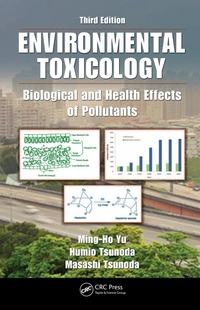
Environmental Toxicology
Biological and Health Effects of Pollutants, Third Edition
3. Auflage
Erschienen am 19. April 2016
397 Seiten
978-1-4398-4039-9 (ISBN)
Beschreibung

Human survival depends on the availability of clean air, water, and food and on the welfare of plants and animals. However, anthropogenic and naturally occurring chemicals can cause adverse effects on living organisms and ecological processes. Environmental Toxicology: Biological and Health Effects of Pollutants, Third Edition presents fundamental information on the effects of environmental toxicants on living systems. It focuses on the chemical and biological characteristics of major pollutants found in the air, water, and soil and relates them to the health and well being of humans, animals, and plants.
An Indispensable Reference on Air, Soil, & Water Pollutants and Their Impact on Living Systems
Surveying the environmental and health changes that have occurred in recent decades, the book discusses the sources, metabolism, and damage process of toxicants, and the environmental, biological, and nutritional factors that may influence toxicity. It looks at natural defense systems, including the mechanisms for detoxification-such as endogenous antioxidants and free radical scavenging enzymes-on a cellular level.
The text examines the major toxicants: EPA criteria air pollutants, environmental fluoride, volatile organic compounds (VOCs), environmental metals and metalloids involved in soil and water pollution, and pesticides and related material such as PCBs and dioxins. It then addresses their relationship with endocrine disruption and environmental cancer. This comprehensive approach offers insight into the interaction of various chemical agents with DNA.
Fully revised and expanded, the third edition of this popular book includes new and updated material as well as a new chapter on occupational toxicology. Appendices cover the process of ecological risk assessment, carcinogens, and PCB nomenclature. Based on research from more than 35 years of teaching environmental toxicology and related courses, this textbook is a useful resource for students, professionals, and researchers interested in the effects of pollutants on living systems.
What's New in This Edition
A new chapter on occupational toxicology, covering indoor air quality, chemicals in the workplace, nanoparticle exposure, and more
An updated chapter on environmental changes and health, including significant environmental changes that have occurred since the last edition
An updated chapter on environmental cancer, including changes in death rates of respiratory cancers
New material on the importance of nitrous oxide (N2O) in stratospheric ozone layer depletion and An expanded discussion of environmental disasters.
An Indispensable Reference on Air, Soil, & Water Pollutants and Their Impact on Living Systems
Surveying the environmental and health changes that have occurred in recent decades, the book discusses the sources, metabolism, and damage process of toxicants, and the environmental, biological, and nutritional factors that may influence toxicity. It looks at natural defense systems, including the mechanisms for detoxification-such as endogenous antioxidants and free radical scavenging enzymes-on a cellular level.
The text examines the major toxicants: EPA criteria air pollutants, environmental fluoride, volatile organic compounds (VOCs), environmental metals and metalloids involved in soil and water pollution, and pesticides and related material such as PCBs and dioxins. It then addresses their relationship with endocrine disruption and environmental cancer. This comprehensive approach offers insight into the interaction of various chemical agents with DNA.
Fully revised and expanded, the third edition of this popular book includes new and updated material as well as a new chapter on occupational toxicology. Appendices cover the process of ecological risk assessment, carcinogens, and PCB nomenclature. Based on research from more than 35 years of teaching environmental toxicology and related courses, this textbook is a useful resource for students, professionals, and researchers interested in the effects of pollutants on living systems.
What's New in This Edition
A new chapter on occupational toxicology, covering indoor air quality, chemicals in the workplace, nanoparticle exposure, and more
An updated chapter on environmental changes and health, including significant environmental changes that have occurred since the last edition
An updated chapter on environmental cancer, including changes in death rates of respiratory cancers
New material on the importance of nitrous oxide (N2O) in stratospheric ozone layer depletion and An expanded discussion of environmental disasters.
Rezensionen / Stimmen
Praise for the Second EditionThis book is very well presented. A particular strength is the use of many examples of major pollution events and case studies, as well as an actual ecological impact assessment study in the appendix. Another strength is that review questions are given at the end of each chapter. ... Overall, this is an excellent text on the subject, particularly for teachers and students of the basics of environmental studies.
-Marinus L. Otte, University College Dublin, in The Geographical Journal, Vol. 172, Issue 2, June 2006 Praise for the Second Edition
This book is very well presented. A particular strength is the use of many examples of major pollution events and case studies, as well as an actual ecological impact assessment study in the appendix. Another strength is that review questions are given at the end of each chapter. ... Overall, this is an excellent text on the subject, particularly for teachers and students of the basics of environmental studies.
-Marinus L. Otte, University College Dublin, in The Geographical Journal, Vol. 172, Issue 2, June 2006
Weitere Details
Auflage
3rd edition
Sprache
Englisch
Verlagsort
Baton Rouge
USA
Verlagsgruppe
Taylor & Francis Inc
Zielgruppe
Für Beruf und Forschung
Senior undergraduate students, graduate students, and researchers in the areas of environmental sciences, environmental toxicology/chemistry, and environmental health; practicing consultants and ecotoxicologists; regulatory agencies; and public health officials.
Editions-Typ
Überarbeitete Ausgabe
Illustrationen
103 s/w Abbildungen, 41 s/w Tabellen
103 b/w images, 41 tables and approx 55
ISBN-13
978-1-4398-4039-9 (9781439840399)
Copyright in bibliographic data and cover images is held by Nielsen Book Services Limited or by the publishers or by their respective licensors: all rights reserved.
Schweitzer Klassifikation
Weitere Ausgaben
Andere Ausgaben
Ming-Ho Yu | Humio Tsunoda | Masashi Tsunoda
Environmental Toxicology
Biological and Health Effects of Pollutants, Third Edition
Buch
11/2011
3. Auflage
CRC Press
182,50 €
Versand in 15-20 Tagen
Vorauflage
Pankaj Gupta | Amit Chanjta | Yogesh Mehta
Environmental Toxicology
E-Book
12/2023
1. Auflage
Taylor & Francis
73,49 €
Als Download verfügbar
Personen
Dr. Ming-Ho Yu is professor emeritus at Huxley College of the Environment, Western Washington University. Dr. Yu served as the vice president and president of the International Society for Fluoride Research (ISFR) from 1986 to 1996 and is the associate editor of Fluoride, the official publication of the society. He is a founding coeditor of Environmental Sciences, a journal published in Tokyo, Japan. Dr. Yu is the author of Environmental Toxicology: Impacts of Environmental Toxicants on Living Systems and Environmental Toxicology: Biological and Health Effects of Pollutants, Second Edition and coauthor of Introduction to Environmental Toxicology: Molecular Substructures to Ecological Landscapes, published by CRC Press.
Dr. Humio Tsunoda
is professor emeritus at Iwate Medical University in Morioka, Japan. He received a Green Cross Award from the Japan Industrial Safety and Health Association, and awards for distinguished service from the Ministry of Construction, the Ministry of Labor, the Japanese Association of Rural Medicine, the Japan Society for Atmospheric Environment, and the Japanese Society for Occupational Health. In 2010, Dr. Tsunoda received the Order of the Sacred Treasure, Gold Rays with Neck Ribbon from the government of Japan.
Dr. Masashi Tsunoda
is an associate professor at the Department of Preventive Medicine, Kitasato University School of Medicine in Japan. He is a councilor of the Japan Society for Biomedical Research on Trace Elements, an editorial board member of the International Society for Fluoride Research, and a board member of the Japanese Society of Immunotoxicology. He is coeditor of Kitasato Medical Journal and a guest reviewer of Toxicological Sciences.
Dr. Humio Tsunoda
is professor emeritus at Iwate Medical University in Morioka, Japan. He received a Green Cross Award from the Japan Industrial Safety and Health Association, and awards for distinguished service from the Ministry of Construction, the Ministry of Labor, the Japanese Association of Rural Medicine, the Japan Society for Atmospheric Environment, and the Japanese Society for Occupational Health. In 2010, Dr. Tsunoda received the Order of the Sacred Treasure, Gold Rays with Neck Ribbon from the government of Japan.
Dr. Masashi Tsunoda
is an associate professor at the Department of Preventive Medicine, Kitasato University School of Medicine in Japan. He is a councilor of the Japan Society for Biomedical Research on Trace Elements, an editorial board member of the International Society for Fluoride Research, and a board member of the Japanese Society of Immunotoxicology. He is coeditor of Kitasato Medical Journal and a guest reviewer of Toxicological Sciences.
Inhalt
Introduction. Environmental Changes and Health. Occurrence of Toxicants. Toxic Action of Pollutants. Factors Affecting Xenobiotic Action. Biotransformation: Metabolism of Xenobiotics. Responses to Environmental Toxicants. Air Pollution: Inorganic Gases. Air Pollution: Particulate Matter. Environmental Fluoride. Volatile Organic Compounds. Soil and Water Pollution: Environmental Metals and Metalloids. Pesticides and Related Materials. Occupational Toxicology. Endocrine Disruption. Mutagenic Pollutants. Environmental Cancer. Appendix 1: Ecological Risk Assessment. Appendix 2: 11th Report on Carcinogens. Appendix 3: List of Cigarette Smoke Carcinogens. Appendix 4: Polychlorinated Biphenyl (PCB) Nomenclature. Index.
