

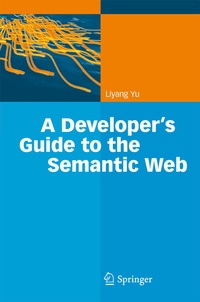
A Developer's Guide to the Semantic Web
Beschreibung

Rezensionen / Stimmen
From the reviews:
"As the title suggests, this book is about the semantic Web, the standards and technologies that allow computers to understand the meaning of information posted online. . this book covers numerous aspects of the semantic Web in significant detail . . primarily intended for software developers, researchers, and practicing professionals who want to gain expertise in the fundamentals quickly. It may also be useful for students taking courses on the semantic Web. Summing Up: Recommended. Upper-division undergraduates through professionals/practitioners." (M. B. DuBois, Choice, Vol. 48 (11), August, 2011)
"This book is a good starting point, especially since finding all of this information on the Web can be difficult. . for developers who are interested in establishing a toehold, this is a nice introduction that should serve for now." (Jeffrey Putnam, ACM Computing Reviews, September, 2011)
Weitere Details
Weitere Ausgaben
Nachauflagen
Andere Ausgaben
Person
Inhalt
Web of Data: Towards the Idea of the Semantic Web
The Building Block for the Semantic Web: RDF
Other RDF-related Technologies: Microformats, RDFa and GRDDL
RDFS and Ontology
OWL: Web Ontology Language
SPARQL: Querying the Semantic Web
FOAF: Friend of A Friend
Semantic Markup at Work: Rich Snippets and SearchMonkey
Semantic Wiki
DBpedia
Linked Open Data
Building the Foundation for Development on the Semantic Web
Jena: a Framework for Development on the Semantic Web
Follow Your Nose: A Basic Semantic Web Agent
More Application Examples on the Semantic Web
