

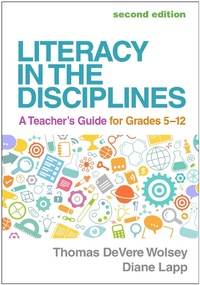
Literacy in the Disciplines
A Teacher's Guide for Grades 5-12
2. Auflage
Erschienen am 30. Juli 2024
282 Seiten
978-1-4625-5533-8 (ISBN)
Beschreibung
Teachers of students ages 10-17 (grades 5-12); teacher educators and graduate students. May serve as a supplemental text in graduate-level courses.
Weitere Details
Weitere Ausgaben
Personen
Thomas DeVere Wolsey, EdD, teaches graduate courses in research and literacy and leads professional development for teachers throughout the United States, including on the Hopi Reservation in Arizona, as well as in Egypt, Guatemala, Mexico, China, and elsewhere. He is the author or coauthor of numerous books for teachers and teacher educators, most recently on the topic of teaching refugees and displaced students. Dr. Wolsey has developed training materials for the California Department of Education, TextProject, San Diego State University, and other institutions and programs. His research and writing explore the intersections of literacy and technology, middle grades and secondary literacy practices, teacher preparation, and green school design.
Diane Lapp, EdD, is Distinguished Professor Emerita of Education in the Department of Teacher Education and Lecturer in the Department of Educational Administration at San Diego State University. She has taught elementary, middle, and high school and currently serves as an Instructional Coach at Health Sciences High and Middle College in San Diego. Dr. Lapp's research and instruction focus on issues related to struggling readers and writers who live in economically deprived urban settings, and their families and teachers. Widely published, she has received the Outstanding Teacher Educator of the Year Award from the International Literacy Association (ILA), as well as the William S. Gray Citation of Merit, ILA's highest individual honor. Dr. Lapp is a member of the Reading Hall of Fame and the California Reading Hall of Fame.
Diane Lapp, EdD, is Distinguished Professor Emerita of Education in the Department of Teacher Education and Lecturer in the Department of Educational Administration at San Diego State University. She has taught elementary, middle, and high school and currently serves as an Instructional Coach at Health Sciences High and Middle College in San Diego. Dr. Lapp's research and instruction focus on issues related to struggling readers and writers who live in economically deprived urban settings, and their families and teachers. Widely published, she has received the Outstanding Teacher Educator of the Year Award from the International Literacy Association (ILA), as well as the William S. Gray Citation of Merit, ILA's highest individual honor. Dr. Lapp is a member of the Reading Hall of Fame and the California Reading Hall of Fame.
Inhalt
I. The Literacy of the Disciplines
1. What Is Disciplinary Literacy?
2. What Are the Literacy Demands of Experts in the Disciplines?: Talking with Scientists, Historians, Mathematicians, Authors of Fiction, Musicians, Artists, Athletes, and Technical Experts
3. Literacy in Civic, Professional, and Personal Life
II. Literacy Instruction in the Disciplines
4. Saying It Well: Instruction That Supports Academic Language Development in the Disciplines
5. Choosing the Right Words: Instruction That Supports Academic Vocabulary Use in the Disciplines
6. Arguing It Well: Instruction That Supports Communication in the Disciplines
7. Reading It Carefully: Instruction That Supports Reading in the Disciplines
8. Reading It Closely: Instruction That Supports Close Reading in the Disciplines
9. Writing It Down: Instruction That Supports Writing in the Disciplines
III. Routines That Support Learning in the Disciplines
10. Organizing It Well: Using Organizational Structures in the Disciplines
11. Presenting It Well: Using Multimodal Tools in the Disciplines
12. Assessing It Well: Assessment That Supports Student Learning in the Disciplines
Conclusion. What's Next for Literacy in the Disciplines?: Going Beyond College and Career Readiness
References
Index
1. What Is Disciplinary Literacy?
2. What Are the Literacy Demands of Experts in the Disciplines?: Talking with Scientists, Historians, Mathematicians, Authors of Fiction, Musicians, Artists, Athletes, and Technical Experts
3. Literacy in Civic, Professional, and Personal Life
II. Literacy Instruction in the Disciplines
4. Saying It Well: Instruction That Supports Academic Language Development in the Disciplines
5. Choosing the Right Words: Instruction That Supports Academic Vocabulary Use in the Disciplines
6. Arguing It Well: Instruction That Supports Communication in the Disciplines
7. Reading It Carefully: Instruction That Supports Reading in the Disciplines
8. Reading It Closely: Instruction That Supports Close Reading in the Disciplines
9. Writing It Down: Instruction That Supports Writing in the Disciplines
III. Routines That Support Learning in the Disciplines
10. Organizing It Well: Using Organizational Structures in the Disciplines
11. Presenting It Well: Using Multimodal Tools in the Disciplines
12. Assessing It Well: Assessment That Supports Student Learning in the Disciplines
Conclusion. What's Next for Literacy in the Disciplines?: Going Beyond College and Career Readiness
References
Index
