

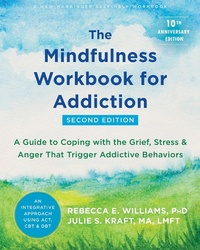
Mindfulness Workbook for Addiction
A Guide to Coping with the Grief, Stress, and Anger That Trigger Addictive Behaviors
Erschienen am 1. Februar 2022
242 Seiten
978-1-68403-812-1 (ISBN)
Beschreibung
Break the addiction cycle once and for all with this powerful and compassionate workbook--now fully revised and updated! If you struggle with addiction, know that you are not alone. Addictive behaviors are often the result of loss--the loss of a job, the death of a loved one, or even the end of a romantic relationship. If you're like many others, you may have turned to drugs, alcohol, or other troubling behaviors to avoid the pain of loss. But this only delays the healing process, and can ultimately lead to a destructive cycle that leaves you feeling trapped. So, how can you break free? This second edition of The Mindfulness Workbook for Addiction will help you identify the root of your addictive behaviors while providing healthy coping strategies to deal with the stress, anxiety, and depression that can come from experiencing a loss. With these powerful mindfulness exercises and lifestyle tips, you will be able to replace addictive behaviors with healthy behaviors to begin healing. This workbook will help you: Determine the function your addiction is serving Develop healthy coping skills for dealing with loss Accept your thoughts and emotions Avoid addiction "triggers" Heal broken relationships and build a support system No matter the loss, the mindfulness skills in this workbook will allow you to process your grief and replace your addiction with healthy coping behaviors.
Weitere Details
Weitere Ausgaben
Inhalt
- Intro
- Contents
- Exercises
- Exercise 1.1 Journal Questions
- Exercise 1.2 Identifying Your False Beliefs About Emotions
- Exercise 1.3 Emotion-Dodging Methods
- Exercise 1.4 Consequences of Emotion Dodging
- Exercise 1.5 Learning About Your Feelings
- Exercise 1.6 How Would You Feel?
- Exercise 1.7 Connecting Emotions to Life Situations
- Exercise 2.1 Identifying Your Repeat-Offender Thoughts
- Exercise 2.2 Where Did Your Repeat-Offender Thoughts Come From?
- Exercise 2.3 Consider the Evidence Worksheet
- Exercise 3.1 Reflecting on Your Behaviors
- Exercise 3.2 Practice Choosing the Opposite
- Exercise 3.3 The Birthday Toast
- Exercise 3.4 Uncover Your Values
- Exercise 3.5 Reflecting on Values
- Exercise 3.6 Making Decisions Based on Values
- Exercise 4.1 Observe Your Mind
- Exercise 4.2 Imagine the Space
- Exercise 4.3 Study an Object
- Exercise 4.4 Count the Sounds
- Exercise 4.5 Be Focused and Fascinated
- Exercise 4.6 Be in Your Body
- Exercise 4.7 Walking with Words
- Exercise 4.8 It Is What It Is
- Exercise 5.1 Losses Checklist
- Exercise 5.2 Identifying Your Losses
- Exercise 5.3 How Resolved Is Your Loss?
- Exercise 5.4 Loss Impact Worksheet
- Exercise 5.5 Your Responses to Loss
- Exercise 6.1 Identify Addictions Worksheet: Alcohol, Drugs, and Caffeine
- Exercise 6.2 Checklist of Addiction Signs: Alcohol or Drugs
- Exercise 6.3 Identify Addictions Worksheet: Other Troubling Behaviors
- Exercise 6.4 Checklist of Addiction Signs: Troubling Behaviors
- Exercise 6.5 Time Line of Addictive Behavior
- Exercise 6.6 Wellness Script
- Exercise 7.1 Creating Your Addiction-and-Loss Time Line
- Exercise 7.2 Reflecting on Your Addiction-and-Loss Time Line
- Exercise 7.3 The Loss Anniversary Calendar
- Exercise 7.4 Specific Triggers Worksheet
- Exercise 8.1 Being an Observer
- Exercise 8.2 What Your Stages Look Like
- Exercise 8.3 Denial: Acknowledging Your Loss
- Exercise 8.4 Anger: Calming Color Meditation
- Exercise 8.5 Bargaining: Releasing Control
- Exercise 8.6 Depression: One Step at a Time
- Exercise 8.7 Acceptance: From Resistance to Letting Go
- Exercise 8.8 Unwrapping Your Feelings
- Exercise 8.9 The Gift to Yourself
- Exercise 9.1 List of Common Social Problems
- Exercise 9.2 Practicing "I" Statements
- Exercise 9.3 Practicing Your Listening Skills
- Exercise 9.4 Qualities of Relationships
- Exercise 9.5 Identifying Your Healthy and Unhealthy Relationships
- Exercise 9.6 Letter of Invitation
- Exercise 9.7 Healing Conversation Format
- Exercise 9.8 Healing Conversation Action Plan
- Exercise 9.9 The Commit to Quit Agreement
- Exercise 9.10 Keep Track of Your Thoughts
- Exercise 10.1 Leaves Down a Stream
- Exercise 10.2 Progressive Muscle Relaxation (PMR)
- Exercise 10.3 Open Body Posture
- Exercise 10.4 Nonjudgmental Phrases
- Exercise 10.5 Practice Gratitude
- Exercise 10.6 The Self-Compassion Letter
- Exercise 10.7 Acts of Kindness Toward Yourself
- Exercise 10.8 Loving-Kindness Meditation
- Exercise 11.1 Checklist of Ten Common Signs of Depression
- Exercise 11.2 Checklist of Ten Common Signs of Anxiety
- Exercise 11.3 Checklist of Ten Common Signs of Post-Traumatic Stress Disorder
- Exercise 11.4 Checklist of Ten Common Signs of Bipolar Disorder
- Exercise 11.5 Checklist of Ten Common Signs of Psychosis
- Exercise: 11.6 Dual Recovery Self-Awareness Plan
- Exercise 12.1 The Mindful Sleep Checklist
- Exercise 12.2 Work as a Gift
- Exercise 12.3 Pleasant Activities List
- Preface to the Second Edition
- Introduction
- Part 1: Getting to Know the Main Concepts and Skills
- 1. Emotions
- 2. Thoughts
- 3. Behaviors
- 4. Mindfulness
- Part 2: Looking at Your Losses
- 5. Loss
- 6. Addiction
- 7. Connecting Addiction and Loss
- 8. Mindful Grieving
- Part 3: Moving Forward
- 9. Relationships
- 10. More Mindfulness
- 11. Mental Health
- 12. Wellness in Recovery
- Acknowledgments
- References
