

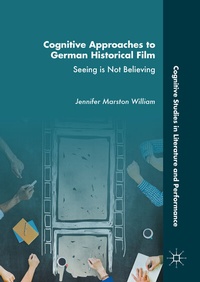
Cognitive Approaches to German Historical Film
Beschreibung

This book explores how minds at the movies understand minds in the movies and introduces readers to some fundamental principles of Cognitive Studies-namely conceptual blending, Theory of Mind, and empathy/perspective-taking-through their application to film analysis. A cognitive approach to recent popular historical films demonstrates cinema's potential to stimulate viewers' critical thinking about crucial events of the past century. Diverging from the focus on narrative processing in traditional cognitivist theory, this book examines film reception and production in the context of the latest developments in cognitive and social psychology. Turning to German cinema as a case study for this interdisciplinary partnership, Jennifer Marston William offers a fresh look at some internationally successful films of the twenty-first century, including Nowhere in Africa , Goodbye, Lenin! , Sophie Scholl , Downfall , The Lives of Others , and TheBaader-Meinhof Complex .
Weitere Details
Weitere Ausgaben
Andere Ausgaben
Person
Jennifer Marston William is Professor of German in the School of Languages and Cultures at Purdue University, USA, where she is affiliated with the interdisciplinary programs in Jewish Studies and Film & Video Studies, and is a founding member of the Center for Cognitive Literary Studies.
Inhalt
.1. Introduction: What this Book is, and is Not.- 2. Conceptual Blending and Imagining Historical Time and Space.- 3. Theory of Mind and the Cinematic Retelling of History.- 4. Perspective-Taking and Empathic Responses to Historical Film.- 5. Epilogue: Examining the Mind's Eye through the Viewer's Eye: Implications and Future Directions.
