

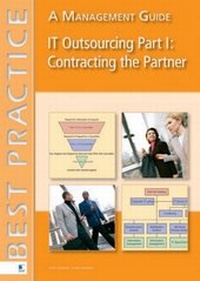
IT Outsourcing Part 1: Contracting the Partner
Contracting the Partner
1. Auflage
Erschienen am 1. Januar 2009
146 Seiten
978-90-8753-526-1 (ISBN)
Beschreibung

As companies focus on the core specialisms, most will look to the benefits of outsourcing some, if not all, of the IT services required. The benefits include:
cost-efficient operations;
delivery of IT services at lower cost through economies of scale;
improvements in time-to-market of IT solutions;
improvements in capability and
quality of IT service delivery.
This essential guide looks at the procedures needed to achieve all these benefits when contracting an outsourcing partner. It explains the benefits of a well thought-out and practical approach to selecting a partner; a partner, indeed, whose performance may make or break an organization's delivery to market. This book is a key reference guide to anyone procuring IT services and also to those who are responsible for maintaining the contract once signed. By covering all aspects of the Outsourcing contracting process, its guidance will help reduce risks and miscommunication. In addition its approach to the Request for Proposal (also known as Invitation to Tender) shows how clarity at this stage can deliver significant benefits as the services go live in the operational phase.
Weitere Details
Weitere Ausgaben
Andere Ausgaben
Buch
01/2009
Van Haren Publishing BV
45,91 €
Versand in 10-15 Tagen
E-Book
01/2009
Van Haren Publishing
25,99 €
Als Download verfügbar
Inhalt
1 - Acknowledgements [Seite 6]
2 - Foreword [Seite 10]
3 - Introduction [Seite 14]
4 - Chapter 1 Outsourcing [Seite 18]
4.1 - 1.1The definition of outsourcing [Seite 18]
4.2 - 1.2Types of outsourcing [Seite 19]
4.3 - 1.3The phases of outsourcing [Seite 19]
4.4 - 1.4The advantages and disadvantages of outsourcing [Seite 26]
4.5 - 1.5Critical success factors in outsourcing [Seite 27]
5 - Chapter 2 The BioFruit case [Seite 30]
5.1 - 2.1The company [Seite 30]
5.2 - 2.2IT function (current situation) [Seite 31]
5.3 - 2.3The planned IT outsourcing [Seite 31]
6 - Chapter 3 The business case [Seite 34]
6.1 - 3.1The objective and creation of the business case [Seite 34]
6.2 - 3.2The contents of the business case [Seite 35]
6.3 - 3.3The financial view of the business case [Seite 36]
6.4 - 3.4The BioFruit business case [Seite 40]
7 - Chapter 4 The RFP [Seite 48]
7.1 - 4.1The RFP structure [Seite 49]
7.2 - 4.2The development of the RFP [Seite 50]
7.3 - 4.3General style recommendations for RFPs [Seite 51]
8 - Chapter 5 The supplier instructions [Seite 52]
8.1 - 5.1The contents of the proposal [Seite 52]
8.2 - 5.2The format of the proposal [Seite 54]
8.3 - 5.3The tender procedure and timeline [Seite 55]
9 - Chapter 6 The service requirements [Seite 60]
9.1 - 6.1Establishing the service specifications [Seite 60]
9.2 - 6.2Describing the objects to be managed [Seite 61]
9.3 - 6.3Specifying the required tasks [Seite 64]
9.4 - 6.4Setting the required service levels [Seite 71]
9.5 - 6.5Formulating the service requirements [Seite 71]
9.6 - 6.6BioFruit's required services [Seite 72]
10 - Chapter 7 Transition requirements [Seite 76]
10.1 - 7.1The transition tracks [Seite 77]
10.2 - 7.2The approach for defining the transition requirements [Seite 80]
10.3 - 7.3Situation analysis [Seite 81]
10.4 - 7.4Risk analysis [Seite 83]
10.5 - 7.5Design of the transition strategy [Seite 85]
10.6 - 7.6Planning the decision-making [Seite 89]
10.7 - 7.7Formulating the transition requirements [Seite 91]
10.8 - 7.8Sample transition planning for BioFruit [Seite 91]
11 - Chapter 8 The governance requirements [Seite 96]
11.1 - 8.1The demand and supply management organization [Seite 97]
11.2 - 8.2Responsibilities [Seite 98]
11.3 - 8.3Organization and roles [Seite 99]
11.4 - 8.4 The underlying core competencies [Seite 101]
11.5 - 8.5Decision-making and meeting structure [Seite 103]
11.6 - 8.6Formulating the governance requirements [Seite 104]
11.7 - 8.7Governance of BioFruit [Seite 105]
12 - Chapter 9 HR, financial and legal requirements [Seite 108]
12.1 - 9.1HR requirements [Seite 108]
12.2 - 9.2Financial requirements - price models [Seite 110]
12.3 - 9.3Supplementary financial requirements [Seite 114]
12.4 - 9.4Legal requirements [Seite 115]
12.5 - 9.5BioFruit [Seite 119]
13 - Chapter 10 Supplier selection [Seite 120]
13.1 - 10.1Evaluation criteria [Seite 120]
13.2 - 10.2The selection process [Seite 121]
14 - Appendix A The design of a transition strategy [Seite 124]
15 - Appendix B Methodology background [Seite 132]
15.1 - B.1. ASL [Seite 132]
15.2 - B.2. ISPL [Seite 132]
15.3 - B.3. ITIL [Seite 133]
16 - Bibliography [Seite 134]
17 - Abbreviations [Seite 136]
18 - Index [Seite 138]
2 - Foreword [Seite 10]
3 - Introduction [Seite 14]
4 - Chapter 1 Outsourcing [Seite 18]
4.1 - 1.1The definition of outsourcing [Seite 18]
4.2 - 1.2Types of outsourcing [Seite 19]
4.3 - 1.3The phases of outsourcing [Seite 19]
4.4 - 1.4The advantages and disadvantages of outsourcing [Seite 26]
4.5 - 1.5Critical success factors in outsourcing [Seite 27]
5 - Chapter 2 The BioFruit case [Seite 30]
5.1 - 2.1The company [Seite 30]
5.2 - 2.2IT function (current situation) [Seite 31]
5.3 - 2.3The planned IT outsourcing [Seite 31]
6 - Chapter 3 The business case [Seite 34]
6.1 - 3.1The objective and creation of the business case [Seite 34]
6.2 - 3.2The contents of the business case [Seite 35]
6.3 - 3.3The financial view of the business case [Seite 36]
6.4 - 3.4The BioFruit business case [Seite 40]
7 - Chapter 4 The RFP [Seite 48]
7.1 - 4.1The RFP structure [Seite 49]
7.2 - 4.2The development of the RFP [Seite 50]
7.3 - 4.3General style recommendations for RFPs [Seite 51]
8 - Chapter 5 The supplier instructions [Seite 52]
8.1 - 5.1The contents of the proposal [Seite 52]
8.2 - 5.2The format of the proposal [Seite 54]
8.3 - 5.3The tender procedure and timeline [Seite 55]
9 - Chapter 6 The service requirements [Seite 60]
9.1 - 6.1Establishing the service specifications [Seite 60]
9.2 - 6.2Describing the objects to be managed [Seite 61]
9.3 - 6.3Specifying the required tasks [Seite 64]
9.4 - 6.4Setting the required service levels [Seite 71]
9.5 - 6.5Formulating the service requirements [Seite 71]
9.6 - 6.6BioFruit's required services [Seite 72]
10 - Chapter 7 Transition requirements [Seite 76]
10.1 - 7.1The transition tracks [Seite 77]
10.2 - 7.2The approach for defining the transition requirements [Seite 80]
10.3 - 7.3Situation analysis [Seite 81]
10.4 - 7.4Risk analysis [Seite 83]
10.5 - 7.5Design of the transition strategy [Seite 85]
10.6 - 7.6Planning the decision-making [Seite 89]
10.7 - 7.7Formulating the transition requirements [Seite 91]
10.8 - 7.8Sample transition planning for BioFruit [Seite 91]
11 - Chapter 8 The governance requirements [Seite 96]
11.1 - 8.1The demand and supply management organization [Seite 97]
11.2 - 8.2Responsibilities [Seite 98]
11.3 - 8.3Organization and roles [Seite 99]
11.4 - 8.4 The underlying core competencies [Seite 101]
11.5 - 8.5Decision-making and meeting structure [Seite 103]
11.6 - 8.6Formulating the governance requirements [Seite 104]
11.7 - 8.7Governance of BioFruit [Seite 105]
12 - Chapter 9 HR, financial and legal requirements [Seite 108]
12.1 - 9.1HR requirements [Seite 108]
12.2 - 9.2Financial requirements - price models [Seite 110]
12.3 - 9.3Supplementary financial requirements [Seite 114]
12.4 - 9.4Legal requirements [Seite 115]
12.5 - 9.5BioFruit [Seite 119]
13 - Chapter 10 Supplier selection [Seite 120]
13.1 - 10.1Evaluation criteria [Seite 120]
13.2 - 10.2The selection process [Seite 121]
14 - Appendix A The design of a transition strategy [Seite 124]
15 - Appendix B Methodology background [Seite 132]
15.1 - B.1. ASL [Seite 132]
15.2 - B.2. ISPL [Seite 132]
15.3 - B.3. ITIL [Seite 133]
16 - Bibliography [Seite 134]
17 - Abbreviations [Seite 136]
18 - Index [Seite 138]
