

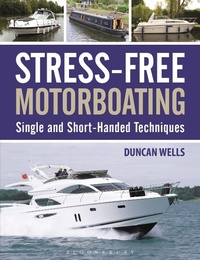
Stress-Free Motorboating
Single and Short-Handed Techniques
1. Auflage
Erschienen am 23. März 2017
160 Seiten
978-1-4729-4730-7 (ISBN)
Beschreibung
Stress-free Motorboating is the answer to all single- or short-handed crews' prayers. Highly illustrated with step by step photographs, this unique handbook tackles the most common motorboating situations anyone cruising along the coast or river will have to manage - whether cruising along a river or the coast.
It covers tricky procedures for getting off (and then back on) a marina berth, anchoring, mooring to a buoy or jetty, motoring in big seas, entering locks, and even picking up a man overboard, with QR codes linking to helpful instructional action videos.
Essential advice is given about fuel monitoring, engine care and maintenance, looking after batteries, and many more issues specific to motorboats.
Stress-free Motorboating will be a godsend to all crews, whether aboard a 35-footer, a sports runabout or a 60-foot displacement cruiser, whether crossing the Channel or just pottering along the coast or a river.
It covers tricky procedures for getting off (and then back on) a marina berth, anchoring, mooring to a buoy or jetty, motoring in big seas, entering locks, and even picking up a man overboard, with QR codes linking to helpful instructional action videos.
Essential advice is given about fuel monitoring, engine care and maintenance, looking after batteries, and many more issues specific to motorboats.
Stress-free Motorboating will be a godsend to all crews, whether aboard a 35-footer, a sports runabout or a 60-foot displacement cruiser, whether crossing the Channel or just pottering along the coast or a river.
Weitere Details
Auflage
1. Auflage
Sprache
Englisch
Verlagsort
London
Großbritannien
Verlagsgruppe
Bloomsbury Publishing PLC
ISBN-13
978-1-4729-4730-7 (9781472947307)
Copyright in bibliographic data and cover images is held by Nielsen Book Services Limited or by the publishers or by their respective licensors: all rights reserved.
Schweitzer Klassifikation
Weitere Ausgaben
Person
Duncan Wells is an RYA instructor and sailing school principal. He has written for many leading boating magazines in the UK and US. He is the author of the bestselling Stress-free Sailing, which has helped countless sailors learn helpful boat handling and berthing techniques (also published by Adlard Coles Nautical).
Inhalt
- Cover
- Half-title
- Title
- Copyright
- Contents
- ACKNOWLEDGEMENTS
- PREFACE
- 1 INTRODUCTION AND PHILOSOPHY
- 2 SKILLS AND DISCIPLINES
- Rope
- Attaching to the dock
- Knots
- The boathook
- Sharing a cleat
- Keep a clean head
- 3 ENGINES
- Dealing with breakdowns
- Alarms
- Fuel consumption and economy
- 4 CONTROLLING THE BOAT
- Types of propulsion
- What can you expect?
- How to make your boat go sideways
- Turning the boat 180° in its own length
- 5 THE BERTH
- Fixings to the shore
- Which side to moor
- Neighbours
- Fenders
- Mooring warps
- Positioning
- Prevailing wind
- 6 GETTING OFF THE BERTH
- Fendering
- Grip
- Everything handled from on board
- Slipping a long line
- Finger berth
- Measuring wind speed
- 7 GETTING ON TO THE BERTH
- The approach
- Ring moorings or hooped cleats
- Rafting up
- 8 MOORING BUOYS
- Picking up the buoy from alongside
- Types of buoy
- Approach and pick-up
- Slipping the mooring
- 9 ANCHORING
- Coding the cable
- Anchoring essentials
- Ground tackle
- How much scope to allow?
- Some quick tips for anchoring success
- 10 RIVERS AND CANALS
- Current
- Bank effect
- Getting on and off a pontoon
- Getting on to the dock
- Tell other boats what you are doing
- Colregs: IRPCS
- 11 WEATHER
- Weather scenarios
- What the clouds mean
- Frontal systems
- Things that affect you
- How wind affects the water
- Moon phases
- 12 NAVIGATION
- Speed limits
- GPS and paper charts
- Etiquette
- 13 SAFETY AND MOB STRATEGY
- Lifejackets
- Man overboard
- 14 SEASICKNESS
- What is seasickness?
- Preventative measures
- 15 EPILOGUE
- INDEX
