

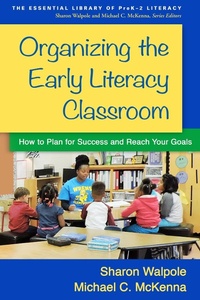
Organizing the Early Literacy Classroom
How to Plan for Success and Reach Your Goals
Erschienen am 20. Mai 2016
132 Seiten
978-1-4625-2655-0 (ISBN)
Beschreibung
PreK-2 classroom teachers; teacher educators and graduate students. May serve as a supplemental text in courses on elementary teaching methods and early childhood education.
Weitere Details
Weitere Ausgaben
Personen
Sharon Walpole, PhD, is Professor in the School of Education at the University of Delaware. She has extensive school-based experience designing and implementing tiered instructional programs. Dr. Walpole has also been involved in federally funded and other schoolwide reform projects. Her current work involves the design and effects of schoolwide reforms. She has coauthored or coedited several books, including How to Plan Differentiated Reading Instruction, Second Edition: Resources for Grades K-3; The Literacy Coach's Handbook, Second Edition; and Organizing the Early Literacy Classroom. Dr. Walpole is also Series Editor, with Michael C. McKenna, of The Essential Library of PreK-2 Literacy. She is a recipient of the Early Career Award for Significant Contributions to Literacy Research and Education from the Literacy Research Association and the Excellence in Teaching Award from the University of Delaware.
Michael C. McKenna, PhD, was Thomas G. Jewell Professor of Reading in the School of Education and Human Development at the University of Virginia until his death in 2016. He authored, coauthored, or edited more than 20 books and over 100 articles, chapters, and technical reports on a range of literacy topics. Dr. McKenna also served as Series Editor, with Sharon Walpole, of The Essential Library of PreK-2 Literacy. His research was sponsored by the National Reading Research Center and the Center for the Improvement of Early Reading Achievement. He was a corecipient of the Edward B. Fry Book Award from the Literacy Research Association and the Award for Outstanding Academic Books from the American Library Association, and a member of the Reading Hall of Fame.
Inhalt
1. Setting Teaching and Learning Goals
2. Building a Professional Library
3. Understanding Your Curriculum
4. Creating an Assessment Plan
5. Linking Assessments to Report Cards
6. Organizing Your Space
7. Organizing Your Time
8. Organizing Your Team
9. Organizing Your Children's Books
10. Establishing Routines
11. Planning Communications with Families
References
2. Building a Professional Library
3. Understanding Your Curriculum
4. Creating an Assessment Plan
5. Linking Assessments to Report Cards
6. Organizing Your Space
7. Organizing Your Time
8. Organizing Your Team
9. Organizing Your Children's Books
10. Establishing Routines
11. Planning Communications with Families
References
