

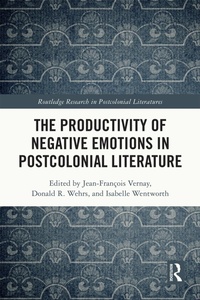
The Productivity of Negative Emotions in Postcolonial Literature
1. Auflage
Erschienen am 18. November 2024
298 Seiten
978-1-040-25543-8 (ISBN)
Beschreibung

This volume explores the possibilities and potentialities of "negative" affect in postcolonial literature and literary theory, featuring work on postcolonial studies, First Nations studies, cognitive cultural studies, cognitive historicism, reader response theory, postcolonial feminist studies, and trauma studies. The chapters of this work investigate negative affect in all its types and dimensions: analyses of the structures of feeling created by socio-political forces; assemblages and alliances produced by negative emotion; enactive interrelationships of emotion and environment; and the ethical implications of emotional response, to name a few. It seeks to rebrand "negative" emotions as productive forces which can paradoxically confer pleasure, agential power, and social progress through literary representation.
Rezensionen / Stimmen
"The Productivity of Negative Emotions in Postcolonial Literature promises to stand out among emotion studies for its simultaneous respect for scientific research and socio-historical context. Taking diverse approaches to emotions labeled "negative," its scholars engage the latest cognitive, philosophical, and historical studies of emotions without giving any one field the final word."- Laura Otis, Samuel Candler Dobbs Professor of English Emerita, Emory University, USA
"This collection draws a fascinating affective map of the postcolonial condition through a range of emotional conflicts articulated in literature that stretches across modernity all the way to our globalized and digitized present. Given the historical realities of power and oppression, this collection on the negative is a richly productive step both along the planetary terrain of postcolonial literary study and the restless archive of critical theory."
-Saikat Majumdar Professor of English and Creative Writing, Ashoka University, India
Weitere Details
Reihe
Auflage
1. Auflage
Sprache
Englisch
Verlagsort
London
Großbritannien
Verlagsgruppe
Taylor & Francis Ltd
Zielgruppe
Für höhere Schule und Studium
ISBN-13
978-1-040-25543-8 (9781040255438)
Copyright in bibliographic data and cover images is held by Nielsen Book Services Limited or by the publishers or by their respective licensors: all rights reserved.
Schweitzer Klassifikation
Weitere Ausgaben
Personen
Jean-Francois Vernay is the author of five monographs including The Seduction of Fiction: A Plea for Putting Emotions Back into Literary Interpretation (2016), translated into Mandarin by Dr Jun Feng, La seduction de la fiction (2019), and Neurocognitive Interpretations of Australian Literature: Criticism in the Age of Neuroawareness (Routledge, 2021). He has also edited a Routledge volume: The Rise of the Australian Neurohumanities: Conversations Between Neurocognitive Research and Australian Literature, published in 2021. His monographs have been taken up for translation into English, Arabic, Korean, and Mandarin.
Donald R. Wehrs, Hargis Professor of English Literature at Auburn University, Auburn, AL, USA, is editor or co-editor of five collections, most recently Cultural Memory: From the Sciences to the Humanities (Routledge, 2023) and The Palgrave Handbook of Affect Studies and Textual Criticism (2017). He is author of four monographs, most recently Ethical Sense and Literary Significance: Deep Sociality and the Cultural Agency of Imaginative Discourse (Routledge, 2024), as well as essays on literary theory, Shakespeare, postcolonial studies, 18th-century British fiction, and comparative literature.
Isabelle Wentworth is a lecturer in English at the Australian Catholic University. Her research is in cognitive literary criticism, particularly within the contemporary literature of Australia and South America. Her work has been recently published in Poetics Today, Textual Practice, Cognitive Systems Research, and Hispanic Studies Review, among other international journals. Her first monograph, Catching Time: Interaction, Cognition, and Temporality in the Novel (Routledge) was published in 2024.
Donald R. Wehrs, Hargis Professor of English Literature at Auburn University, Auburn, AL, USA, is editor or co-editor of five collections, most recently Cultural Memory: From the Sciences to the Humanities (Routledge, 2023) and The Palgrave Handbook of Affect Studies and Textual Criticism (2017). He is author of four monographs, most recently Ethical Sense and Literary Significance: Deep Sociality and the Cultural Agency of Imaginative Discourse (Routledge, 2024), as well as essays on literary theory, Shakespeare, postcolonial studies, 18th-century British fiction, and comparative literature.
Isabelle Wentworth is a lecturer in English at the Australian Catholic University. Her research is in cognitive literary criticism, particularly within the contemporary literature of Australia and South America. Her work has been recently published in Poetics Today, Textual Practice, Cognitive Systems Research, and Hispanic Studies Review, among other international journals. Her first monograph, Catching Time: Interaction, Cognition, and Temporality in the Novel (Routledge) was published in 2024.
Inhalt
List of Contributors
Foreword
Acknowledgments
Introduction / Donald R. Wehrs, Isabelle Wentworth, and Jean-Francois Vernay
THEORETICAL LINEAMENTS: NEGATIVE EMOTIONS AND THE AFFORDANCES OF FICTION
Chapter 1: Ontology of Diasporic Emotions in If You See Me, Don't Say Hi by Neel Patel / Angelo Monaco
Chapter 2: The Productivity of 'Negative Emotions' Through Shock Value Fiction: The Case of Australian Indigenous Writers / Jun Feng & Jean-Francois Vernay
Chapter 3: Negative Emotions in the Light of Neuropsychoanalysis: The Generative Matrix of Witi Ihimaera's Multigenerational Saga / Alistair Fox
Chapter 4: First-hand Experiences of the Transformation of Traumatic Memories and Cascading Emotions in the Creative Writing Process / Liane Gabora & Sue Woolfe.
Chapter 5: Managing COVID-19 Anger and Anxiety: The Quarantine Train and the Affective Functions of Online Poetry / Hannah Pardey
EMOTIONS OF LOSS:
Chapter 6: Representing and Resisting Maternal Melancholy in Buchi Emecheta's Second-class Citizen and The Joys of Motherhood / Sonya Andermahr
Chapter 7: Disaffection and Retrieved Agency in Lahiri's "Interpreter of Maladies"/ Donald R. Wehrs
Chapter 8: On Postcolonial Disappointment: Affect's Formal Politics in Post-Transition Narrative from South Africa / Andrew van der Vlies
EMOTIONS OF INSECURITY
Chapter 9: 'Solastalgia' as an Epistemic Approach: "A Map to the Next World," "Averno," and the Power of Negative Affect / Joydeep Chakraborty
Chapter 10: "The squeals and groans are the same": Horror and Subject-Development in Sydney Bridge Upside Down / William Shaw
Chapter 11: Fear in Indigenous Literatures of the Global South: The Poetry of Graciela Huinao and Ellen van Neerven / Isabelle Wentworth
Chapter 12: On Negative Emotions in Apocalyptic Cultural Memories: Literary Affects of Estrangement in "Postcolonial" Acadie / Matthew Cormier
EMOTIONS OF DISCONTENT
Chapter 13: "A Cold Rage Penetrated Her Body": The Transformative Power of Anger in Shahrnush Parsipur's Women Without Men / Melanie Heydari
Chapter 14: On the Other Side of Anger: Nature, Ecology and Culture in Rushdie's Shalimar, the Clown / Lalita Pandit Hogan
Chapter 15: Negative Affect to Positive Resistance: Indignation in Cesaire's Une Tempete / Bradley Irish
Index
Foreword
Acknowledgments
Introduction / Donald R. Wehrs, Isabelle Wentworth, and Jean-Francois Vernay
THEORETICAL LINEAMENTS: NEGATIVE EMOTIONS AND THE AFFORDANCES OF FICTION
Chapter 1: Ontology of Diasporic Emotions in If You See Me, Don't Say Hi by Neel Patel / Angelo Monaco
Chapter 2: The Productivity of 'Negative Emotions' Through Shock Value Fiction: The Case of Australian Indigenous Writers / Jun Feng & Jean-Francois Vernay
Chapter 3: Negative Emotions in the Light of Neuropsychoanalysis: The Generative Matrix of Witi Ihimaera's Multigenerational Saga / Alistair Fox
Chapter 4: First-hand Experiences of the Transformation of Traumatic Memories and Cascading Emotions in the Creative Writing Process / Liane Gabora & Sue Woolfe.
Chapter 5: Managing COVID-19 Anger and Anxiety: The Quarantine Train and the Affective Functions of Online Poetry / Hannah Pardey
EMOTIONS OF LOSS:
Chapter 6: Representing and Resisting Maternal Melancholy in Buchi Emecheta's Second-class Citizen and The Joys of Motherhood / Sonya Andermahr
Chapter 7: Disaffection and Retrieved Agency in Lahiri's "Interpreter of Maladies"/ Donald R. Wehrs
Chapter 8: On Postcolonial Disappointment: Affect's Formal Politics in Post-Transition Narrative from South Africa / Andrew van der Vlies
EMOTIONS OF INSECURITY
Chapter 9: 'Solastalgia' as an Epistemic Approach: "A Map to the Next World," "Averno," and the Power of Negative Affect / Joydeep Chakraborty
Chapter 10: "The squeals and groans are the same": Horror and Subject-Development in Sydney Bridge Upside Down / William Shaw
Chapter 11: Fear in Indigenous Literatures of the Global South: The Poetry of Graciela Huinao and Ellen van Neerven / Isabelle Wentworth
Chapter 12: On Negative Emotions in Apocalyptic Cultural Memories: Literary Affects of Estrangement in "Postcolonial" Acadie / Matthew Cormier
EMOTIONS OF DISCONTENT
Chapter 13: "A Cold Rage Penetrated Her Body": The Transformative Power of Anger in Shahrnush Parsipur's Women Without Men / Melanie Heydari
Chapter 14: On the Other Side of Anger: Nature, Ecology and Culture in Rushdie's Shalimar, the Clown / Lalita Pandit Hogan
Chapter 15: Negative Affect to Positive Resistance: Indignation in Cesaire's Une Tempete / Bradley Irish
Index
