

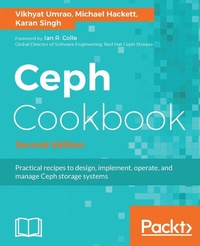
Ceph Cookbook
Practical recipes to design, implement, operate, and manage Ceph storage systems
2. Auflage
Erschienen am 8. Juli 2025
466 Seiten
978-1-78839-215-0 (ISBN)
Beschreibung
No detailed description available for "Ceph Cookbook".
Weitere Details
Person
Singh Karan :
Karan is an IT expert and passionate tech enthusiast living with his beautiful wife Monika in Finland. He holds Honours degree in Bachelor of Computer Science and a Master degree in System Engineering from BITS, Pilani. Apart from this, he is a certified professional for technologies like OpenStack, NetApp and Oracle Solaris. Karan is currently working as a System Specialist of Storage and Cloud Platform for CSC - IT Center for Science Ltd. focusing all his energies on providing IaaS cloud solutions based on OpenStack and Ceph and building economic multi-petabyte storage system using Ceph. Karan possesses a rich skill set and working experience of a variety of cloud technologies. He devotes a part of his time to R&D and learning technologies. He is also the author of the very first book on Ceph titled Learning Ceph, published in 2014. Karan possesses extensive system administration skills and has excellent working experience on a variety of Unix environments, backup, enterprise storage systems, and cloud platforms. When not working on Ceph and OpenStack, Karan can be found working with Configuration management, containers and devops related tools. He loves writing about technologies and is an avid blogger. You can reach him on Twitter. Hackett Michael :
Michael Hackett is a storage and SAN expert in customer support. He has been working on Ceph and storage-related products for over 12 years. Apart from this, he holds several storage and SAN-based certifications and prides himself on his ability to troubleshoot and adapt to new complex issues. Michael is currently working at Red Hat, based in Massachusetts, where he is a principal software maintenance engineer for Red Hat Ceph and the technical product lead for the global Ceph team. Michael lives in Massachusetts with his wife, Nicole, his two sons, and their dog. He is an avid sports fan and enjoys time with his family.Umrao Vikhyat :
Vikhyat Umrao has 9 years of experience with distributed storage products as a sustenance engineer and in the last couple of years, he has been working on software-defined storage technology, with specific expertise in Ceph Unified Storage. He has been working on Ceph for over 3 years now and in his current position at Red Hat, he focuses on the support and development of Ceph to solve Red Hat Ceph storage customer issues and upstream reported issues. He is based in the Greater Boston area, where he is a principal software maintenance engineer for Red Hat Ceph Storage. Vikhyat lives with his wife, Pratima, and he likes to explore new places.
Karan is an IT expert and passionate tech enthusiast living with his beautiful wife Monika in Finland. He holds Honours degree in Bachelor of Computer Science and a Master degree in System Engineering from BITS, Pilani. Apart from this, he is a certified professional for technologies like OpenStack, NetApp and Oracle Solaris. Karan is currently working as a System Specialist of Storage and Cloud Platform for CSC - IT Center for Science Ltd. focusing all his energies on providing IaaS cloud solutions based on OpenStack and Ceph and building economic multi-petabyte storage system using Ceph. Karan possesses a rich skill set and working experience of a variety of cloud technologies. He devotes a part of his time to R&D and learning technologies. He is also the author of the very first book on Ceph titled Learning Ceph, published in 2014. Karan possesses extensive system administration skills and has excellent working experience on a variety of Unix environments, backup, enterprise storage systems, and cloud platforms. When not working on Ceph and OpenStack, Karan can be found working with Configuration management, containers and devops related tools. He loves writing about technologies and is an avid blogger. You can reach him on Twitter. Hackett Michael :
Michael Hackett is a storage and SAN expert in customer support. He has been working on Ceph and storage-related products for over 12 years. Apart from this, he holds several storage and SAN-based certifications and prides himself on his ability to troubleshoot and adapt to new complex issues. Michael is currently working at Red Hat, based in Massachusetts, where he is a principal software maintenance engineer for Red Hat Ceph and the technical product lead for the global Ceph team. Michael lives in Massachusetts with his wife, Nicole, his two sons, and their dog. He is an avid sports fan and enjoys time with his family.Umrao Vikhyat :
Vikhyat Umrao has 9 years of experience with distributed storage products as a sustenance engineer and in the last couple of years, he has been working on software-defined storage technology, with specific expertise in Ceph Unified Storage. He has been working on Ceph for over 3 years now and in his current position at Red Hat, he focuses on the support and development of Ceph to solve Red Hat Ceph storage customer issues and upstream reported issues. He is based in the Greater Boston area, where he is a principal software maintenance engineer for Red Hat Ceph Storage. Vikhyat lives with his wife, Pratima, and he likes to explore new places.
Inhalt
- Cover
- Copyright
- Credits
- Disclaimer
- Foreword
- About the Authors
- About the Reviewer
- www.PacktPub.com
- Customer Feedback
- Table of Contents
- Preface
- Chapter 1: Ceph - Introduction and Beyond
- Introduction
- Ceph - the beginning of a new era
- Software-defined storage - SDS
- Cloud storage
- Unified next-generation storage architecture
- RAID - the end of an era
- RAID rebuilds are painful
- RAID spare disks increases TCO
- RAID can be expensive and hardware dependent
- The growing RAID group is a challenge
- The RAID reliability model is no longer promising
- Ceph - the architectural overview
- Planning a Ceph deployment
- Setting up a virtual infrastructure
- Getting ready
- How to do it...
- Installing and configuring Ceph
- Creating the Ceph cluster on ceph-node1
- How to do it...
- Scaling up your Ceph cluster
- How to do it.
- Using the Ceph cluster with a hands-on approach
- How to do it...
- Chapter 2: Working with Ceph Block Device
- Introduction
- Configuring Ceph client
- How to do it...
- Creating Ceph Block Device
- How to do it...
- Mapping Ceph Block Device
- How to do it...
- Resizing Ceph RBD
- How to do it...
- Working with RBD snapshots
- How to do it...
- Working with RBD clones
- How to do it...
- Disaster recovery replication using RBD mirroring
- How to do it...
- Configuring pools for RBD mirroring with one way replication
- How to do it...
- Configuring image mirroring
- How to do it...
- Configuring two-way mirroring
- How to do it...
- See also
- Recovering from a disaster!
- How to do it...
- Chapter 3: Working with Ceph and OpenStack
- Introduction
- Ceph - the best match for OpenStack
- Setting up OpenStack
- How to do it...
- Configuring OpenStack as Ceph clients
- How to do it...
- Configuring Glance for Ceph backend
- How to do it.
- Configuring Cinder for Ceph backend
- How to do it...
- Configuring Nova to boot instances from Ceph RBD
- How to do it.
- Configuring Nova to attach Ceph RBD
- How to do it...
- Chapter 4: Working with Ceph Object Storage
- Introduction
- Understanding Ceph object storage
- RADOS Gateway standard setup, installation, and configuration
- Setting up the RADOS Gateway node
- How to do it.
- Installing and configuring the RADOS Gateway
- How to do it.
- Creating the radosgw user
- How to do it.
- See also.
- Accessing the Ceph object storage using S3 API
- How to do it.
- Configuring DNS
- Configuring the s3cmd client
- Configure the S3 client (s3cmd) on client-node1
- Accessing the Ceph object storage using the Swift API
- How to do it...
- Integrating RADOS Gateway with OpenStack Keystone
- How to do it...
- Integrating RADOS Gateway with Hadoop S3A plugin
- How to do it...
- Chapter 5: Working with Ceph Object Storage Multi-Site v2
- Introduction
- Functional changes from Hammer federated configuration
- RGW multi-site v2 requirement
- Installing the Ceph RGW multi-site v2 environment
- How to do it...
- Configuring Ceph RGW multi-site v2
- How to do it...
- Configuring a master zone
- Configuring a secondary zone
- Checking the synchronization status
- Testing user, bucket, and object sync between master and secondary sites
- How to do it...
- Chapter 6: Working with the Ceph Filesystem
- Introduction
- Understanding the Ceph Filesystem and MDS
- Deploying Ceph MDS
- How to do it...
- Accessing Ceph FS through kernel driver
- How to do it...
- Accessing Ceph FS through FUSE client
- How to do it...
- Exporting the Ceph Filesystem as NFS
- How to do it...
- Ceph FS - a drop-in replacement for HDFS
- Chapter 7: Monitoring Ceph Clusters
- Introduction
- Monitoring Ceph clusters - the classic way
- How to do it...
- Checking the cluster's health
- Monitoring cluster events
- The cluster utilization statistics
- Checking the cluster's status
- The cluster authentication entries
- Monitoring Ceph MON
- How to do it...
- Checking the MON status
- Checking the MON quorum status
- Monitoring Ceph OSDs
- How to do it...
- OSD tree view
- OSD statistics
- Checking the CRUSH map
- Monitoring PGs
- Monitoring Ceph MDS
- How to do it...
- Introducing Ceph Metrics and Grafana
- collectd
- Grafana
- Installing and configuring Ceph Metrics with the Grafana dashboard
- How to do it...
- Monitoring Ceph clusters with Ceph Metrics with the Grafana dashboard
- How to do it ...
- Chapter 8: Operating and Managing a Ceph Cluster
- Introduction
- Understanding Ceph service management
- Managing the cluster configuration file
- How to do it...
- Adding monitor nodes to the Ceph configuration file
- Adding an MDS node to the Ceph configuration file
- Adding OSD nodes to the Ceph configuration file
- Running Ceph with systemd
- How to do it...
- Starting and stopping all daemons
- Querying systemd units on a node
- Starting and stopping all daemons by type
- Starting and stopping a specific daemon
- Scale-up versus scale-out
- Scaling out your Ceph cluster
- How to do it...
- Adding the Ceph OSD
- Adding the Ceph MON
- There's more...
- Scaling down your Ceph cluster
- How to do it...
- Removing the Ceph OSD
- Removing the Ceph MON
- Replacing a failed disk in the Ceph cluster
- How to do it...
- Upgrading your Ceph cluster
- How to do it...
- Maintaining a Ceph cluster
- How to do it...
- How it works...
- Throttle the backfill and recovery:
- Chapter 9: Ceph under the Hood
- Introduction
- Ceph scalability and high availability
- Understanding the CRUSH mechanism
- CRUSH map internals
- How to do it...
- How it works...
- CRUSH tunables
- The evolution of CRUSH tunables
- Argonaut - legacy
- Firefly - CRUSH_TUNABLES3
- Hammer - CRUSH_V4
- Jewel - CRUSH_TUNABLES5
- Ceph and kernel versions that support given tunables
- Warning when tunables are non-optimal
- A few important points
- Ceph cluster map
- High availability monitors
- Ceph authentication and authorization
- Ceph authentication
- Ceph authorization
- How to do it.
- I/O path from a Ceph client to a Ceph cluster
- Ceph Placement Group
- How to do it.
- Placement Group states
- Creating Ceph pools on specific OSDs
- How to do it...
- Chapter 10: Production Planning and Performance Tuning for Ceph
- Introduction
- The dynamics of capacity, performance, and cost
- Choosing hardware and software components for Ceph
- Processor
- Memory
- Network
- Disk
- Partitioning the Ceph OSD journal
- Partitioning Ceph OSD data
- Operating system
- OSD filesystem
- Ceph recommendations and performance tuning
- Tuning global clusters
- Tuning Monitor
- OSD tuning
- OSD general settings
- OSD journal settings
- OSD filestore settings
- OSD recovery settings
- OSD backfilling settings
- OSD scrubbing settings
- Tuning the client
- Tuning the operating system
- Tuning the network
- Sample tuning profile for OSD nodes
- How to do it...
- Ceph erasure-coding
- Erasure code plugin
- Creating an erasure-coded pool
- How to do it...
- Ceph cache tiering
- Writeback mode
- Read-only mode
- Creating a pool for cache tiering
- How to do it...
- See also
- Creating a cache tier
- How to do it...
- Configuring a cache tier
- How to do it...
- Testing a cache tier
- How to do it...
- Cache tiering - possible dangers in production environments
- Known good workloads
- Known bad workloads
- Chapter 11: The Virtual Storage Manager for Ceph
- Introductionc
- Understanding the VSM architecture
- The VSM controller
- The VSM agent
- Setting up the VSM environment
- How to do it...
- Getting ready for VSM
- How to do it...
- Installing VSM
- How to do it...
- Creating a Ceph cluster using VSM
- How to do it...
- Exploring the VSM dashboard
- Upgrading the Ceph cluster using VSM
- VSM roadmap
- VSM resources
- Chapter 12: More on Ceph
- Introduction
- Disk performance baseline
- Single disk write performance
- How to do it...
- Multiple disk write performance
- How to do it...
- Single disk read performance
- How to do it...
- Multiple disk read performance
- How to do it...
- Results
- Baseline network performance
- How to do it...
- See also
- Ceph rados bench
- How to do it...
- How it works...
- RADOS load-gen
- How to do it...
- How it works...
- There's more...
- Benchmarking the Ceph Block Device
- How to do it...
- How it works...
- See also
- Benchmarking Ceph RBD using FIO
- How to do it...
- See Also
- Ceph admin socket
- How to do it...
- Using the ceph tell command
- How to do it...
- Ceph REST API
- How to do it...
- Profiling Ceph memory
- How to do it...
- The ceph-objectstore-tool
- How to do it...
- How it works...
- Using ceph-medic
- How to do it...
- How it works...
- See also
- Deploying the experimental Ceph BlueStore
- How to do it...
- See Also
- Chapter 13: An Introduction to Troubleshooting Ceph
- Introduction
- Initial troubleshooting and logging
- How to do it...
- Troubleshooting network issues
- How to do it...
- Troubleshooting monitors
- How to do it...
- Troubleshooting OSDs
- How to do it...
- Troubleshooting placement groups
- How to do it...
- There's more.
- Chapter 14: Upgrading Your Ceph Cluster from Hammer to Jewel
- Introduction
- Upgrading your Ceph cluster from Hammer to Jewel
- How to do it...
- Upgrading the Ceph monitor nodes
- Upgrading the Ceph OSD nodes
- Upgrading the Ceph Metadata Server
- See also
- Index
