

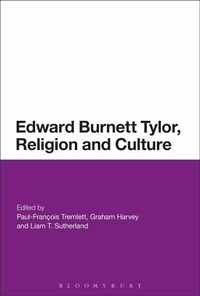
Edward Burnett Tylor, Religion and Culture
1. Auflage
Erschienen am 21. September 2017
240 Seiten
978-1-350-00343-9 (ISBN)
Beschreibung

Through revisiting and challenging what we think we know about the work of Edward Burnett Tylor, a founding figure of anthropology, this volume explores new connections and insights that link Tylor and his work to present concerns in new and important ways.
At the publication of Primitive Culture in 1871, Tylor was at the centre of anthropological research on religion and culture, but today Tylor's position in the anthropological canon is rarely acknowledged. Edward Burnett Tylor, Religion and Culture does not claim to present a definitive, new Tylor. The old Tylor - the founder of British anthropology; the definer of religion; the intellectualist; the evolutionist; the liberal; the utilitarian; the avatar of white, Protestant rationalism; the Tylor of the canon - remains. Part I explore debates and contexts of Tylor's lifetime, while the chapters in Part II explore a series of new Tylors, including Tylor the ethnographer and Tylor the Spiritualist, re-writing the legacy of the founder of anthropology in the process.
Edward Burnett Tylor, Religion and Culture is essential reading for anyone interested in the study of religion and the anthropology of religion.
At the publication of Primitive Culture in 1871, Tylor was at the centre of anthropological research on religion and culture, but today Tylor's position in the anthropological canon is rarely acknowledged. Edward Burnett Tylor, Religion and Culture does not claim to present a definitive, new Tylor. The old Tylor - the founder of British anthropology; the definer of religion; the intellectualist; the evolutionist; the liberal; the utilitarian; the avatar of white, Protestant rationalism; the Tylor of the canon - remains. Part I explore debates and contexts of Tylor's lifetime, while the chapters in Part II explore a series of new Tylors, including Tylor the ethnographer and Tylor the Spiritualist, re-writing the legacy of the founder of anthropology in the process.
Edward Burnett Tylor, Religion and Culture is essential reading for anyone interested in the study of religion and the anthropology of religion.
Weitere Details
Auflage
1. Auflage
Sprache
Englisch
Verlagsort
London
Großbritannien
Verlagsgruppe
Bloomsbury Publishing PLC
Zielgruppe
Für Beruf und Forschung
ISBN-13
978-1-350-00343-9 (9781350003439)
Copyright in bibliographic data and cover images is held by Nielsen Book Services Limited or by the publishers or by their respective licensors: all rights reserved.
Schweitzer Klassifikation
Weitere Ausgaben
Andere Ausgaben
Paul-Francois Tremlett | Graham Harvey | Liam T. Sutherland
Edward Burnett Tylor, Religion and Culture
Buch
03/2019
Bloomsbury Academic
61,96 €
Versand in 15-20 Tagen
Paul-Francois Tremlett | Graham Harvey | Liam T. Sutherland
Edward Burnett Tylor, Religion and Culture
Buch
09/2017
Bloomsbury Academic
177,78 €
Versand in 15-20 Tagen
Personen
Paul-Francois Tremlett is Senior Lecturer of Religious Studies at The Open University, UK
Liam Sutherland is a doctoral student in Religious Studies at the University of Edinburgh, UK
Graham Harvey is Professor of Religious Studies at the Open University, UK
Liam Sutherland is a doctoral student in Religious Studies at the University of Edinburgh, UK
Graham Harvey is Professor of Religious Studies at the Open University, UK
Inhalt
List of Contributors
Acknowledgements
Introduction: Why Tylor, Why Now?-Graham Harvey, Liam Sutherland and Paul-François Tremlett
Part One: Contexts and Debates
1. 'The Debate between E. B. Tylor and Andrew Lang over the Theory of Primitive Monotheism: Implications for Contemporary Studies of Indigenous Religions', James Cox (Professor and Honorary Fellow in the School of Divinity at the University of Edinburgh, Scotland)
2. 'Tylor, "Fetishes" and the Matter of Animism', Graham Harvey (Professor of Religious Studies at the Open University, UK)
3. '"Belief in Spiritual Beings": E. B. Tylor's (Primitive) Cognitive Theory of Religion', Jonathan Jong (Research Fellow and Co-Lead for Brain, Belief and Behaviour at Coventry University, UK)
4. 'From Nineteenth- to Twentieth-Century Theorizing about Myth in Britain and Germany: Tylor versus Blumenberg', Robert A. Segal (Professor and holds a Chair in Religious Studies at the University of Aberdeen, Scotland)
5. 'Tylor and Debates about the Definition of "Religion": Then and Now', Liam Sutherland (doctoral candidate at the University of Edinburgh, Scotland)
Part Two: Tylor beyond the Canon
6. 'Edward Burnett Tylor as Ethnographer', Miguel Astor-Aguilera (Associate Professor in Religious Studies at Arizona State University, USA)
7. '"Necromancy is a Religion": Tylor's Discussion of Spiritualism in Primitive Culture and in his Diary', Anne Kalvig (Professor of Religious Studies at the University of Stavanger, Norway)
8. 'Edward Tylor, Archaeologist? The Archaeological Foundations of 'Mr Tylor's Science'', Katy Soar (Visiting Lecturer at Royal Holloway, University of London, an Honorary Research Fellow at the University of Nottingham and an Honorary Research Associate at the Open University, UK)
9. 'Telling Tylorian Tales: Reflections on Language, Myth and Religion', Martin Stringer (Professor and Pro-Vice Chancellor at Swansea University, Wales)
10. 'Deconstructing the Survival in E. B. Tylor's Primitive Culture: From Memes to Dreams and Bricolage', Paul-François Tremlett (Senior Lecturer in Religious Studies at the Open University, UK)
Bibliography
Index
Acknowledgements
Introduction: Why Tylor, Why Now?-Graham Harvey, Liam Sutherland and Paul-François Tremlett
Part One: Contexts and Debates
1. 'The Debate between E. B. Tylor and Andrew Lang over the Theory of Primitive Monotheism: Implications for Contemporary Studies of Indigenous Religions', James Cox (Professor and Honorary Fellow in the School of Divinity at the University of Edinburgh, Scotland)
2. 'Tylor, "Fetishes" and the Matter of Animism', Graham Harvey (Professor of Religious Studies at the Open University, UK)
3. '"Belief in Spiritual Beings": E. B. Tylor's (Primitive) Cognitive Theory of Religion', Jonathan Jong (Research Fellow and Co-Lead for Brain, Belief and Behaviour at Coventry University, UK)
4. 'From Nineteenth- to Twentieth-Century Theorizing about Myth in Britain and Germany: Tylor versus Blumenberg', Robert A. Segal (Professor and holds a Chair in Religious Studies at the University of Aberdeen, Scotland)
5. 'Tylor and Debates about the Definition of "Religion": Then and Now', Liam Sutherland (doctoral candidate at the University of Edinburgh, Scotland)
Part Two: Tylor beyond the Canon
6. 'Edward Burnett Tylor as Ethnographer', Miguel Astor-Aguilera (Associate Professor in Religious Studies at Arizona State University, USA)
7. '"Necromancy is a Religion": Tylor's Discussion of Spiritualism in Primitive Culture and in his Diary', Anne Kalvig (Professor of Religious Studies at the University of Stavanger, Norway)
8. 'Edward Tylor, Archaeologist? The Archaeological Foundations of 'Mr Tylor's Science'', Katy Soar (Visiting Lecturer at Royal Holloway, University of London, an Honorary Research Fellow at the University of Nottingham and an Honorary Research Associate at the Open University, UK)
9. 'Telling Tylorian Tales: Reflections on Language, Myth and Religion', Martin Stringer (Professor and Pro-Vice Chancellor at Swansea University, Wales)
10. 'Deconstructing the Survival in E. B. Tylor's Primitive Culture: From Memes to Dreams and Bricolage', Paul-François Tremlett (Senior Lecturer in Religious Studies at the Open University, UK)
Bibliography
Index
