

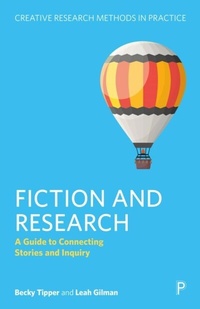
Fiction and Research
A Guide to Connecting Stories and Inquiry
1. Auflage
Erschienen am 30. Juli 2024
164 Seiten
978-1-4473-6974-5 (ISBN)
Beschreibung

Discover how fiction can breathe life into your research.
Fiction - in the form of everyday storytelling, prose, plays, films, folktales, and comics - can be powerful and resonant. This engaging book introduces the ways in which fiction can inform, inspire and enliven all kinds of research.
Presenting a range of case studies and examples from diverse disciplines, this book explores how and why researchers have employed fiction and fictional techniques throughout the research process, including using fiction to communicate research findings. An essential primer to thinking creatively with fiction , the book:
- discusses a range of theoretical perspectives on the use of fiction in research;
- explores challenges and ethical questions for researchers using fiction;
- offers practical advice, creative prompts and resources.
Enabling the reader to reflect on how fiction might be used in their own research, this comprehensive introduction will help students and experienced researchers embark on their own research-based fiction projects in no time.
Fiction - in the form of everyday storytelling, prose, plays, films, folktales, and comics - can be powerful and resonant. This engaging book introduces the ways in which fiction can inform, inspire and enliven all kinds of research.
Presenting a range of case studies and examples from diverse disciplines, this book explores how and why researchers have employed fiction and fictional techniques throughout the research process, including using fiction to communicate research findings. An essential primer to thinking creatively with fiction , the book:
- discusses a range of theoretical perspectives on the use of fiction in research;
- explores challenges and ethical questions for researchers using fiction;
- offers practical advice, creative prompts and resources.
Enabling the reader to reflect on how fiction might be used in their own research, this comprehensive introduction will help students and experienced researchers embark on their own research-based fiction projects in no time.
Rezensionen / Stimmen
"This is a gem of a book! Engagingly written with fascinating examples, it is inspirational in its approach to the exciting interface of fiction and research, yet also practical in its focus on critical thinking, reflective questions and creative exercises. An essential part of any creative researcher's toolkit." Jennifer Mason, University of Manchester "A compelling, detailed and comprehensive guide for anyone interested in the relationship between research and fiction. Entwining literary and academic examples and references, it is accessible, warm and thought-provoking!" Candice Satchwell, University of Central Lancashire "This is a wonderful work that I wish existed long before I embarked on a path combining roles as researcher and fiction-writer. Tipper and Gilman do a marvellous job looking at the generative intersection of fiction and research and discussing the potentials, pitfalls, hopes, and possible failures at each turn. I felt so inspired reading this that I had to put the book down to jot down all the ideas that kept popping into my head." Sherine Hamdy, University of California, IrvineWeitere Details
Reihe
Auflage
First Edition
Sprache
Englisch
Verlagsort
Bristol
Großbritannien
Verlagsgruppe
Bristol University Press
Zielgruppe
Für höhere Schule und Studium
Illustrationen
7 s/w Abbildungen
7 Illustrations, black and white
Dateigröße
1,86 MB
ISBN-13
978-1-4473-6974-5 (9781447369745)
Copyright in bibliographic data and cover images is held by Nielsen Book Services Limited or by the publishers or by their respective licensors: all rights reserved.
Schweitzer Klassifikation
Weitere Ausgaben
Andere Ausgaben
Buch
07/2024
1. Auflage
Policy Press
81,00 €
Versand in 15-20 Tagen
E-Book
07/2024
1. Auflage
Policy Press
34,99 €
Als Download verfügbar
Buch
07/2024
1. Auflage
Policy Press
25,00 €
Versand in 15-20 Tagen
Personen
Becky Tipper is a freelance writer and researcher.
Leah Gilman is Wellcome Trust Research Fellow in the Department of Sociological Studies at The University of Sheffield.
Leah Gilman is Wellcome Trust Research Fellow in the Department of Sociological Studies at The University of Sheffield.
Inhalt
Part 1: Thinking about Fiction and Research
1. Tracing Connections between Fiction and Research
2. Theoretical Approaches to Fiction and Research
Part 2: Fiction in Practice
3. Examples of Fiction in Practice
4. Difficult Questions
Part 3: Creating and Sharing Fiction
5. Crafting Fictions: Practical Notes and Creative Prompts
6. Next Steps: Sharing Research-Fictions
1. Tracing Connections between Fiction and Research
2. Theoretical Approaches to Fiction and Research
Part 2: Fiction in Practice
3. Examples of Fiction in Practice
4. Difficult Questions
Part 3: Creating and Sharing Fiction
5. Crafting Fictions: Practical Notes and Creative Prompts
6. Next Steps: Sharing Research-Fictions
