

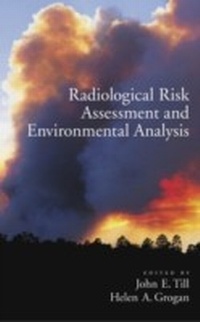
Radiological Risk Assessment and Environmental Analysis
1. Auflage
Erschienen am 10. Juli 2008
729 Seiten
978-0-19-972291-4 (ISBN)
Beschreibung

Radiological Risk Assessment and Environmental Analysis comprehensively explains methods used for estimating risk to people exposed to radioactive materials released to the environment by nuclear facilities or in an emergency such as a nuclear terrorist event. This is the first book that merges the diverse disciplines necessary for estimating where radioactive materials go in the environment and the risk they present to people. It is not only essential to managers and scientists, but is also a teaching text.
The chapters are arranged to guide the reader through the risk assessment process, beginning with the source term (where the radioactive material comes from) and ending with the conversion to risk. In addition to presenting mathematical models used in risk assessment, data is included so the reader can perform the calculations. Each chapter also provides examples and working problems.
The book will be a critical component of the rebirth of nuclear energy now taking place, as well as an essential resource to prepare for and respond to a nuclear emergency.
Weitere Details
Weitere Ausgaben
Andere Ausgaben
John E. Till | Helen Grogan
Radiological Risk Assessment and Environmental Analysis
Buch
07/2008
Oxford University Press Inc
173,20 €
Versand in 15-20 Tagen
Personen
John E. Till is president and founder of Risk Assessment Corporation (RAC), based in Neeses. South Carolina.
Helen A. Grogan is president of Cascade Scientific, Inc., based in Bend, Oregon.
Inhalt
- Intro
- Contents
- Contributors
- 1 The Radiological Assessment Process
- Radiological Assessment Process
- Source Term
- Environmental Transport
- Exposure Factors
- Conversion to Dose
- Conversion of Dose to Risk
- Uncertainty Analysis
- Validation
- Communication of Dose and Risk and Stakeholder Participation
- Conclusion
- References
- 2 Radionuclide Source Terms
- Radionuclides of Interest and Their Properties
- Situations That Do Not Require Source Terms
- Human Activities Producing Releases of Radionuclides
- Uranium Mining
- Uranium Milling
- Uranium Conversion
- Uranium Enrichment
- Weapon Component and Fuel Fabrication
- Reactors
- Fuel Processing Plants
- Solid Waste Disposal
- Source Term Development for Facilities
- Source Terms for Prospective Analyses
- Source Terms for Retrospective Analyses
- Problems
- References
- 3 Atmospheric Transport of Radionuclides
- The Atmosphere
- Composition
- Vertical Extent Important for Atmospheric Releases
- Scales of Motion
- Input Data for Atmospheric Transport and Diffusion Calculations
- Source
- Winds
- Turbulence and Stability
- Atmospheric Stability Categories
- Modeling of Transport and Diffusion
- Gaussian Diffusion Models
- Puff-Transport and Diffusion Models
- Multibox Models
- Particle-in-Cell Models
- Screening Models
- Atmospheric Removal Processes
- Model Validation
- Guidelines for Selecting Models
- Regulatory Models
- Conclusions
- Problems
- References
- 4 Surface Water Transport of Radionuclides
- Basic Transport and Fate Mechanisms
- Transport
- Intermedia Transfer
- Degradation/Decay
- Transformation
- Radionuclide Contributions from Other Environmental Media
- Radionuclide Transport Models
- Accidental Radionuclide Releases
- Routine Long-Term Radionuclide Releases
- Rivers
- Estuaries
- Coastal Waters and Oceans
- Lakes
- Sediment Effects
- Numerical Modeling
- Chernobyl Nuclear Accident Aquatic Assessment
- Radionuclide Transport in Rivers
- Aquatic Pathways and Their Radiation Dose Contributions
- New Chernobyl Development
- Problems
- References
- 5 Transport of Radionuclides in Groundwater
- Applications of Groundwater Models for Radionuclide Migration
- Geologic Isolation of High-Level Waste
- Shallow Land Burial
- Uranium Mining and Milling
- Nuclear Power Plant Accidents
- Types of Groundwater Models
- Groundwater Models for High-Level Waste Repositories
- Groundwater Models for Shallow Land Burial of Low-Level Waste
- Groundwater Models for Mill Tailings Waste Migration
- Equations for Groundwater Flow and Radioactivity Transport
- Groundwater Flow
- Mass Transport
- Chain Decay of Radionuclides
- Percolation of Water into the Ground
- Parameters for Transport and Flow Equations
- Diffusion and Dispersion in Porous Media
- Porosity and Effective Porosity
- Hydraulic Conductivity for Saturated Flow
- Sorption, Retardation, and Colloids
- Methods of Solution for Groundwater Flow and Transport
- Numerical Methods
- Analytical Solutions of the Convective-Dispersive Equations
- Simplified Analytical Methods for Minimum Dilution
- Models for Population Doses
- Source Term Models for Low-Level Waste
- Model Validation and Calibration
- Misuse of Models
- Problems
- References
- 6 Terrestrial Food Chain Pathways: Concepts and Models
- Conceptual Model of the Terrestrial Environment
- Strategies for Evaluating Food Chain Transport
- Predictive Approaches
- Mechanistic Models: The Mathematical Foundations for Single Compartments
- Concepts and Terminology of Tracer Kinetics
- Single-Compartment, First-Order Loss Systems
- Single-Compartment, Non-First-Order Loss Systems
- Individual Transport Processes: Concepts and Mathematical Formulations
- Types of Processes
- Deposition from Air to Soil and Vegetation
- Transport from Soil to Vegetation
- Transport from Vegetation to Soil
- Transport within the Soil Column
- Transport from Vegetation to Animals
- Transport from Soil to Animals
- Transfers to Animal-Derived Human Food Products
- Ingestion Pathways to Humans
- Dynamic Multicompartment Models: Putting It All Together
- Conclusions
- Problems
- References
- 7 Aquatic Food Chain Pathways
- Aquatic Ecosystem Classification
- Conceptual Model for an Aquatic Environment
- Physicochemical Processes
- Radionuclide Uptake and Concentration Factors
- Examples of Bioconcentration Factors
- Bioconcentration Factors in Screening-Level Risk Estimations
- Bioaccumulation Factors in Estimating Exposure
- Bioaccumulation under Nonequilibrium Conditions: The Chernobyl Cooling Pond Example
- Case Studies in Exposure and Bioaccumulation
- Discussion of the Chernobyl Modeling Results
- Problems
- References
- 8 Site Conceptual Exposure Models
- Evaluation Area
- Interested Party Input
- Exposure Pathways
- Sources and Source Areas
- Radionuclides
- Exposure Areas
- Potentially Exposed Persons
- Behaviors and Activities
- Exposure Media
- Exposure Routes
- Transport Mechanisms
- Transfer Mechanisms
- Exposure Scenarios
- Exposure Factors
- Problems
- References
- 9 Internal Dosimetry
- External versus Internal Exposure
- Internal Dose Control
- Regulatory Requirements
- ICRP Publication 26 Techniques
- ICRP Publication 30 Techniques
- Calculation of the Committed Dose Equivalent
- Dosimetric Models Used in the ICRP 30 Calculations
- Recent Recommendations
- ICRP Publication 60
- Age-Dependent Doses to the Public (ICRP Publications 56, 67, 69, 71, and 72)
- ICRP Publication 89
- ICRP Publications 88 and 95
- Summary
- Problems
- References
- 10 External Dosimetry
- Dose Coefficients for External Exposure
- Definition of External Dose Coefficient
- Compilation of External Dose Coefficients
- Description of Dose Coefficients in Current Federal Guidance
- Applicability of Dose Coefficients
- Effective Dose Coefficients
- Dose Coefficients for Other Age Groups
- Corrections to Dose Coefficients for Photons
- Shielding during Indoor Residence
- Effects of Ground Roughness
- Exposure during Boating Activities
- Exposure to Contaminated Shorelines
- Point-Kernel Method
- Description of the Point-Kernel Method
- Point-Kernel Method for Photons
- Applications of the Point-Kernel Method for Photons
- Point-Kernel Method for Electrons
- Problems
- References
- 11 Estimating and Applying Uncertainty in Assessment Models
- Why Perform an Uncertainty Analysis?
- Describing Uncertainty
- Probability Distributions
- Descriptive Statistics
- Statistical Intervals
- Typical Distributions
- Correlations and Multivariate Distributions
- Assigning Distributions
- Deriving Distributions from Data
- Methods of Propagation
- Analytical Methods
- Formulas for Normal and Lognormal Distributions
- Mathematical Approximation Techniques
- Propagation Using Interval Estimates
- Covariance and the Order of Operations
- Monte Carlo Methods
- Generating Random Numbers
- Potential Problems with Monte Carlo Methods
- Sampling Designs
- Number of Simulations
- Interpretation of the Output Distributions
- Sensitivity Analysis
- Local Sensitivity Analysis
- Global Sensitivity Analysis
- Statistics for Ranking Parameters
- Uncertainty and Model Validation
- Summary
- Problems
- References
- 12 The Risks from Exposure to Ionizing Radiation
- Radiobiological Effects after Low Doses of Radiation
- Biophysical Aspects of Radiation Action on Cells
- Chromosomal DNA as the Principal Target for Radiation
- Epigenetic Responses to Radiation
- Effects at Low Doses of Radiation
- Dose and Dose-Rate Effectiveness Factor
- Genetic Susceptibility to Cancer
- Heritable Diseases
- Cancer Epidemiology
- Japanese A-Bomb Survivors
- Other Cohorts
- In Utero Exposures
- Uncertainties in Risk Estimates Based on Mortality Data
- Risk Coefficients for Cancer and Hereditary Effects
- Cancer Risk Coefficients
- Hereditary Risk
- Overall Conclusions on Biological Effects at Low Doses
- Problems
- References
- 13 The Role of Epidemiology in Estimating Radiation Risk: Basic Methods and Applications
- Measures of Disease Burden in Populations
- Estimating Disease Risk
- Estimating Disease Rate
- Estimating Disease Prevalence
- Measures of Association between Disease Risk and Suspected Causative Factors
- Risk Ratio
- Risk Odds Ratio
- Exposure Odds Ratio
- Study Designs Commonly Used in Epidemiologic Investigations
- Cohort Designs
- Case-Control Designs
- Nested Designs
- Assessing the Observed Level of Association between Disease and Exposure
- Interpreting Estimates of Disease Exposure Association
- Confidence Intervals
- Issues in Radiation Epidemiology
- Conclusion
- Problems
- References
- 14 Model Validation
- Validation Process
- Model Composition
- Model Performance
- Calibration
- Tests of Model Performance
- Testing for Bias
- Measures of Scatter
- Correlation and Regression
- Visual Display of Information
- Reasons for Poor Model Performance
- User Error
- The Model
- The Assessment Question
- Conclusions
- Problems
- References
- 15 Regulations for Radionuclides in the Environment
- Principal Laws for Regulating Exposures to Radionuclides and Hazardous Chemicals in the Environment
- Institutional Responsibilities for Radiation Protection of the Public
- Responsibilities of U.S. Governmental Institutions
- Role of Advisory Organizations
- Standards for Controlling Routine Radiation Exposures of the Public
- Basic Approaches to Regulating Exposure to Radionuclides in the Environment
- Radiation Protection Standards for the Public
- Standards for Specific Practices or Sources
- Exemption Levels for Radionuclides in the Environment
- Concepts of Exemption
- Recommendations of Advisory Organizations
- Exemptions Established by the U.S. Nuclear Regulatory Commission
- Protective Action Guides for Accidents
- Purpose and Scope of Protective Action Guides
- Time Phases for Defining Protective Actions
- Protective Action Guides Established by Federal Agencies
- Proposed Recommendations of the U.S. Department of Homeland Security
- U.S. Nuclear Regulatory Commission's Reactor Siting Criteria
- ICRP Recommendations on Responses to Accidents
- IAEA Guidelines for Intervention Levels in Emergency Exposure Situations
- Conclusions
- References
- Index
- A
- B
- C
- D
- E
- F
- G
- H
- I
- J
- K
- L
- M
- N
- O
- P
- R
- S
- T
- U
- V
- W
- X
- Y
- Z
