

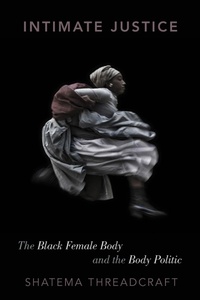
Intimate Justice
The Black Female Body and the Body Politic
Erschienen am 3. Oktober 2016
240 Seiten
978-0-19-063207-6 (ISBN)
Beschreibung
In 1973, the year the women's movement won an important symbolic victory with Roe v. Wade, reports surfaced that twelve-year-old Minnie Lee Relf and her fourteen-year-old sister Mary Alice, the daughters of black Alabama farm hands, had been sterilized without their or their parents' knowledge or consent. Just as women's ability to control reproduction moved to the forefront of the feminist movement, the Relf sisters' plight stood as a reminder of the ways in which the movement's accomplishments had diverged sharply along racial lines. Thousands of forced sterilizations were performed on black women during this period, convincing activists in the Black Power, civil rights and women's movements that they needed to address, pointedly, the racial injustices surrounding equal access to reproductive labor and intimate life in America. As horrific as the Relf tragedy was, it fit easily within a set of critical events within black women's sexual and reproductive history in America, which black feminists argue began with coerced reproduction and enforced child neglect in the period of enslavement.
While reproductive rights activists and organizations, historians and legal scholars have all begun to grapple with this history and its meaning, political theorists have yet to do so. Intimate Justice charts the long and still incomplete path to black female intimate freedom and equality--a path marked by infanticides, sexual terrorism, race riots, coerced sterilizations and racially biased child removal policies. In order to challenge prevailing understandings of freedom and equality, Shatema Threadcraft considers the troubled status of black female intimate life during four moments: antebellum slavery, Reconstruction, the nadir, and the civil rights and women's movement eras. Taking up important and often overlooked aspects of the necessary conditions for justice, Threadcraft's book is a compelling challenge to the meaning of equality in American race and gender relations.
Weitere Details
Weitere Ausgaben
Person
Shatema Threadcraft is an Assistant Professor of Political Science and a member of the Graduate faculty of Women's and Gender Studies at Rutgers University. Her research has been supported by the Ford Foundation, the American Association of University Women, the Charles Warren Center for Studies in American History at Harvard University, the Gilder Lehrman Institute of American History, the Rutgers Center for Historical Analysis and the Rutgers Center for Race and Ethnicity.
Inhalt
Preface
Chapter 1: Introduction: Black Female Body Politics
Chapter 2: "What Free Could Possibly Mean": The Intimate Sphere in Enslaved Women's Visions of Freedom
Chapter 3: Racial Violence and the Post-Emancipation Struggle for Intimate Equality
Chapter 4: Intimate Injustice, Political Obligation and the Dark Ghetto
Chapter Five: Intimate Justice
Notes
Index
