

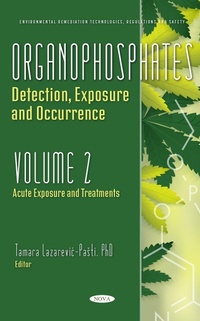
Organophosphates: Detection, Exposure and Occurrence. Volume 2: Acute Exposure and Treatments
Erschienen am 24. Februar 2022
380 Seiten
978-1-68507-734-1 (ISBN)
Beschreibung

Organophosphates are widely used nowadays. They have applications as pesticides, drugs, plasticizers, flame retardants or chemical warfare agents. Their acute toxicity is ascribed to the inhibition of acetylcholinesterase, a key enzyme in the transmission of nerve impulses in animals. Their toxic effects are manifested by the accumulation of acetylcholine and can lead to paralysis or death. Organophosphates also inhibit the other enzymes playing important roles in various biochemical processes. Organophosphate poisoning therapy is based on the application of specific antidotes as well as non-specific and symptomatic procedures. In this contribution, the authors overview the organophosphates' impact on human health and the environment, their various applications, acute exposure and possible treatments. In Volume 1, special attention was given to the connection of organophosphate exposure to cancer, synaptic vulnerability and depression development. The current state of knowledge and the future perspectives regarding their use, regulations, fate in the environment, biomonitoring, routes of exposure and legislation are reviewed. The detection and remediation of organophosphates in the environment using ionic liquids, electrochemical oxidation, carbon materials and metal-organic frameworks are discussed in more detail. The applications of organophosphates as acaricides and flame retardants are also reviewed. Volume 2 is dedicated to the use of organophosphates as chemical warfare agents and nerve gases and intentional and unintentional exposure to them. The history of the organophosphorous nerve gases development is summarized. The routes of the exposure to organophosphate chemical warfare agents and their acute toxicity are also discussed. The special focus is on the medical countermeasures and support during acute respiratory distress in nerve agent poisoning and the conventional and new treatment options.
Weitere Details
Weitere Ausgaben
Andere Ausgaben
Tamara Lazarevic-Pati
Organophosphates
Detection, Exposure and Occurrence. Volume 2: Acute Exposure and Treatments
Buch
03/2022
Nova Science Publishers Inc
302,21 €
Versand in 15-20 Tagen
Inhalt
- Intro
- Contents
- Preface
- Chapter 1
- Organophosphates as Chemical Warfare Agents
- Abstract
- Introduction
- History of the Organophosphates Development
- CWA from the Organophosphates Group
- Types of CWA
- Types of CWA from Organophosphates Group
- Pathways and Routes of Exposure
- General Exposure Hazards
- Latency Period
- Vapor/Aerosols (Mists or Dusts)
- Solids (Non-Aerosol)
- Development and Use of CWA
- The Use of SARIN in Terrorist Attacks
- The Use of NOVICHOK in Terrorist Attacks
- International Control of Chemical Weapons
- Toxic Effects of Organophosphates
- Protection, Treatment, and Decontamination
- Protective Measures against Chemical and Biological Agents
- Respirator
- Skin Protection
- Detection
- Removal of Organophosphates from Contaminated Persons and Personal Protective Agents
- Vapors
- Casualties/Personnel
- Small Areas
- Liquids, Solutions, or Liquid Aerosols
- Casualties/Personnel
- Small Areas
- Solids, Dusty Agents, or Particulate Aerosols
- Casualties/Personnel
- Small Areas
- Antidotes - Medical Countermeasures
- Conclusion
- Acknowledgments
- References
- Chapter 2
- Acute Respiratory Distress in Nerve Agent Poisoning. Part 1: Respiratory and Pulmonary Effects of Organophosphates and Nerve Agents
- Abstract
- Introduction
- Overview
- Animal Studies of Nerve Agent Respiratory Toxicity
- Pulmonary Toxicity of Aerosolized V-Type Nerve Agent Microinstallation in Guinea Pigs
- Respiratory Effects and Pulmonary Toxicity of G-Type Nerve Agent Microinstallation in Guinea Pigs
- Endotracheal Microinstallation of NAs in Guinea Pigs - Summary and Comments
- Inhalational Exposure of Rats to Aerosolized VX
- Inhalational Exposure of Rats to G-Type Nerve Agent Vapors
- Inhalational Exposure of Rats to Aerosolized VX and G-Type Nerve Agent Vapors -Summary and Comments
- Animal Studies of the Respiratory Toxicity of OP Pesticides
- High-Level Systemic Exposure to Dichlorvos in Rats
- Low-Level Inhalational Exposure to Dichlorvos Vapors
- Low-Level Systemic Exposure to Parathion and Paraoxon in Guinea Pigs, Rabbits and Rats
- Low-Level Exposure to OP Pesticides and Airway Reactivity
- Animal Studies of the Respiratory Toxicity of OP Pesticides - Summary and Comments
- Human Data on Respiratory Failure Following Exposure to OPs
- General Mechanistic and Pathophysiological Analysis of Lung Injury
- Normal Function of Lung Cells
- Overview of the Pathophysiology of ALI/ARDS
- Population Dynamics and Role of Alveolar Macrophages in ALI/ARDS
- The Role of Neutrophils in Pulmonary Inflammation and Pulmonary Edema
- Alveolar Fluid Homeostasis and Its Dysfunction in Lung Injury
- The Role of Acetylcholine in OP-Induced Lung Injury
- The Epithelial Cholinergic System in the Airways
- Muscarinic Control of ASM Contraction, Bronchoconstriction, and Effect of AChE Inhibitors - In Vitro Studies
- Non-Quantal Release of ACh
- Tracheal Epithelial Involvement in ASM Relaxation
- Regulation of Airway Mucus Production
- Cholinergic Modulation of Alveolar Fluid Homeostasis
- Pro-Inflammatory Activities of ACh in Pulmonary Non-Immune Cells
- Pro-Inflammatory Activities of ACh in Pulmonary Immune Cells
- Nicotinic Acetylcholine Receptors and the Resolution of Inflammation
- Possible Non-Cholinergic Mechanisms
- Direct Toxicity to Pulmonary Epithelial Cells
- Acute Lung Injury Caused by Resistive Breathing
- Glutamate and GABA
- The Role of Solvents in OP Poisoning
- Overview of the Pontine-Medullary Respiratory Control Network
- Neurotransmitters and Neuromodulators in the Respiratory CPG
- Neurophysiological Studies on the Effects of NAs and OPs on Central Respiratory Control
- Mechanism and Pathophysiology of Brain Injury in OP/NA Poisoning
- AChE Inhibition in the Brainstem
- Cholinergic Mechanisms in Central Respiratory Control Regions
- Physiological Function and Toxicity of Glutamate and Glutamatergic Agonists
- The Role of Inhibitory Transmission in Central Respiratory Control and Its Dysfunction in OP Poisoning
- Summary and Comments
- Concluding Summary
- Conclusion
- References
- Chapter 3
- Acute Respiratory Distress in Nerve Agent Poisoning. Part 2: Medical Countermeasures and Medical Support
- Abstract
- Introduction
- Ventilation Support - Techniques and Devices
- Prehospital Respiratory Support, Supplemental Oxygen, Bag-Valve Mask, and Supraglottic Airways
- Supplemental Oxygen
- Positive Pressure Ventilation
- Lung Protective Ventilation
- Further Studies and Current Status of High PEEP, Recruitment Maneuvers, and the Open Lung Approach
- High-Frequency Oscillation Ventilation (HFOV) and Airway Pressure Release Ventilation (APRV)
- Prone Positioning
- Inhaled Nitric Oxide and Inhaled Prostacyclin Therapy
- Permissive Hypercapnia
- Summary of Current Invasive Ventilation Strategies and Adjunct Therapies in ARDS
- Non-Invasive Ventilation (NIV) or Non-Invasive Positive Pressure Ventilation (NPPV)
- Continuous Positive Airway Pressure (CPAP)
- NPPV and CPAP in Toxic Inhalational Injury
- Oxygen Delivery by High-flow Nasal Cannula (HFNC)
- Comparative Evaluation of the Non-Invasive Positive Pressure Strategies
- Negative-Pressure Ventilation
- Airway Clearance Techniques
- ARDS Prediction and Prevention
- Checklist for Lung Injury Prevention (CLIP)
- Early Identification of Patients at Risk
- The Berlin and Kigali Definitions of ARDS
- Non-Invasive Ventilation and Prevention of ALI/ARDS
- Pharmacological Countermeasures
- General
- Nerve Agent Antidotes
- Nerve Agent Antidotes and Accessory Lung Therapies
- Bronchodilators
- Glucocorticoids
- Combinations of ((2-Adrenergic Agonists with Glucocorticoids and Muscarinic Antagonists
- N-acetylcysteine
- Intravenous Lipid Emulsions
- Lipid Supplements, ARDS, and Inflammation
- Anticoagulant and Fibrinolytic Therapy
- Recommendations and Future Directions
- Conclusion
- References
- Chapter 4
- Emergency Managements of Acute Organophosphate Toxicity
- Abstract
- Introduction
- Pathophysiology
- Epidemiology
- Clinical Findings in Acute OP Toxicity
- Differential Diagnosis
- Diagnosis Tests
- Emergency Treatment in Acute OP Toxicity
- Decontamination
- Medication
- Antimuscarinic
- Atropine
- Glycopyrrolate
- Diphenhydramine
- Antidote Therapy
- Magnesium Sulfate
- Seizure Treatment
- Discharge Criteria
- Conclusion
- References
- Chapter 5
- New Treatment Options in Acute Organophosphate Toxicity
- Abstract
- Introduction
- New Oximes
- Antioxidants
- Lipid Treatment
- Fresh Frozen Plasma
- Hemoperfusion, Hemofiltration, and Plasma Exchange
- Conclusion
- References
- Editor's Contact Information
- Index
- Blank Page
- Blank Page
