

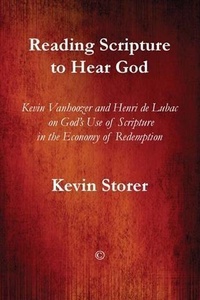
Reading Scripture to Hear God
Kevin Vanhoozer and Henri de Lubac on God's Use of Scripture in the Economy of Redemption
Erschienen am 30. April 2015
186 Seiten
978-0-227-90469-5 (ISBN)
Beschreibung
Recent theological discussions between Catholics and Evangelicals have generated a renewed appreciation for God's ongoing use of Scripture for self-mediation to the Church. Noting the significant influence of Henri de Lubac (one of the drafters of 'Dei Verbum' and proponent of a renewal of the Patristic and Medieval emphasis on a spiritual sense of Scripture), and Kevin Vanhoozer (the leading Evangelical proponent of a theological interpretation of Scripture), Kevin Storer seeks to draw Evangelical and Catholic theologians into dialogue about God's ongoing use of Scripture in the economy of redemption. Storer suggests that a number of traditional tensions between Catholics and Evangelicals, such as the literal or spiritual sense of Scripture, a sacramental or a covenantal model of God's self-mediation, and an emphasis on the authority of Scripture or the authority of the Church, can be eased by shifting greater focus upon God's ongoing use of creaturely realities for the building of the Church in union with Christ. This project seeks to enable Evangelicals to appropriate the insights of de Lubac's Catholic 'Ressourcement' project, while also encouraging Catholic theologians to appreciate Vanhoozer's Evangelical emphasis on God's use of the literal sense of Scripture to build the Church.
Rezensionen / Stimmen
"It is with great joy that I recommend this book to be in the library of every serious Bible student and theologian."-Charles Kim, Theological Book Review, Vol. 27 No.1, 2016
Weitere Details
Sprache
Englisch
Verlagsort
Cambridge
Großbritannien
Dateigröße
8,14 MB
ISBN-13
978-0-227-90469-5 (9780227904695)
Copyright in bibliographic data and cover images is held by Nielsen Book Services Limited or by the publishers or by their respective licensors: all rights reserved.
Schweitzer Klassifikation
Weitere Ausgaben
Person
Kevin Storer received his PhD from Duquesne University in Pittsburgh and is Adjunct Professor of Theology at Duquesne University and St. Vincent College in Latrobe, Pennsylvania.
Inhalt
Introduction
Theological Interpretation of Scripture and the Opportunity for Evangelical and Catholic Dialogue
Kevin Vanhoozer: God's Speech-Acts
Beyond Postliberals and Revisionists
Henri de Lubac: Ressourcement
Beyond Modernism and Neo-Thomism
Description of the Project
Chapter 1
God's Use of Scripture for Self-Communication: Divine Speaking in the Literal and Spiritual Sense
Introduction: Vanhoozer and de Lubac and the Literal and Spiritual Senses
Kevin Vanhoozer: God's Authorship of Scripture and the Sufficiency of the Literal Sense
Henri de Lubac: Christ's Presence in Scripture and the Necessity of the Spiritual Sense
Conclusion: Persistent Challenges and Dialogue
Chapter 2
Vanhoozer's Covenantal Ontology and de Lubac's Sacramental Ontology: Different Models of Christ's Self-Mediation in the Economy of Redemption
Introduction
Vanhoozer's Communicative/Covenantal Ontology and God's Use of Scripture
De Lubac's Sacramental Ontology and God's Use of Scripture
Convergence: Trans-Figural Reading and the Spiritual Sense of Scripture
Chapter 3
God's Use of Scripture and Church in the Economy of Redemption
Introduction: Vanhoozer's Covenant Ecclesiology and de Lubac's Sacramental Ecclesiology
Vanhoozer's Covenant Ecclesiology
De Lubac's Sacramental Ecclesiology
Convergence: Development of Doctrine as Extending Canonical
Meaning Potential or Reading as the Totus Christus?
Conclusion
Bibliography
Theological Interpretation of Scripture and the Opportunity for Evangelical and Catholic Dialogue
Kevin Vanhoozer: God's Speech-Acts
Beyond Postliberals and Revisionists
Henri de Lubac: Ressourcement
Beyond Modernism and Neo-Thomism
Description of the Project
Chapter 1
God's Use of Scripture for Self-Communication: Divine Speaking in the Literal and Spiritual Sense
Introduction: Vanhoozer and de Lubac and the Literal and Spiritual Senses
Kevin Vanhoozer: God's Authorship of Scripture and the Sufficiency of the Literal Sense
Henri de Lubac: Christ's Presence in Scripture and the Necessity of the Spiritual Sense
Conclusion: Persistent Challenges and Dialogue
Chapter 2
Vanhoozer's Covenantal Ontology and de Lubac's Sacramental Ontology: Different Models of Christ's Self-Mediation in the Economy of Redemption
Introduction
Vanhoozer's Communicative/Covenantal Ontology and God's Use of Scripture
De Lubac's Sacramental Ontology and God's Use of Scripture
Convergence: Trans-Figural Reading and the Spiritual Sense of Scripture
Chapter 3
God's Use of Scripture and Church in the Economy of Redemption
Introduction: Vanhoozer's Covenant Ecclesiology and de Lubac's Sacramental Ecclesiology
Vanhoozer's Covenant Ecclesiology
De Lubac's Sacramental Ecclesiology
Convergence: Development of Doctrine as Extending Canonical
Meaning Potential or Reading as the Totus Christus?
Conclusion
Bibliography
