

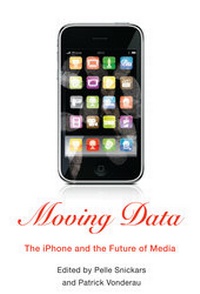
Moving Data
The iPhone and the Future of Media
1. Auflage
Erschienen am 10. Juli 2012
360 Seiten
978-0-231-50438-6 (ISBN)
Beschreibung

The iPhone has revolutionized not only how people communicate but also how we consume and produce culture. Combining traditional and social media with mobile connectivity, smartphones have redefined and expanded the dimensions of everyday life, allowing individuals to personalize media as they move and process constant flows of data. Today, millions of consumers love and live by their iPhones, but what are the implications of its special technology on society, media, and culture?
Featuring an eclectic mix of original essays, Moving Data explores the iPhone as technological prototype, lifestyle gadget, and platform for media creativity. Media experts, cultural critics, and scholars consider the device's newness and usability--even its "lickability"--and its "biographical" story. The book illuminates patterns of consumption; the fate of solitude against smartphone ubiquity; the economy of the App Store and its perceived "crisis of choice"; and the distance between the accessibility of digital information and the protocols governing its use. Alternating between critical and conceptual analyses, essays link the design of participatory media to the iPhone's technological features and sharing routines, and they follow the extent to which the pleasures of gesture-based interfaces are redefining media use and sensory experience. They also consider how user-led innovations, collaborative mapping, and creative empowerment are understood and reconciled through changes in mobile surveillance, personal rights, and prescriptive social software. Presenting a range of perspectives and arguments, this book reorients the practice and study of media critique.
Featuring an eclectic mix of original essays, Moving Data explores the iPhone as technological prototype, lifestyle gadget, and platform for media creativity. Media experts, cultural critics, and scholars consider the device's newness and usability--even its "lickability"--and its "biographical" story. The book illuminates patterns of consumption; the fate of solitude against smartphone ubiquity; the economy of the App Store and its perceived "crisis of choice"; and the distance between the accessibility of digital information and the protocols governing its use. Alternating between critical and conceptual analyses, essays link the design of participatory media to the iPhone's technological features and sharing routines, and they follow the extent to which the pleasures of gesture-based interfaces are redefining media use and sensory experience. They also consider how user-led innovations, collaborative mapping, and creative empowerment are understood and reconciled through changes in mobile surveillance, personal rights, and prescriptive social software. Presenting a range of perspectives and arguments, this book reorients the practice and study of media critique.
Alle Preise
Weitere Details
Weitere Ausgaben
Andere Ausgaben
Buch
07/2012
Columbia University Press
113,58 €
Versand in 10-20 Tagen
Buch
07/2012
Columbia University Press
34,57 €
Artikel z.Zt. nicht lieferbar
Personen
Pelle Snickars is head of research at the National Library of Sweden and coeditor, with Patrick Vonderau, of The YouTube Reader. His work can be found at www.pellesnickars.se.
Patrick Vonderau is associate professor in the Department of Media Studies at Stockholm University and a cofounder and board member of NECS-European Network for Cinema and Media Studies (www.necs.org).
Patrick Vonderau is associate professor in the Department of Media Studies at Stockholm University and a cofounder and board member of NECS-European Network for Cinema and Media Studies (www.necs.org).
Inhalt
Introduction, by Pelle Snickars and Patrick Vonderau
Data Archaeologies
1. With Eyes, With Hands: The Relocation of Cinema Into the iPhone, by Francesco Casetti and Sara Sampietro
2. Navigating Screenspace: Toward Performative Cartography, by Nanna Verhoeff
3. The iPhone as an Object of Knowledge, by Alexandra Schneider
4. Media Archaeology, Installation Art, and the iPhone Experience, by Jennifer Steetskamp
5. Hard Candy, by Kristopher L. Cannon and Jennifer M. Barker
Politics of Redistribution
6. Personal Media in the Digital Economy, by Göran Bolin
7. Big Hollywood, Small Screens, by Alisa Perren and Karen Petruska
8. Pushing the (Red) Envelope: Portable Video, Platform Mobility, and Pay-Per-View Culture, by Chuck Tryon
9. Platforms, Pipelines, and Politics: The iPhone and Regulatory Hangover, by Jennifer Holt
10. A Walled Garden Turned Into a Rain Forest, by Pelle Snickars
The App Revolution
11. iPhone Apps: A Digital Culture of Interactivity, by Barbara Flueckiger
12. Slingshot to Victory: Games, Play, and the iPhone, by Mia Consalvo
13. Reading (with) the iPhone, by Gerard Goggin
14. Ambient News and the Para-iMojo: Journalism in the Age of the iPhone, by Janey Gordon
15. Party Apps and Other Citizenship Calls, by Anu Koivunen
16. The iPhone's Failure: Protests and Resistances, by Oliver Leistert
Mobile Lives
17. I, Phone -- I, Learn, by Anne Balsamo
18. EULA, Codec, API: The Opacity of Digital Culture, by Lane DeNicola
19. "The Back of Our Devices Looks Better than the Front of Anyone Else's": On Apple and Interface Design, by Lev Manovich
20. Playing the iPhone, by Frauke Behrendt
21. Mobile Media Life, by Mark Deuze and The Janissary Collective
Coda
22. The End of Solitude, by Dalton Conley
Bibliography
List of Contributors
Index
Data Archaeologies
1. With Eyes, With Hands: The Relocation of Cinema Into the iPhone, by Francesco Casetti and Sara Sampietro
2. Navigating Screenspace: Toward Performative Cartography, by Nanna Verhoeff
3. The iPhone as an Object of Knowledge, by Alexandra Schneider
4. Media Archaeology, Installation Art, and the iPhone Experience, by Jennifer Steetskamp
5. Hard Candy, by Kristopher L. Cannon and Jennifer M. Barker
Politics of Redistribution
6. Personal Media in the Digital Economy, by Göran Bolin
7. Big Hollywood, Small Screens, by Alisa Perren and Karen Petruska
8. Pushing the (Red) Envelope: Portable Video, Platform Mobility, and Pay-Per-View Culture, by Chuck Tryon
9. Platforms, Pipelines, and Politics: The iPhone and Regulatory Hangover, by Jennifer Holt
10. A Walled Garden Turned Into a Rain Forest, by Pelle Snickars
The App Revolution
11. iPhone Apps: A Digital Culture of Interactivity, by Barbara Flueckiger
12. Slingshot to Victory: Games, Play, and the iPhone, by Mia Consalvo
13. Reading (with) the iPhone, by Gerard Goggin
14. Ambient News and the Para-iMojo: Journalism in the Age of the iPhone, by Janey Gordon
15. Party Apps and Other Citizenship Calls, by Anu Koivunen
16. The iPhone's Failure: Protests and Resistances, by Oliver Leistert
Mobile Lives
17. I, Phone -- I, Learn, by Anne Balsamo
18. EULA, Codec, API: The Opacity of Digital Culture, by Lane DeNicola
19. "The Back of Our Devices Looks Better than the Front of Anyone Else's": On Apple and Interface Design, by Lev Manovich
20. Playing the iPhone, by Frauke Behrendt
21. Mobile Media Life, by Mark Deuze and The Janissary Collective
Coda
22. The End of Solitude, by Dalton Conley
Bibliography
List of Contributors
Index
