

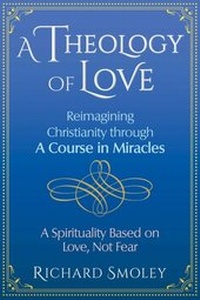
A Theology of Love
Reimagining Christianity through A Course in Miracles
1. Auflage
Erschienen am 5. November 2019
240 Seiten
978-1-62055-926-0 (ISBN)
Beschreibung
A spirituality based on love, not fear
• Shares key, inspiring teachings from A Course in Miracles as well as Hinduism, Buddhism, Gnosticism, and the Sefer Yetzirah, the oldest known Kabbalistic text
• Cites philosophical wisdom from Kant, Blake, Jung, and Gurdjieff, alongside cognitive science, to reveal how the world is not difficult and flawed, but our fear-based mind-sets lead us to see it that way
• Offers a path to help you regenerate from the "fallen" state and experience God as infinite love and light
In the West, theology has almost always meant Christian theology--a hodgepodge of beliefs that are hard to make sense of. Why, for example, should an all-loving, merciful God have gotten mad at the human race because someone ate a piece of fruit six thousand years ago? And why would he send part of himself down to earth to be tortured to death? These beliefs, stated baldly, are nonsensical. Millions of people are realizing this and losing their faith. The time has come to reenvision Christian theology without contradictory teachings laced with fear. It is time for a theology of love and miracles.
Richard Smoley reframes Christian theology using logical, consistent, and easy-to-understand teachings of unconditional love and forgiveness. He draws inspiration not only from the Bible, but also from Hinduism, Buddhism, Gnosticism, and from esoteric and mystical teachings, such as A Course in Miracles and the Sefer Yetzirah, the oldest known Kabbalistic text. He explains how the "fallen" state of the human condition, not one of sin but of oblivion, leads us to experience the world as flawed and problematic--not wholly evil, but not wholly good.
Citing philosophical wisdom from Kant, Blake, Jung, and Gurdjieff, alongside cognitive science, Smoley reveals how it is not the world that is flawed, but the way we see the world. Sharing key teachings from A Course in Miracles, he shows that our fear-based mind-sets--often filled with anxiety, suffering, and shame--lead us to feel separated from God when, in fact, we are all extensions of a God of infinite love and light.
Offering a path to help you regenerate from the "fallen" state and see the real spiritual world and loving God that lies behind it, the author provides ways for each of us to craft our own self-consistent theology. He also lays out a vision for the future of spirituality, a path for present-day religion to transform into something higher and more universal.
• Shares key, inspiring teachings from A Course in Miracles as well as Hinduism, Buddhism, Gnosticism, and the Sefer Yetzirah, the oldest known Kabbalistic text
• Cites philosophical wisdom from Kant, Blake, Jung, and Gurdjieff, alongside cognitive science, to reveal how the world is not difficult and flawed, but our fear-based mind-sets lead us to see it that way
• Offers a path to help you regenerate from the "fallen" state and experience God as infinite love and light
In the West, theology has almost always meant Christian theology--a hodgepodge of beliefs that are hard to make sense of. Why, for example, should an all-loving, merciful God have gotten mad at the human race because someone ate a piece of fruit six thousand years ago? And why would he send part of himself down to earth to be tortured to death? These beliefs, stated baldly, are nonsensical. Millions of people are realizing this and losing their faith. The time has come to reenvision Christian theology without contradictory teachings laced with fear. It is time for a theology of love and miracles.
Richard Smoley reframes Christian theology using logical, consistent, and easy-to-understand teachings of unconditional love and forgiveness. He draws inspiration not only from the Bible, but also from Hinduism, Buddhism, Gnosticism, and from esoteric and mystical teachings, such as A Course in Miracles and the Sefer Yetzirah, the oldest known Kabbalistic text. He explains how the "fallen" state of the human condition, not one of sin but of oblivion, leads us to experience the world as flawed and problematic--not wholly evil, but not wholly good.
Citing philosophical wisdom from Kant, Blake, Jung, and Gurdjieff, alongside cognitive science, Smoley reveals how it is not the world that is flawed, but the way we see the world. Sharing key teachings from A Course in Miracles, he shows that our fear-based mind-sets--often filled with anxiety, suffering, and shame--lead us to feel separated from God when, in fact, we are all extensions of a God of infinite love and light.
Offering a path to help you regenerate from the "fallen" state and see the real spiritual world and loving God that lies behind it, the author provides ways for each of us to craft our own self-consistent theology. He also lays out a vision for the future of spirituality, a path for present-day religion to transform into something higher and more universal.
Weitere Details
Weitere Ausgaben
Person
Richard Smoley is one of the world's leading authorities on the Western esoteric traditions, with degrees from both Harvard and Oxford. His many books include Inner Christianity: A Guide to the Esoteric Tradition and How God Became God: What Scholars Are Really Saying about God and the Bible. Former editor of Gnosis, he is now editor of Quest: Journal of the Theosophical Society in America. He lives in Winfield, Illinois.
Inhalt
Acknowledgments
Note on Citations from A Course in Miracles
Introduction
Part 1
FALL
ONE
What Is God?
TWO
The Five-Dimensional Box
THREE
The Cloud of Oblivion
FOUR
The Reign of Number
FIVE
Of Mirrors and Madness
SIX
A Suppositional Moment
Part 2
REGENERATION
SEVEN
The Law on Two Levels
EIGHT
Meaning for a Meaningless World
NINE
From the Unreal to the Real
TEN
Creating, Making, and the Qualia
ELEVEN
The Scandal of Particularity
TWELVE
Being toward Death
THIRTEEN
Relationships, Special and Holy
FOURTEEN
Church and Sacraments
FIFTEEN
The Ladder of Prayer
SIXTEEN
Dispensations
SEVENTEEN
The Age of the Holy Spirit
EIGHTEEN
Summa Theologiae
APPENDIX
Studying A Course in Miracles
Notes
Selected
Bibliography
Index
Note on Citations from A Course in Miracles
Introduction
Part 1
FALL
ONE
What Is God?
TWO
The Five-Dimensional Box
THREE
The Cloud of Oblivion
FOUR
The Reign of Number
FIVE
Of Mirrors and Madness
SIX
A Suppositional Moment
Part 2
REGENERATION
SEVEN
The Law on Two Levels
EIGHT
Meaning for a Meaningless World
NINE
From the Unreal to the Real
TEN
Creating, Making, and the Qualia
ELEVEN
The Scandal of Particularity
TWELVE
Being toward Death
THIRTEEN
Relationships, Special and Holy
FOURTEEN
Church and Sacraments
FIFTEEN
The Ladder of Prayer
SIXTEEN
Dispensations
SEVENTEEN
The Age of the Holy Spirit
EIGHTEEN
Summa Theologiae
APPENDIX
Studying A Course in Miracles
Notes
Selected
Bibliography
Index
