

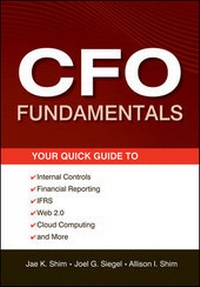
CFO Fundamentals
Your Quick Guide to Internal Controls, Financial Reporting, IFRS, Web 2.0, Cloud Computing, and More
Erschienen am 30. Januar 2012
960 Seiten
978-1-118-21955-3 (ISBN)
Beschreibung
The thorough reference that goes wherever you go
The Complete CFO Reference is the perfect up-to-datereference tool for today's busy CFO, controller, treasurer, andother finance professionals. Written in an easy format and packedwith checklists, samples, and worked-out solutions for a widevariety of accounting and finance problems, readers can take thishandy reference wherever they go-on a business trip, visiting aclient, conducting a conference call, or attending a meeting.
* Covers all major developments in finance and accounting everyCFO needs to know about including IFRS, Web-based planning, andranging from financial reporting and internal control to financialdecision making for shareholder value maximization
* Includes tables, forms, checklists, questionnaires, practicaltips, and sample reports
* Incorporates Accounting Standards Codification (ASC) throughoutthe book, as well as coverage of International Financial ReportingStandards (IFRS) and its impact on financial reporting, XBRLreporting, risk management and disaster recovery, Web-basedplanning and budgeting, Web 2.0, cloud computing, and environmentalcosting
Simplifying day-to-day work in dozens of critical areas, TheComplete CFO Reference is the perfect up-to-date reference toolfor today's busy chief financial officer (CFO), controller,treasurer, financial director, budgeting director, and otherfinancial professionals in public practice and privateindustry.
Weitere Details
Weitere Ausgaben
Personen
JAE K. SHIM, PHD, has authored or coauthored more than fiftyprofessional and college accounting books. He is CEO of DeltaConsulting Co., a financial consulting and training firm, and hasbeen a consultant to commercial and nonprofit organizations forover thirty years.
JOEL G. SIEGEL, PHD, CPA, is the author of over fiftybooks and has written hundreds of articles for accounting andfinancial journals. Dr. Siegel has acted as consultant inaccounting issues to many organizations, including IT&T,Citicorp, and Person-Wolinsky CPA Review.
ALLISON I. SHIM, MS, is CFO of Delta Consulting Co. Sheis a finance expert and a PhD candidate at the University ofCalifornia, Irvine.
Inhalt
- Intro
- CFO Fundamentals
- Contents
- What This Book Will Do for You
- PART ONE: REPORTS AND FILINGS
- 1: Chief Financial Offi cer's Role and Reports
- Role of the Chief Financial Officer
- Governmental Reporting
- Reporting under the Sarbanes-Oxley Act
- XBRL Reporting
- Other Reporting
- 2: Securities and Exchange Commission Filings
- SEC Rules
- S Forms
- SEC Regulations
- SOX Reporting Requirements
- PART TWO: FINANCIAL REPORTING
- 3: Financial Statement Reporting: The Income Statement
- How Is the Income Statement Presented?
- Revenue Recognition
- Construction Contracts
- Expense Recognition
- 4: Financial Statement Reporting: The Balance Sheet
- Assets
- Accounts Receivable
- Inventory
- Fixed Assets
- Disclosure
- Liabilities
- Accounting for Compensated Absences
- Environmental Obligations
- Exit or Disposal Activities
- Fair Value Measurements
- Fair Value Option for Financial Assets and Financial Liabilities
- Statement of Cash Flows
- Available-for-Sale and Held-to-Maturity Securities
- 5: Statement of Cash Flows
- Classifications of Cash Flow
- Analysis of the Statement of Cash Flows
- 6: Accounting and Disclosures
- Accounting Changes
- Futures Contracts
- Various Disclosures
- 7: Key Financial Accounting Areas
- Consolidation
- Investments in Stocks and Bonds
- Leases
- Pension Plans
- Postretirement Benefits Excluding Pensions
- Income Tax Allocation
- Deferred Tax Liability versus Deferred Tax Asset
- Tax Rates
- Foreign Currency Accounting
- Translation of Foreign Currency Statements When the Foreign Currency Is the Functional Currency
- International Financial Reporting Standards
- 8: Interim and Segmental Reporting
- Interim Reporting
- Segmental Reporting
- PART THREE: COST MANAGEMENT AND IT SYSTEMS
- 9: Cost Management and Analysis
- What Is Cost Management and Analysis?
- Strategic Cost Management
- Overhead Costing
- Activity-Based Costing
- Activity-Based Management
- Target Costing and Pricing
- 10: Cost-Volume-Profit Analysis and Leverage
- Cost-Volume-Profit Analysis
- What-If Analysis
- Sales-Mix Analysis
- CVP Analysis for Nonprofit Organizations
- Leverage
- 11: Short-Term Decisions
- Relevant Costs
- Best Use of Scarce Resources
- Theory of Constraints
- 12: Financial Forecasting, Planning, and Budgeting
- Financial Forecasting: The Percent-of-Sales Method
- Budgeting
- Some Financial Calculations
- Budgeting Software
- Using an Electronic Spreadsheet to Develop a Budget Plan
- Latest Generation of Budgeting and Planning Software and E-Budgeting
- 13: Risk Management
- Enterprise Risk Management
- An Approach to Risk Management
- A Close Look at Risk Management
- How to Reduce Investment Risk: Diversify
- Beta-The Capital Asset Pricing Model
- Arbitrage Pricing Model
- 14: Capital Budgeting and Real Options
- Time Value Fundamentals
- Popular Evaluation Techniques
- Limited Funds for Capital Spending
- Real Options
- Discovery-Driven Planning
- Effect of Income Taxes on Capital Budgeting Decisions
- 15: The What and Why of Responsibility Accounting
- Responsibility Accounting Basics
- Cost Center Performance and Standard Costs
- Flexible Budgets and Performance Reports
- Production Mix and Yield Variances
- 16: Control of Profit Centers
- How Do You Evaluate Profit Centers?
- Profit Variance Analysis
- 17: Performance of Investment Centers and Transfer Pricing
- Rate of Return on Investment
- Residual Income
- Investment Decisions under ROI and RI
- Transfer Pricing
- 18: How to Analyze and Improve Corporate Profi tability and Shareholder Value
- Measures of Managerial Performance and Shareholder Return
- Sustainable Rate of Growth
- Economic Value Added
- Balanced Scorecard
- 19: Information Technology and IT Systems
- Computer Technologies Available for Business
- Role of Information Systems in the Strategic Plan
- Management Information Systems
- Who Uses Executive Information Systems?
- Value Chain Management Software
- Extensible Business Reporting Language
- Web 2.0
- Cloud Computing and Competitive Advantage
- Mobile Computing (Wireless Technology)
- Handheld Device Security and Contingency Planning
- Disaster Recovery and Business Continuity Planning
- CFO's View of Information Technology: A Current Survey
- PART FOUR: MANAGEMENT OF ASSETS AND LIABILITIES
- 20: Working Capital and Cash Management
- Evaluating Working Capital
- Cash Management
- Cash Management Models
- Banking Relationships
- International Cash Management
- 21: Management of Accounts Receivable
- Managing Receivables
- Investment in Accounts Receivable
- 22: Inventory Management
- Inventory Recording and Control
- Inventory Costs
- Economic Order Quantity
- Reorder Point
- How to Find the Optimal Safety Stock Size
- ABC Inventory Control
- Service Business
- 23: Management of Payables
- Accounts Payable System
- Managing Payables
- PART FIVE: FINANCING THE BUSINESS
- 24: Short-Term and Intermediate-Term Financing
- Short-Term Financing
- Intermediate-Term Financing
- 25: Long-Term Financing
- Types of Long-Term Debt and When Each Should Be Used
- Issuance of Equity Securities
- Financing Strategy
- 26: Warrants and Convertibles
- Warrants
- Convertible Securities
- 27: Cost of Capital and Capital Structure Decisions
- Individual Costs of Capital
- Weights
- EBIT-EPS Approach to Capital Structure Decisions
- Analysis of Corporate Cash Flows
- Coverage Ratios
- Capital Structure Decisions
- 28: Dividend Policy
- Types of Dividend Policies
- Variables to Be Considered
- 29: Financial Management of Multinational Corporations
- Financial Management Essentials for MNCs
- Foreign Exchange Market
- Financial Strategies
- Types of Foreign Exchange Exposure
- Interest Rate Parity
- Purchasing Power Parity
- Appraising Foreign Investments
- Financing
- Analysis of Foreign Investments
- PART SIX: FINANCIAL ANALYSIS, INSURANCE AND LEGAL CONSIDERATIONS, AND ECONOMICS
- 30: Financial Statement Analysis
- Financial Analysis Essentials
- Balance Sheet Analysis
- Potential for Business Failure
- Income Statement Analysis
- Market Value Ratios
- Analyzing the Financial Structure of the Firm
- Product Line Measures
- Industry Characteristics Indicative of Greater Risk
- Considerations in Foreign Operations
- 31: Analysis, Evaluation, and Control of Revenue and Costs
- Control Reports
- Control of Costs
- Performance Measures
- Business Processes
- 32: Insurance and Legal Considerations
- Insurance Protection
- Types of Insurance
- Medical and Catastrophe Coverage
- Liability Insurance Coverage for CFOs
- Business Law
- 33: Reading Economic Indicators
- How Can You Keep Track of the Economy with Economic and Monetary Indicators?
- Housing-Related Measures
- Indices of Leading, Coincident, and Lagging Economic Indicators
- Other Important Economic Indices
- Monetary Indicators and How They Impact the Economy
- Understanding Economic Data and Indicators
- Economic Indicators and Stocks and Businesses
- Economic Indicators and Bond Yields
- PART SEVEN: LIQUIDITY AND TREASURY
- 34: Corporate Investments in Securities
- Cash and Liquidity Management
- Terms and Features of Bonds
- Other Fixed Income Investments
- Money Market Preferred Stock
- Private Equity
- Current Trends in Liquidity Management Strategy
- PART EIGHT: TAXATION
- 35: Tax Factors in Financial Decision Making
- What Should You Know about Taxes?
- Gross Income
- Depreciation
- Amortization
- Tax Planning
- PART NINE: MERGERS AND ACQUISITIONS, DIVESTITURES, FAILURE, AND REORGANIZATION
- 36: Mergers and Acquisitions
- Valuation
- Fair Market Value of Net Assets
- Capitalization of Revenue
- Price/Earnings Ratio
- Similar Businesses
- Sales of Stock
- Combination of Methods
- Successful Strategy for Mergers and Acquisitions
- 37: Divestiture
- Why Divest?
- Asset Valuation Methods
- Profitability Methods
- Market-Based Comparisons
- Discounted Cash Flow Analysis
- Divestiture with Uncertainty
- 38: Forecasting Corporate Financial Distress
- Prediction Models
- Z-Score Model
- Applications
- 39: Failure and Reorganization
- Business Failure
- Reorganization
- 40: Valuation of Bonds and Stocks
- How to Value a Security
- How to Value Bonds
- How to Value Preferred Stock
- How to Value Common Stock
- Price/Earnings Ratio Approaches
- Other Pragmatic Approaches
- The Bottom Line
- 41: Financial Statement Analysis: Key Financial Ratios and Metrics for Nonprofits
- Trend Analysis
- Analysis of the Balance Sheet
- Liquidity Analysis
- Appraisal of Solvency, Capital Structure, and Net Assets (Fund Balance)
- Evaluation of the Statement of Activities
- Performance Metrics
- Spotting Potential Bankruptcy and Avoiding Financial Problems
- Case Study in Financial Statement Analysis
- Appendix
- About the Authors
- Index
