

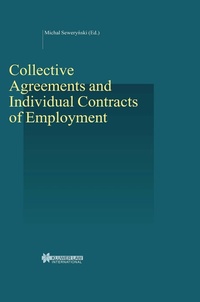
Collective Agreements and Individual Contracts of Employment
Erschienen am 31. Oktober 2003
272 Seiten
978-90-411-7522-9 (ISBN)
Beschreibung

While it can be said that the use of collective labour agreements has greatly expanded during the last decade - witness their growing application in the public sector, and their introduction in many post-communist countries - it is hard to deny that their power to protect employees has diminished considerably and continues to weaken. An understanding of the factors that have contributed to this fundamental change in economic and social conditions is of crucial significance if we are to preserve an equitable balance in the employer-employee relationship.
A growing body of research and commentary already surrounds this important subject. In this symposium sixteen outstanding scholars have assembled a preliminary survey of the essential issues and the means by which they are being addressed in a variety of different countries. The eleven papers reprinted here were originally presented at the 16th Congress of the International Academy of Comparative Law, held in Brisbane in July 2002. Each paper is organized around the following considerations for the particular country in question:
- factors determining the role of collective agreements;
- factors determining the regulatory power of collective agreements toward the employment contract;
- factors limiting the regulatory power of collective agreements;
- degree of freedom of the parties to shape the employment contract; and
- future prospects for collective agreements as a means of regulating the employment contract.
Underlying issues of decentralization, minimum standards, decreasing unionization, unemployment, and the growing individualization of the employment contract are addressed by all the authors. The countries covered are Australia, Belgium, Canada (Quebec), Greece, Italy, Japan, The Netherlands, Poland, South Africa and Switzerland.
Collective Agreements and Individual Contracts of Employment offers a convenient platform from which to conduct further research into this complex and dynamic subject. It is sure to be welcomed by specialists in labour law and industrial relations and by other social science professionals.
A growing body of research and commentary already surrounds this important subject. In this symposium sixteen outstanding scholars have assembled a preliminary survey of the essential issues and the means by which they are being addressed in a variety of different countries. The eleven papers reprinted here were originally presented at the 16th Congress of the International Academy of Comparative Law, held in Brisbane in July 2002. Each paper is organized around the following considerations for the particular country in question:
- factors determining the role of collective agreements;
- factors determining the regulatory power of collective agreements toward the employment contract;
- factors limiting the regulatory power of collective agreements;
- degree of freedom of the parties to shape the employment contract; and
- future prospects for collective agreements as a means of regulating the employment contract.
Underlying issues of decentralization, minimum standards, decreasing unionization, unemployment, and the growing individualization of the employment contract are addressed by all the authors. The countries covered are Australia, Belgium, Canada (Quebec), Greece, Italy, Japan, The Netherlands, Poland, South Africa and Switzerland.
Collective Agreements and Individual Contracts of Employment offers a convenient platform from which to conduct further research into this complex and dynamic subject. It is sure to be welcomed by specialists in labour law and industrial relations and by other social science professionals.
Weitere Details
Weitere Ausgaben
Andere Ausgaben
Michal Sewerynski
Collective Agreements and Individual Contracts of Employment
Buch
10/2003
Kluwer Law International
278,52 €
Versand in 10-20 Tagen
Inhalt
- Cover
- Half Title Page
- Title Page
- Copyright Page
- Table of Contents
- FOREWORD
- NOTES ON CONTRIBUTORS
- COLLECTIVE AGREEMENTS AND INDIVIDUAL CONTRACTS OF EMPLOYMENT IN LABOUR LAW - GENERAL REPORT
- I. FACTORS DETERMINING THE POSITION OF COLLECTIVE AGREEMENTS IN CONTEMPORARY INDUSTRIAL RELATIONS
- 1. Freedom of Collective Bargaining as an Integral Element of Democracy
- 2. Collective Agreements as an Integral Element of the Market Economy
- 3. Collective Agreements as an Instrument of Labour Relations Regulation
- II. FACTORS DETERMINING THE REGULATORY POWER OF COLLECTIVE AGREEMENTS TOWARDS CONTRACTS OF EMPLOYMENT
- 1. Normative Character of Collective Agreements
- 2. Derogatory Effect of Collective Agreements
- 3. Duty to Bargain
- 4. Application of Collective Agreements to all Employees Concerned
- 5. Extension of Collective Agreements by the Public Authority
- 6. Prolongation of the Collective Agreement Application
- III. FACTORS LIMITING THE REGULATORY POWER OF COLLECTIVE AGREEMENTS
- 1. Contractual Character of Collective Agreements
- 2. No Duty to Bargain
- 3. Collective Agreements applied only to Union Members
- 4. Statutory Limits of the Scope of Collective Agreements
- 5. Limits imposed on Collective Agreements by Basic Agreements
- 6. Limits imposed by Higher-level Collective Agreements
- IV. COLLECTIVE AGREEMENT REGULATION AND FREEDOM OF THE PARTIES TO SHAPE THE CONTRACT OF EMPLOYMENT
- 1. Freedom to put into the Contract of Employment more favourable terms than those of Collective Agreements
- 2. No Freedom to Derogate from Collective Agreements
- V. PROSPECTS OF THE REGULATORY FUNCTION OF COLLECTIVE AGREEMENTS TOWARDS THE CONTRACT OF EMPLOYMENT
- 1. Collective Agreements and the Evolution of Trade Unions
- 2. Collective Agreements and the Evolution of Economy
- CONCLUSIONS
- INDIVIDUALISM AND COLLECTIVISM IN AGREEMENT-MAKING UNDER AUSTRALIAN LABOUR LAW
- INTRODUCTION: COMPULSORY ARBITRATION, COLLECTIVE AGREEMENTS AND INDIVIDUAL CONTRACTS
- I. COLLECTIVE LABOUR AGREEMENTS AS ONE OF THE PILLARS OF CONTEMPORARY LABOUR RELATIONS
- 1. Democracy and Collective Labour Agreements
- 2. Market Economy and Collective Labour Agreements
- 3. Collective Labour Agreements as an Instrument of Negotiated Social Policy
- 4. Freedom to Negotiate Collective Labour Agreements as a Principle of Labour Law
- II. LEGAL MECHANISMS FOR SHAPING THE CONTENT OF THE EMPLOYMENT CONTRACT VIA COLLECTIVE AGREEMENT
- 1. Normative Mechanism
- 2. Contractual Mechanism
- 3. Replacement of Terms of the Contract of Employment by Provisions of a Collective Agreement
- III. FACTORS DETERMINING THE REGULATORY POWER OF COLLECTIVE LABOUR AGREEMENTS TOWARDS THE EMPLOYMENT CONTRACT
- 1. Collective Agreements and Deregulation
- 2. Statutory Limits of the Scope of Collective Labour Agreements
- 3. Exclusion of some Employees' Groups from a Collective Labour Agreement as stipulated by its Parties
- 4. Extension of a Collective Labour Agreement by a Public Authority
- 5. Limits Imposed on a Lower-level Collective Labour Agreement by a High-level Collective Agreement
- IV. REGULATION OF COLLECTIVE LABOUR AGREEMENT AND FREEDOM OF PARTIES TO A CONTRACT OF EMPLOYMENT
- V. PROSPECTS FOR COLLECTIVE LABOUR AGREEMENTS AS A MEANS OF REGULATION OF AN EMPLOYMENT CONTRACT
- ACCORDS COLLECTIVES ET INDIVIDUALS DE TRAVAIL EN DROIT DU TRAVAIL BELGE
- I. LA PLACE DE LA CONVENTION COLLECTIVE DE TRAVAIL DANS L'ORDONNANCEMENT JURIDIQUE BELGE
- 1. Le cadre normatif
- 2. La nature juridique des conventions collectives de travail
- II. MECANISMES LEGAUX PERMETTANT D'AFFECTER LE CONTRACT DE TRAVAIL VIA CONVENTIONS COLLECTIVES DE TRAVAIL
- 1. La convention collective de travail
- (a) Conclusion de la convention collective
- (b) Durée de la convention collective
- (c) Contenu de la convention collective de travail
- (d) Effets de la convention collective sur les dispositions du contrat de travail
- 2. Le règlement de travail
- (a) Elaboration et modification du règlement de travail
- (b) Publicité du règlement de travail
- (c) Contenu du règlement de travail
- (d) Effet du règlement de travail
- III. FACTEURS DETERMINANT LE POUVOIR REGULATOIRE DES ACCORDS COLLECTIVES DE TRAVAIL ENVERS LE CONTRAT DE TRAVAIL
- 1. Accords collectifs de travail et dérégulation
- (a) Loi semi-impérative
- (b) La loi unilatéralement impérative
- 2. Limites légales du champ d'application des conventions collectives de travail
- (a) Exclusion de la négociation collective de certaines matières
- (b) Exclusion de la réglementation des accords collectifs de travail de certains groupes de travailleurs ou de certains domaines d'emploi
- 3. Exclusion de certains groupes de salariés des conventions collectives de travail décidées par les parties: le problème des avantages réservés aux syndiqués
- 4. Extension d'une convention collective de travail par une autorité publique
- (a) Procédure
- (b) Effets
- (c) Modalités selon lesquelles l'extension cesse de produire ses effets
- 5. Limites imposées à un niveau inférieur de conventions collectives par un niveau supérieur de conventions collectives
- (a) Limites imposées à un niveau inférieur de conventions collectives de travail par un niveau normatif supérieur, compte tenu de l'objet des dispositions
- (b) Limites imposées à un niveau inférieur de conventions collectives de travail par un niveau normatif supérieur en raison de la hiérarchie des normes
- IV. CONVENTIONS COLLECTIVES DE TRAVAIL ET LIBERTE DES PARTIES AU CONTRAT DE TRAVAIL
- V. PERSPECTIVES DES CONVENTIONS COLLECTIVES DE TRAVAIL EN TANT QUE MOYEN DE REGULATION DU CONTRAT DE TRAVAIL: LES CONVENTIONS COLLECTIVES DE TRAVAIL ET LES ACTES JURIDIQUES VOISINS
- (a) Laconvention collective «irréguliére»
- (b) Le règlement de travail
- (c) Décision
- (d) L'acte d'adhésion
- CONVENTIONS COLLECTIVES ET CONTRATS INDIVIDUELS DE TRAVAIL EN DROIT QUÉBÉCOIS
- INTRODUCTION
- I. DESCRIPTION ET COMPARAISON
- 1. Le contrat individuel de travail
- 1.1. Les règles du Code civil
- 1.2. Les lois complémentaires
- 2. La convention collective de travail
- 2.1. Définition et contenu
- 2.2. Caractéristiques et nature juridique
- II. RAPPORTS ENTRE LE CONTRAT ET LA CONVENTION
- 1. Rapports du contrat individuel avec le régime collectif
- 2. Rapports de la convention collective avec le régime individuel
- 2.1. Rapport avec le droit du régime individuel
- 2.2. Rapport avec le contrat individuel de travail
- CONCLUSION
- ANNEX CODE CIVIL DU QUÉBEC
- COLLECTIVE AGREEMENTS AND INDIVIDUAL EMPLOYMENT CONTRACTS: DEVELOPMENTS IN THE LIGHT OF COMPARATIVE LAW
- COLLECTIVE AGREEMENTS AND INDIVIDUAL CONTRACTS OF EMPLOYMENT IN LABOUR LAW - ITALIAN REPORT
- I. CONSTITUTIONAL FRAMEWORK
- II. DEVELOPMENT OF COLLECTIVE BARGAINING
- III. COLLECTIVE AGREEMENTS AS CONTRACTS
- IV. CONCLUSIONS: COLLECTIVE AGREEMENTS BETWEEN CIVIL LAW AND PUBLIC LAW
- COLLECTIVE LABOUR AGREEMENTS AND INDIVIDUAL CONTRACTS OF EMPLOYMENT IN JAPANESE LABOUR LAW
- I. COLLECTIVE LABOUR AGREEMENTS AS ONE OF THE PILLARS OF CONTEMPORARY LABOUR RELATIONS
- 1. The Legal System of Collective Bargaining
- 2. Japanese Enterprise Unionism
- II. LEGAL MECHANISMS OF SHAPING THE CONTENT OF THE CONTRACT OF EMPLOYMENT THROUGH COLLECTIVE LABOUR AGREEMENTS
- 1. Peculiarity of the Japanese Legal System on the Formation or Modification of Working Conditions
- 2. Legal Form and Effect of Collective Labour Agreements
- 3. Legal Form and Effect of Work Rules
- III. FACTORS DETERMINING THE REGULATORY POWER OF COLLECTIVE LABOUR AGREEMENTS TOWARDS THE CONTRACT OF EMPLOYMENT
- 1. Collective Labour Agreements and Deregulation
- 2. Statutory Limits of the Scope of Collective Labour Agreements
- 3. Exclusion of Some Employees' Groups from the Collective Labour Agreement Concluded by its Parties
- 4. Extension of a Collective Labour Agreement by a Public Authority
- 5. Limits imposed on a Lower-level Collective Labour Agreement by a Higher-level Collective Labour Agreement
- IV. COLLECTIVE LABOUR AGREEMENT REGULATION AND FREEDOM OF PARTIES TO ENTER INTO CONTRACTS OF EMPLOYMENT
- V. PROSPECTS FOR COLLECTIVE LABOUR AGREEMENTS AS A MEANS OF REGULATION OF EMPLOYMENT CONTRACT
- 1. Collective Labour Agreements and the Evolution of Trade Unions and Employers' Organizations
- 2. Collective Labour Agreements and other Collective Accords
- 3. Evolution of the Economy and its Impact on the Application of Collective Labour Agreements
- CONCLUSION
- COLLECTIVE AGREEMENTS AND INDIVIDUAL CONTRACTS OF EMPLOYMENT IN LABOUR LAW - NETHERLANDS REPORT
- I. COLLECTIVE LABOUR RELATIONS: THE INSTITUTIONAL CONTEXT
- II. COLLECTIVE LABOUR RELATIONS: THE LEGAL CONTEXT
- 1. General
- 2. Freedom and Duty to Negotiate
- 3. Statutory Regulation of Collective Agreements and Similar Instruments
- III. THE CONCEPT OF THE COLLECTIVE AGREEMENT IN THE COLLECTIVE LABOUR AGREEMENTS ACT 1927
- IV. THE SCOPE OF APPLICATION OF COLLECTIVE AGREEMENTS
- V. THE BINDING CHARACTER OF COLLECTIVE AGREEMENTS AND THEIR EFFECT ON THE INDIVIDUAL EMPLOYMENT CONTRACT
- VI. THE CONTENTS OF COLLECTIVE AGREEMENTS: LEGAL CONSTRAINTS
- 1. General
- 2. Arbitration Clauses
- 3. Closed Shop
- 4. Non-competition Clauses
- VII. CONFLICTS BETWEEN COLLECTIVE AGREEMENTS AND INDIVIDUAL AGREEMENTS: THE ABSENCE OF A MORE FAVOURABLE RIGHT-PROVISION IN DUTCH LAW
- VIII. CONFLICTS AMONGST COLLECTIVE AGREEMENTS
- IX. FUTURE PROBLEMS AND TRENDS: THE CHANGING POSITION OF THE UNIONS
- X. FUTURE PROBLEMS AND TRENDS: THE CHANGING POSITION OF COLLECTIVE ARRANGEMENTS
- 1. Tendering out, Temp-workers and Self-employment
- 2. Levels of Negotiation: from Sector to Undertaking and back
- 3. Framework Agreements and Labour Conditions 'à la carte'
- CONCLUSIONS
- COLLECTIVE LABOUR AGREEMENTS AND CONTRACTS OF EMPLOYMENT IN POLISH LABOUR LAW
- I. GENERAL DESCRIPTION OF COLLECTIVE AGREEMENTS AS A SOURCE OF LABOUR LAW
- II. LEGAL MECHANISM FOR REGULATING THE CONTENT OF THE EMPLOYMENT RELATIONSHIP BY MEANS OF A COLLECTIVE LABOUR AGREEMENT
- III. FACTORS DETERMINING THE ROLE OF COLLECTIVE LABOUR AGREEMENTS AS A MEANS OF SHAPING THE CONTENT OF EMPLOYMENT CONTRACTS
- IV. PERSPECTIVES FOR REGULATING THE CONTENT OF EMPLOYMENT CONTRACTS BY MEANS OF COLLECTIVE AGREEMENTS
- COLLECTIVE AGREEMENTS AND INDIVIDUAL CONTRACTS OF EMPLOYMENT IN LABOUR LAW - SOUTH AFRICAN REPORT
- I. COLLECTIVE LABOUR AGREEMENTS AS ONE OF THE PILLARS OF CONTEMPORARY LABOUR RELATIONS
- (a) Recognition of freedom to negotiate collective agreements within the democratic system
- (b) Constitutionalization of freedom to negotiate collective labour agreements
- 1. Market Economy and Collective Labour Agreements
- 2. Collective Labour Agreements as instruments of negotiated Social Policy
- (a) Social partners dialogue
- (b) Collective agreements and social agreements
- 3. Freedom to negotiate Collective Labour Agreements as a Principle of the Labour Law
- (a) Explicit or implicit legal recognition of the principle
- (b) Duty to negotiate
- II. LEGAL MECHANISM OF SHAPING THE CONTENT OF THE EMPLOYMENT CONTRACT VIA COLLECTIVE AGREEMENT
- 1. Normative Mechanism
- 2. Contractual Mechanism
- 3. Replacement of Terms of the Contract of Employment by Provisions of a Collective Agreement
- (a) Automatically/without notice
- (b) With notice
- III. COLLECTIVE LABOUR AGREEMENTS AND DEREGULATION
- 1. Statutory Limits of the Scope of Collective Labour Agreements
- (a) Exclusion of subject matters
- (b) Exclusions of groups of employees or fields of employment
- 2. Exclusion of some Employees' Groups from Collective Labour Agreement Stipulated by the Parties
- 3. Extension of a Collective Labour Agreement by a Public Authority
- 4. Limits imposed on a Lower-level Collective Labour Agreement by a Higher-level Collective Labour Agreement
- (a) Concerning the subject matters of a lower-level collective agreement
- (b) Subordination of a lower-level collective agreement to a higher-level collective agreement
- IV. COLLECTIVE LABOUR AGREEMENT REGULATION AND FREEDOM OF PARTIES TO A CONTRACT OF EMPLOYMENT
- 1. Freedom to put into a Contract Provisions more favourable to an Employee than the Provisions of a Collective Agreement
- 2. Freedom to put into a Contract Provisions less favourable to an Employee than the Provisions of a Collective Agreement
- V. COLLECTIVE LABOUR AGREEMENTS AND THE EVOLUTION OF TRADE UNIONS AND EMPLOYERS' ORGANIZATIONS
- (a) Reduction of the application of collective labour agreements as a consequence of a decrease in trade unionism
- (b) Weakening of trade unions' bargaining power as a consequence of unemployment
- 1. Collective Labour Agreements and other Collective Accords
- (a) Works' agreements
- (b) Informal collective agreements/concluded with informal employees' representation
- 2. Collective Labour Agreements in the Field of Particular Employment
- (a) Atypical contracts of employment
- (b) Contract labour/employment not based on a contract of employment
- 3. Evolution of the Economy and its Impact on the Application of Collective Labour Agreements
- (a) Development of the service sector based on self-employment
- (b) Globalization of the economy and multinational collective agreements
- COLLECTIVE AGREEMENTS AND INDIVIDUAL CONTRACTS OF EMPLOYMENT UNDER MODERN LABOUR CONDITIONS - SWISS REPORT
- I. CHARACTERIZATION OF MODERN LABOUR
- II. LEGAL CONSEQUENCES OF THE MODERN INDIVIDUAL EMPLOYMENT RELATIONSHIP
- III. THE STATUS OF COLLECTIVE LABOUR AGREEMENTS UNDER PRESENT LAW
- IV. THE OBJECTIVES OF THE COLLECTIVE LABOUR AGREEMENT
- V. THE CRISIS COLLECTIVE LABOUR LAW
- VI. NEW ORIENTATION OF TRADE UNION POLICY
- Back Cover
