

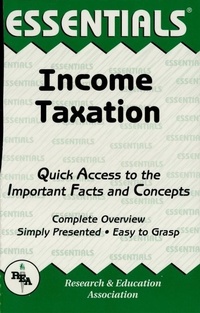
Income Taxation Essentials
Erschienen am 1. Januar 2013
164 Seiten
978-0-7386-7168-0 (ISBN)
Beschreibung
REA's Essentials provide quick and easy access to critical information in a variety of different fields, ranging from the most basic to the most advanced. As its name implies, these concise, comprehensive study guides summarize the essentials of the field covered. Essentials are helpful when preparing for exams, doing homework and will remain a lasting reference source for students, teachers, and professionals. Income Taxation includes basic principles, filing status and exemptions, exclusions from gross income, inclusions in gross income, gains and losses, nonrecognition, capital gains and losses, deductions toward adjusted gross income, itemized deductions, depreciation, amortization, depletion, special loss rules, credits, alternative minimum tax, and tax accounting.
Weitere Details
Weitere Ausgaben
Inhalt
- Intro
- These "Little Books" have rescued lots of grades and more!
- Title Page
- Copyright Page
- WHAT "THE ESSENTIALS" WILL DO FOR YOU
- Table of Contents
- CHAPTER 1 - BASIC PRINCIPLES
- 1.1 What is a Tax?
- 1.2 Other Functions of Federal Taxation
- 1.3 Sources of the Tax Law
- 1.4 Role of the IRS
- 1.5 How a Tax Bill Becomes Law
- 1.6 Steps in Computing Individual Income Tax
- 1.7 Tax Schematic
- CHAPTER 2 - FILING STATUS AND EXEMPTIONS
- 2.1 The Importance of Filing Status
- 2.2 Types of Filing Status
- 2.3 Who Must File a Return
- 2.4 Personal Exemptions
- 2.5 Dependency Exemptions
- 2.6 Types of Returns
- 2.7 Filing
- 2.8 Extensions
- CHAPTER 3 - EXCLUSIONS FROM GROSS INCOME
- 3.1 Definition of Exclusions
- 3.2 Gifts and Inheritance
- 3.3 Scholarships
- 3.4 Damages
- 3.5 Life Insurance
- 3.6 Special Insurance Plans and Benefits
- 3.7 Social Security Benefits
- 3.8 Employee Fringe Benefits
- 3.9 Tax Exempt Interest
- 3.10 Annuities
- 3.10.1 Lifetime Annuities
- 3.10.2 Three-Year Rule
- 3.11 Foreign Earned Income
- CHAPTER 4 - INCLUSIONS IN GROSS INCOME
- 4.1 Definition of Inclusion
- 4.2 Compensation
- 4.3 Interest
- 4.4 Rent
- 4.5 Prizes and Awards
- 4.6 Forgiveness of Debt
- 4.7 Illegal Income
- 4.8 Gambling Income
- 4.9 Unemployment Compensation
- 4.10 Tax Benefit Rule
- 4.11 Typical Corporate Distributions
- CHAPTER 5 - GAINS AND LOSSES
- 5.1 What is a Gain or Loss?
- 5.2 Realized Gain or Loss
- 5.3 Recognition of Gain or Loss
- 5.4 The Fundamental Formula and Its Terms
- 5.5 Adjustments to Basis
- 5.6 Purchase of Property
- 5.7 Property Received as Compensation
- 5.8 Property Received Incident to Divorce or Separation
- 5.9 Property Received as a Gift
- 5.10 Inheritance
- 5.11 Joint Tenancy with Rights of Survivorship
- 5.12 Taxable Exchange
- 5.13 First-In-First-Out
- 5.14 Intellectual Property and Self-Constructed Assets
- CHAPTER 6 - NONRECOGNITION
- 6.1 The Nontaxable Exchange
- 6.2 The Like-Kind Exchange
- 6.3 Involuntary Conversions
- 6.4 Age 55 or Older Exclusion
- 6.5 Rollover of Principal Residence
- CHAPTER 7 - CAPITAL GAINS AND LOSSES
- 7.1 Treatment of Capital Gains and Losses
- 7.2 Capital Assets: What are They?
- 7.3 Holding Period
- 7.4 Determination of Holding Period
- 7.5 Netting
- 7.6 Section 1231 Property: What is It?
- 7.7 The Section 1231 Netting Process
- 7.8 Insight into Recapture
- 7.9 Special Characterization Rules
- CHAPTER 8 - DEDUCTIONS TOWARD ADJUSTED GROSS INCOME
- 8.1 Deductions toward and from Adjusted Gross Income
- 8.2 Alimony
- 8.3 Penalties on Premature Withdrawal of Time Bearing Deposits
- 8.4 Losses on Dispositions of Property
- 8.5 Individual Retirement Account Contributions
- 8.6 Health Insurance Premiums
- 8.7 Self-Employment Taxes
- 8.8 Deductible Expenses of the Sole Proprietor or Self-Employed Person
- 8.9 Clarification of Certain Expenses
- 8.10 Expenses Related to the Production of Rental or Royalty Income
- 8.11 Reimbursed Employee Business Expenses
- CHAPTER 9 - ITEMIZED DEDUCTIONS
- 9.1 Itemized Deductions
- 9.2 Medical Expenses
- 9.3 Charitable Contributions
- 9.4 Interest
- 9.5 Taxes
- 9.6 Moving Expenses
- 9.7 Tier Two Itemized Deductions
- CHAPTER 10 - DEPRECIATION, AMORTIZATION, AND DEPLETION
- 10.1 Depreciation
- 10.2 Accelerated Cost Recovery System
- 10.3 ACRS "Section 179" Expense
- 10.4 Modified Accelerated Cost Recovery System (MACRS)
- 10.5 Personal Property Under MACRS
- 10.6 Real Estate Under MACRS
- 10.7 Section 179 Under MACRS
- 10.8 Amortization
- 10.9 Depletion
- CHAPTER 11 - SPECIAL LOSS RULES
- 11.1 Losses
- 11.2 Casualty and Theft Losses
- 11.3 Related Party Transactions
- 11.4 Gambling Losses
- 11.5 Worthless Stocks and Bonds
- 11.6 Sham Sales
- 11.7 Wash Sales
- 11.8 Hobby Losses
- 11.9 Converted Property
- 11.10 Net Operating Losses
- CHAPTER 12 - CREDITS
- 12.1 What is a Credit?
- 12.2 Earned Income Credit
- 12.3 Credit for the Elderly or Permanently Disabled
- 12.4 Child Care and Disabled Dependent Credit
- 12.5 Low-Income-Housing Credit
- 12.6 Rehabilitation Credit
- 12.7 Recapture of Credits
- CHAPTER 13 - ALTERNATIVE MINIMUM TAX
- 13.1 What is the Alternative Minimum Tax (AMT)?
- 13.2 Structure of the Computation
- 13.3 Adjustments
- 13.4 Preferences
- CHAPTER 14 - TAX ACCOUNTING
- 14.1 The Annual Accounting Period Concept-What is It?
- 14.2 The Tax Year
- 14.3 Methods of Accounting
- 14.4 Cash Method
- 14.5 Accrual Accounting
- 14.6 Special Rules
- 14.7 Installment Sale
- 14.8 At Risk Rules
- 14.9 Passive Activity Loss Limitation Rules
- 14.10 Inventory
- CHAPTER 15 - RECENT CHANGES IN THE INCOME TAX LAW
- 15.1 Inflation Adjustments
- 15.2 Donations of Appreciated Property
- 15.3 Determining the Non-Taxable Portion of Each Payment from a Retirement Plan Distribution
- 15.4 Kiddie Tax
- 15.5 Changes in Computation of the Alternative Minimum Tax
- 15.6 Social Security Changes
- 15.7 Cosmetic Surgery
- 15.8 Personal Interest Payments
- 15.9 Investment Interest is now Deductible only to the Extent of Investment Income
- 15.10 Passive Losses are Deductible only to the Extent of Passive Income
- 15.11 Deduction of Tax Preparation Fees for Sole Proprietors, Farmers, and Landlords
- 15.12 Schedule C-EZ
- 15.13 Extended Tax Tables
- 15.14 Revised Withholding Tables for Employers
- 15.15 Exclusion for Employer-Provided Education Assistance
- 15.16 Work Opportunity Credit for Employers of Targeted Groups
- 15.17 Low-Income Housing Credit
- 15.18 Amortization of Goodwill or Going-Concern Value
- 15.19 Safe Harbor for People Underpaying their Estimated Taxes
- 15.20 Revision of Rules for Tip Income
- 15.21 Business Expense Deductions are Changed
- 15.22 Debt Discharge Income Exclusion
- 15.23 Depreciation of Nonresidential Real Property
- 15.24 Presidential Election Campaign Fund
- 15.25 Publicly Traded Securities
- 15.26 Capital Gains
- 15.27 Accuracy-Related Penalties
- 15.28 Reporting Discharge of Indebtedness
- 15.29 Installment Payments
- 15.30 Exclusion of Interest on EE Bonds
- 15.31 Real Estate Professionals
- 15.32 Charitable Contributions
- 15.33 Moving Expenses
- 15.34 Club Dues
- 15.35 Social Security Benefits
- 15.36 Empowerment Zones
- 15.37 Indian Reservations
- 15.38 Health Insurance for Self-Employed People
- 15.39 Earned Income Credit Changes
- 15.40 Household Employees
- 15.41 Electronic Filing
- 15.42 Social Security Benefits for Nonresident Aliens are now Increased
- 15.43 State Tuition Programs
- 15.44 Death Benefit Exclusion Repealed
- 15.45 Personal Injury Damages
- 15.46 Employer-Provided Education
- 15.47 Contributions of Stock to Private Foundations
- 15.48 Work Opportunity Credit Replaces Targeted Jobs Credit
- 15.49 FUTA Tax
- CHAPTER 16 - MORE RECENT CHANGES
- 16.1 Section 179 Deductions
- 16.2 New Holding Period
- 16.3 Rules for Gain on Sale of Main Home
- 16.4 Adoption Credit
- 16.5 Long-Term Health Care Insurance
- 16.6 Retirement Changes
- 16.7 Medical Savings Accounts
- 16.8 Accelerated Death Benefits
- 16.9 Section 179 Expense Deduction
- 16.10 Health Insurance for Self-Employed People
- 16.11 Cancellation (Forgiveness) of Student Loans
- 16.12 Orphan Drug Credit
- 16.13 Public Officers Killed in the Line of Duty
- 16.14 Sale of Livestock Due to Weather-Related Conditions
- 16.15 Clean Fuel Vehicles Deduction
- 16.16 Credit for Washington, D.C., First-Time Home Buyers
- 16.17 Burden of Proof
- 16.18 Innocent Spouse
- 16.19 Disabled Taxpayers
- 16.20 Denial of Refund
- 16.21 Third-Party Contacts
- 16.22 No Financial Status Audit
- 16.23 Selection for an Audit
- 16.24 Privileged Communications
- 16.25 Interest Paid and Charged
- 16.26 Disaster Areas
- 16.27 Interest and Penalties
- 16.28 Collections
- 16.29 Offers of Compromise
- 16.30 Debt Collection Practices
- 16.31 Capital Gains
- 16.32 Child Tax Credit
- 16.33 Hope Credit
- 16.34 Lifetime Learning Credit
- 16.35 Education Individual Retirement Accounts
- 16.36 Deduction for Student Loan Interest
- 16.37 Roth Individual Retirement Accounts
- 16.38 Penalty-Free I.R.A. Distributions
- 16.39 Employer-Sponsored Retirement Plans
- 16.40 Net Operating Losses
- 16.41 Welfare to Work Credit
- 16.42 Increased Meal Deduction for Transportation Workers
- 16.43 Income Averaging for Farmers
- 16.44 Adjusted Gross Income for Earned Income Credit Purposes
- 16.45 Foreign Earned Income Exclusion
- 16.46 Increased Standard Deduction for Dependents
- 16.47 Rural Mail Carriers
- 16.48 Home Office Deduction
- These "little Books" have rescued lots of grades and more!
