

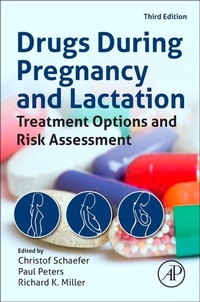
Drugs During Pregnancy and Lactation
Treatment Options and Risk Assessment
3. Auflage
Erschienen am 17. September 2014
918 Seiten
978-0-12-407901-4 (ISBN)
Beschreibung
Drugs During Pregnancy and Lactation, Third Edition is a quick and reliable reference for all those working in disciplines related to fertility, pregnancy, lactation, child health and human genetics who prescribe or deliver medicinal products, and to those who evaluate health and safety risks. Each chapter contains twofold information regarding drugs that are appropriate for prescription during pregnancy and an assessment of the risk of a drug when exposure during pregnancy has already occurred. Thoroughly updated with current regulations, references to the latest pharmacological data, and new medicinal products, this edition is a comprehensive resource covering latest knowledge and findings related to drugs during lactation and pregnancy.
- Provides evidence-based recommendations to help clinicians make appropriate recommendations
- Uniquely organized and structured according to drug class and treatment indications to offer authoritative clinical content on potential adverse effects
- Highlights new research developments from primary source about working mechanism of substances that cause developmental disorders
Weitere Details
Weitere Ausgaben
Inhalt
1. General Commentary on drug therapy and drug risks in pregnancy2. Specific drug therapties during pregnancy2.1 Analgesics, non-steroidal anti-inflammatory drugs (NSAIDs), muscle relaxants, and antigout medications2.2 Allergy and hyosensitization therapy2.3 Antiasthmatic and cough medication2.4 Nausea and vomiting in pregnancy2.5 Gastro-intestinal medications, hyoplipidemic agents and spasmolytics2.6 Anti-infective Agents2.7 Vaccines and immunoglobulins2.8 Heart and blood medications2.9 Anticoagulants, thrombocyte aggregation inhibitors, fibrinolyrics,and volume replacement agents2.10 Epilepsy and antiepileptic medications2.11 Psychotropic drugs2.12 Immunosuppression, rheumatic diseases, multiple sclerosis, and Wilson's disease2.13 Antineoplastic drugs2.14 Uterine contraction agents, tocolytics, vaginal therapeutics and local contraceptives2.15 Hormones2.16 General and local anesthetics and muscle relaxants2.17 Dermatological medications and local therapeutics2.18 Vitamins, minerals and trace elements2.19 Herbs during pregnancy2.20 Diagnostic agents2.21 Recreational drugs2.22 Poisonings and toxins2.23 Occupational, industrial and environmental agents3. General commentary on drug therapy and drug risk during lactation3.1 The advances of breastfeading versus the risks of maternal medication3.2 The passage of medication into the mother's milk3.3 Infant characteristics3.4 Milk plasma ratio3.5 Amount of medication in the milk and relative dose3.6 Toxicity of medications in the mother's milk3.7 Medications that affect lactation3.8 Breastfeeding support4. Specific drug therapies during lactation4.1 Analgesics, antiphlogistics and anesthetics4.2 Antiallergics, antiasthmatics and antitussives4.3 Gastrointestinal drugs4.4 Anti-infectives4.5 Vaccines and immunoglobulins 4.6 Cardiovascular drugs and diuretics4.7 Anticoagulants, thrombocyte aggregation inhibitors and fibrinolytics4.8 Antiepileptics4.9 Psychotropic drugs4.10 Immunomodulating and antineoplastic agents4.11 Hormones and hormone antagonists4.12 Dermatological medication and local therapeutics4.13 Alternative remedies, vitamins, and minerals4.14 Contrast media, radionuclides and diagnostics4.15 Infections during breastfeeding4.16 Recreational drugs4.17 Plant toxins4.18 Industrial chemicals and environmental contaminants4.18.1 Persistent organochlorine compounds (pesticides, polychlorinated biphenyls and dioxins)4.18.2 Mercury 4.18.3 Lead4.18.4 Cadmium4.18.5 Other contaminants4.18.6 Breasfeeding despite environmental contaminants?4.18.7 Breastfeeding and the workplace
