

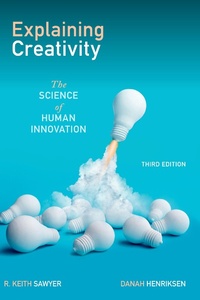
Explaining Creativity
The Science of Human Innovation
3. Auflage
Erschienen am 19. Dezember 2023
593 Seiten
978-0-19-774755-1 (ISBN)
Beschreibung
Explaining Creativity is an accessible introduction to the latest scientific research on creativity. The book summarizes and integrates a broad range of research in psychology and related scientific fields. In the last 50 years, psychologists, anthropologists, and sociologists have devoted increased attention to creativity; we now know more about creativity than at any point in history. Explaining Creativity examines research on thinking processes, personality, culture, mental health, groupwork, technology, self-beliefs, and more. It also reviews creativity across fields such as the arts, science, theater, music, and writing.
This new edition maintains the broad and practical, yet still detailed approach of the previous editions, but it features updated coverage on the full landscape of creative cognition, creative practice, and social and cultural contexts for creativity. With three new chapters on Creativity and Technology, Creativity and Wellbeing, and Creativity and Self, this third edition provides a comprehensive understanding of creativity for anyone interested in the topic.
Weitere Details
Weitere Ausgaben
Personen
R. Keith Sawyer is the Morgan Distinguished Professor in Educational Innovations at the University of North Carolina at Chapel Hill. Dr. Sawyer has published 18 books including the two previous editions of Explaining Creativity. He has published over 100 journal articles and book chapters. His research has explored several topics: group creativity in jazz, theater, and organizations; social emergence; the science of how people learn; and teaching in professional schools of art and design.
Danah Henriksen is Associate Professor of Educational Leadership and Innovation at Arizona State University. As an educational psychologist who has studied creativity for over ten years, she is interested in many aspects of creativity in education, including topics like creative teaching, transdisciplinary thinking skills, design thinking in education, and technology and creativity. Her work has been published in peer-reviewed journals, practitioner articles, and book chapters, and she has served as a creativity leader for EDUsummIT-a UNESCO-based global consortium of leaders in policy, practice, and research on educational technology.
Inhalt
Part 1. Conceptions
1. Introduction
2. Conceptions of Creativity
Part 2: Individualist Approaches
3. Defining Creativity Through Assessment
4. The Creative Personality
5. The Creative Process, Part 1
6. The Creative Process, Part 2
7. The Creative Process, Part 3
8. Biology and Creativity
9. Creative Self Beliefs
10. Creativity and Well-being
Part 3: Sociocultural Approaches
11. The Sociology of Creativity
12. Group Creativity
13. Organizational Creativity
14. Culture and Creativity
15. Creativity and Technology
Part 4: Creativity in the Domains
16. Visual Arts
17. Writing
18. Music
19. Theater
20. Science
21. Conclusion: The Future of Creativity
Appendices
The Domain of Creativity Research
Appendix A: Third Edition Literature Review Methodology
Appendix B: A Timeline of Creativity Research
Appendix C: Creativity Research Overviews
Appendix D: Journal Special Issues
Appendix E: Journals that Publish Creativity Research
Appendix F: Influential Books in Creativity Research
The Field of Creativity Research
Appendix G: Colleges and Universities with a Degree or Certificate in Creativity
Appendix H: Influential Creativity Researchers, 1800-1990
References
Index
