

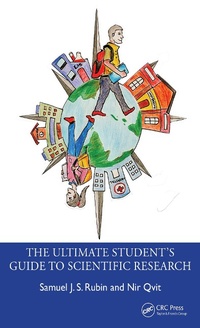
The Ultimate Student's Guide to Scientific Research
1. Auflage
Erschienen am 13. September 2024
150 Seiten
978-1-040-08917-0 (ISBN)
Beschreibung
A scientific career is a long and winding journey. Many factors assemble to determine the trajectory and products of scientific inquiry. This book addresses the scientific career path comprehensively, ranging from how to build a strong foundational knowledge and skill base, to training programs, composing winning research proposals and grants, conducting excellent research, writing papers and reports, collaborative research programs, bridging academia and industry, career advancement, and more.
Guides where, how, and what to study in undergraduate, post-baccalaureate, graduate, and post-graduate training programs and addresses important crossroads throughout the continuum of training and beyond.
Highlights best practices, techniques, and nuances for creating a successful scientific career.
Provides critical insights for traversing major milestones and decision-points in a scientific career and serves as a resources for reference throughout stages of advancement.
Discusses alternative career opportunities for individuals trained in sciences.
Offers students, researchers, and other scientists across all stages of their careers with accessible, engaging, and useful insider tips.
Guides where, how, and what to study in undergraduate, post-baccalaureate, graduate, and post-graduate training programs and addresses important crossroads throughout the continuum of training and beyond.
Highlights best practices, techniques, and nuances for creating a successful scientific career.
Provides critical insights for traversing major milestones and decision-points in a scientific career and serves as a resources for reference throughout stages of advancement.
Discusses alternative career opportunities for individuals trained in sciences.
Offers students, researchers, and other scientists across all stages of their careers with accessible, engaging, and useful insider tips.
Rezensionen / Stimmen
As someone who went through the educational process of becoming a scientist (undergraduate to graduate school), I can say the content and advice given in this book is extremely helpful and practical for anyone considering a future career in science. This includes advice on excelling in undergrad, masters and PhD programs, becoming an efficient and effective scientist, and an exploration of the various career paths in academia and industry one can apply their scientist training to. This book is well suited for students as early as high school who are considering a career in science, but there are nuggets of wisdom for scientists throughout their development cycle, including those in graduate school or just starting their own research labs.Bryan Xie, Stanford University
Worthwhile for junior and experienced researchers. Reviewed in the United States on March 9, 2025. This book is fantastic. I would definitely recommend it for any researcher early in their career. Having gone through it myself, I learned many things I wish I had know earlier and generally got a great perspective on plotting a career trajectory.
Dan Iter, Fastino
As a fellow scientist with a strong interest in soft skills and mentoring, I found The Ultimate Student's Guide to Scientific Research to be comprehensive, refreshingly down-to-earth, and fun to read. Qvit, Rubin, and their co-authors have managed to capture something that is (too) often missing in academic guidance: they've written a guide that not only explains the academic and professional milestones in science, but also offers an honest, thoughtful look at what it's actually like to walk this path.
From the early stages of choosing a training program, all the way to starting your own lab or exploring alternative careers, the book covers each step with clarity and practical advice. It doesn't stop at logistics - it addresses challenges, opportunities, and the emotional and strategic decisions that shape a life in science. Chapters like "The Scientist's Skillset" and "Navigating Decisions, Milestones, and Crossroads in Science" especially resonated with me, as they skillfully bridge the gap between technical knowledge and personal growth.
I especially appreciated the inclusion of diverse perspectives and experiences, such as the chapters on women in science and non-linear career paths. These additions make the book relevant not just for students just starting out, but also for anyone mentoring or advising the next generation of scientists.
In short, this book does what great science communication should do: it informs, encourages, and provides real-life tools for navigating the scientific journey. I would gladly recommend it to any aspiring scientist, and to the mentors who guide them.
Liron Rozenrkantz
Weitere Details
Auflage
1. Auflage
Sprache
Englisch
Verlagsort
London
Großbritannien
Verlagsgruppe
Taylor & Francis Ltd
Zielgruppe
Für höhere Schule und Studium
Für Beruf und Forschung
Illustrationen
1 Tables, black and white; 4 Line drawings, black and white; 4 Illustrations, black and white
ISBN-13
978-1-040-08917-0 (9781040089170)
Copyright in bibliographic data and cover images is held by Nielsen Book Services Limited or by the publishers or by their respective licensors: all rights reserved.
Schweitzer Klassifikation
Weitere Ausgaben
Personen
Dr. "Yoni" Samuel J. S. Rubin completed his PhD in immunology at Stanford University School of Medicine, followed by postdoctoral training, MD, clinical residency, and fellowship at the same institution. His research focuses on better understanding the molecular and cellular mechanisms underlying chronic immune-mediated diseases and using this knowledge to develop safer, cheaper, and more effective tools for detecting and treating illness worldwide. In the field of mucosal immunology and immune cell trafficking, Dr. Rubin's findings have inspired the development of novel blood-based methods for detection of gastroenterological conditions.
Dr. Nir Qvit completed his doctorate in organic chemistry at the Hebrew University in 2008. His graduate work focused on developing strategies for synthesis of small molecules, peptides, and peptidomimetics (modified peptides) for various therapeutic applications. Dr. Qvit completed postdoctoral training and worked as a Senior Scientist in Chemical and Systems Biology at Stanford University. In 2017, Dr. Qvit became a Senior Lecturer and Principal Investigator of the multi-national and inter-disciplinary Laboratory for Chemical Biology of Protein-Protein Interactions in the Azrieli Faculty of Medicine at Bar Ilan University.
Dr. Nir Qvit completed his doctorate in organic chemistry at the Hebrew University in 2008. His graduate work focused on developing strategies for synthesis of small molecules, peptides, and peptidomimetics (modified peptides) for various therapeutic applications. Dr. Qvit completed postdoctoral training and worked as a Senior Scientist in Chemical and Systems Biology at Stanford University. In 2017, Dr. Qvit became a Senior Lecturer and Principal Investigator of the multi-national and inter-disciplinary Laboratory for Chemical Biology of Protein-Protein Interactions in the Azrieli Faculty of Medicine at Bar Ilan University.
Inhalt
1. Introduction
Samuel J. S. Rubin, Nir Qvit
2. The history of science
Nir Qvit, Samuel J. S. Rubin
3. Scientific impacts
Nir Qvit, Samuel J. S. Rubin
4. A day in the life of a scientist
Samuel J. S. Rubin, Nir Qvit
5. The scientist's skillset
Samuel J. S. Rubin, Nir Qvit
6. The conception of a career in science
Nadav Qvit
7. Finding the right training program
Samuel J. S. Rubin, Nir Qvit
8. Excelling in your undergraduate degree
Samuel J. S. Rubin, Nir Qvit
9. Postbaccalaureate programs
Samuel J. S. Rubin, Nir Qvit
10. The master's degree
Nir Qvit, Samuel J. S. Rubin
11. Excelling in your PhD
Samuel J. S. Rubin, Nir Qvit
12. The Secret Sauce: how to be an efficient and effective research scientist
Aaron Leconte
13. Designing a research project
Nir Qvit, Samuel J. S. Rubin
14. Obtaining research funding
Nir Qvit, Samuel J. S. Rubin
15. Publishing and presenting scientific findings
Nir Qvit, Samuel J. S. Rubin
16. Science in a pandemic
Samuel J. S. Rubin, Nir Qvit
17. Excelling in your postdoc
Nir Qvit, Samuel J. S. Rubin
18. Starting a laboratory or research group
Nir Qvit, Samuel J. S. Rubin
19. Alternate and circuitous paths
Bo'az Klartag
20. Navigating decisions, milestones, and crossroads in science
Samuel J. S. Rubin, Nir Qvit
21. Women in science
Brett Goldsmith, Kiana Aran
22. Scientific career trajectories
Nir Qvit, Samuel J. S. Rubin
23. Epilogue
Nir Qvit, Samuel J. S. Rubin
Samuel J. S. Rubin, Nir Qvit
2. The history of science
Nir Qvit, Samuel J. S. Rubin
3. Scientific impacts
Nir Qvit, Samuel J. S. Rubin
4. A day in the life of a scientist
Samuel J. S. Rubin, Nir Qvit
5. The scientist's skillset
Samuel J. S. Rubin, Nir Qvit
6. The conception of a career in science
Nadav Qvit
7. Finding the right training program
Samuel J. S. Rubin, Nir Qvit
8. Excelling in your undergraduate degree
Samuel J. S. Rubin, Nir Qvit
9. Postbaccalaureate programs
Samuel J. S. Rubin, Nir Qvit
10. The master's degree
Nir Qvit, Samuel J. S. Rubin
11. Excelling in your PhD
Samuel J. S. Rubin, Nir Qvit
12. The Secret Sauce: how to be an efficient and effective research scientist
Aaron Leconte
13. Designing a research project
Nir Qvit, Samuel J. S. Rubin
14. Obtaining research funding
Nir Qvit, Samuel J. S. Rubin
15. Publishing and presenting scientific findings
Nir Qvit, Samuel J. S. Rubin
16. Science in a pandemic
Samuel J. S. Rubin, Nir Qvit
17. Excelling in your postdoc
Nir Qvit, Samuel J. S. Rubin
18. Starting a laboratory or research group
Nir Qvit, Samuel J. S. Rubin
19. Alternate and circuitous paths
Bo'az Klartag
20. Navigating decisions, milestones, and crossroads in science
Samuel J. S. Rubin, Nir Qvit
21. Women in science
Brett Goldsmith, Kiana Aran
22. Scientific career trajectories
Nir Qvit, Samuel J. S. Rubin
23. Epilogue
Nir Qvit, Samuel J. S. Rubin
