

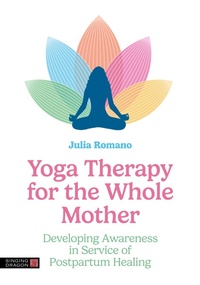
Yoga Therapy for the Whole Mother
Developing Awareness in Service of Postpartum Healing
Erschienen am 18. Juli 2024
336 Seiten
978-1-83997-459-5 (ISBN)
Beschreibung

One of the first of its kind, this is an authoritative and professional yoga therapy text offering a comprehensive overview of postpartum conditions and guidance on how to manage them using yoga therapy as both a lens and a toolbox. Rather than focussing on returning a woman's body to its pre-birth condition, this guide recentres emphasis on the mother's healing in body, mind, and spirit and guides practitioners in how to facilitate this transition.
This book is centred on the pancamaya model which views the individual as a composite of five separate but interrelated layers including the physical, the breath-energetic, the psycho-emotional, the capacity for discernment, and awe. Split into five sections based on these layers, this guide will cover common postpartum issues alongside contemporary supporting research, as well as the best yoga therapy tools to address each concern.
This evidence-based resource is invaluable for practitioners who want to help facilitate the postpartum healing journey.
This book is centred on the pancamaya model which views the individual as a composite of five separate but interrelated layers including the physical, the breath-energetic, the psycho-emotional, the capacity for discernment, and awe. Split into five sections based on these layers, this guide will cover common postpartum issues alongside contemporary supporting research, as well as the best yoga therapy tools to address each concern.
This evidence-based resource is invaluable for practitioners who want to help facilitate the postpartum healing journey.
Weitere Details
Auflage
Digital original
Sprache
Englisch
Verlagsort
London
Großbritannien
Editions-Typ
Digitale Ausgabe
Illustrationen
B&W
ISBN-13
978-1-83997-459-5 (9781839974595)
Copyright in bibliographic data and cover images is held by Nielsen Book Services Limited or by the publishers or by their respective licensors: all rights reserved.
Schweitzer Klassifikation
Weitere Ausgaben
Andere Ausgaben
Julia Irene Romano
Yoga Therapy for the Whole Mother
Developing Awareness in Service of Postpartum Healing
Buch
07/2024
Jessica Kingsley Publishers
37,00 €
Versand in 3-4 Wochen
Person
Julia Romano, MA, MA, MS, is a Certified Yoga Therapist in private practice, focusing on the challenges and lessons that arise from life's many transitions. She leads workshops guiding newly postpartum women through each layer of self so that they may find healing. She infuses her offering of yoga therapy with teachings and tools gleaned from her training in International Conflict Management and Clinical Psychology. As supervisor to yoga therapists and co-creator of a 200-hour yoga teacher training based in Washington, DC, Romano finds joy in helping new yoga teachers and yoga therapists alike discern their path.
Author and poet, Romano is the creator of the Substack Site Mark Upon the Infinite: Parenting While Walking a Spiritual Path as well as The Yoga Therapy Lens. Romano is also a committed back-to-the-land and keep-it-simple advocate, having transplanted with her husband and four children to the rolling hills of West Virginia where they are putting down roots and seeing what blossoms.
Author and poet, Romano is the creator of the Substack Site Mark Upon the Infinite: Parenting While Walking a Spiritual Path as well as The Yoga Therapy Lens. Romano is also a committed back-to-the-land and keep-it-simple advocate, having transplanted with her husband and four children to the rolling hills of West Virginia where they are putting down roots and seeing what blossoms.
Inhalt
- Intro
- Yoga Therapy for the Whole Mother
- Cover
- Of related interest
- Title Page
- Copyright
- Contents
- 1. Introduction
- Yoga therapy and the fourth trimester
- Who this text is for, and how to use it
- Body awareness and negative self concept
- Top down, bottom up, and everything in between
- What is "postpartum?"
- Global grandmothers, and my domestic bias
- On ritual
- The yoga therapy scope of practice
- What's in (and not in) my toolbox
- The setting for postpartum yoga therapy
- The role of discernment
- The quality of the relationship
- Working with new moms
- 2. Negative Self Concept and Disordered Body Awareness: The Disease, the Science, the Treatment, and the Healing
- The disease of negative self concept and disordered body awareness
- Why meditation in movement "works"
- Disordered body awareness: a lens for treatment
- Assessment and development of body awareness: a good place to start
- Protocols for assessing and treating disordered body awareness
- Scale of body connection: measuring body awareness and bodily dissociation
- Introspective asana
- Kosha scan in introspective asana
- Three adjectives practice, and shapes, colors, and textures
- Body scan
- Body awareness in motion
- Body mapping
- 3. The Pancamaya Kosha Lens and Related Central Yogic Concepts
- Breaking the pancamaya kosha model down
- Communicating the pancamaya kosha model
- The pancamaya kosha model in yoga therapy action
- Exploring and supporting the whole being: protocols for pancamaya kosha
- Kosha check-in
- Purusha, prakriti
- 4. Annamaya Kosha, the Physical Dimension
- Acute and medium- to long-term conditions
- Tools for annamaya kosha
- The nervous system and its component parts
- Giving birth, one way or another
- Unpacking the conditions of annamaya kosha
- Postpartum anemia
- Postpartum edema
- Venous thrombosis
- Constipation and hemorrhoids
- Mindful intake
- Mindful soaks
- Mindful potty time
- Moving for movements
- Postpartum pain: no one tells you how much it's going to hurt
- Common sources of postpartum pain
- Posture, and activities of daily living
- Taking shape across the koshas
- Neck, shoulder, back, and jaw pain
- Chin nods, neck rotation, and lateral flexion and extension
- Shoulder and arm rotations
- Shoulder blade retraction
- Transverse abdominIs contractions
- Anterior/posterior stretch
- Lumbar pain
- Spinal revolution in cat-cow
- Back extension in cobra pose
- Hip rotator stretch in supine figure four
- Hip flexor stretching in triangle pose and high lunge
- Pelvic pain
- Pubic symphysis osteitis, and moving about your day
- Exercises for pubic symphysis diastasis
- Pelvic girdle pain, and treating the whole woman
- Sacroiliac pain
- Tailbone pain
- Wrist pain: condition etiology and tools
- Mobilize
- Stretch
- Stabilize
- Squeeze
- Resist
- Pain and the yoga therapy lens
- Yoga therapy tools for pain
- Breath awareness
- Breath regulation, "calming alertness," and cooling down
- Awareness and regulation
- Movement
- Breast and bottle feeding: nourishment is a two-way street
- Developing awareness in breastfeeding
- Core body reconnection, and identifying diastasis recti
- Baby steps toward postural awareness
- 360-degree breathing
- Pelvic floor breathing
- Notice imbalance
- Walk with awareness
- Step-by-step balancing
- Bridge pose
- Abduct, adduct
- Marching bridge with hand press
- Supported squats
- Supine tuck-tilt
- Supine tuck-tilt with "breathing bridge"
- Tabletop tuck-tilt
- Plank tuck
- Diastasis recti abdominis
- Identifying diastasis recti abdominis
- Mindful rising, mindful lifting
- Touch your scars: caesarean-specific recommendations
- Visualize the layers of healing
- The breath is a stretch
- Move what you can
- rest the rest
- Touch your scars
- Tell your story: trauma is not a four-letter word
- Pelvic floor awareness: exploring dysfunction through the yoga therapy lens
- Urinary incontinence
- Fecal incontinence
- Pelvic organ prolapse
- Urinary retention
- Terminal constipation
- First, awareness
- Potty pelvic floor awareness
- Pelvic floor awareness in motion, and posture
- Relaxation
- Supine squats (one-legged modified happy baby)
- Supine squats with rotation
- Leg extensions: extend, bend, and breathe
- Bound angle pose: seated or supine
- Healing self-touch
- Strengthening
- Supine leg raise
- Uddiyana bandha, and the pelvic trampoline
- Supine upward lift
- Standing upward lift
- Exploring and supporting the physical sheath: protocols for annamaya kosha
- Annamaya kosha inquiry prompts
- Annamaya kosha experiential practice
- Legs up the wall
- Mindful intake
- Walking meditation
- Muscular tense-muscular release-energetic relax, or tense-release-relax
- Self-massage
- Movement that breathes
- 5. Pranamaya Kosha, the Breath and Energetic Dimension
- Structuring our exploration of the pranamaya kosha
- The brain-heart-breath axis
- Heart rate variability
- Breath assessment and breath awareness
- Conditions of the pranamaya kosha
- Exploring and supporting the breath-energetic sheath: protocols for pranamaya kosha
- Pranamaya kosha inquiry prompts
- Pranamaya kosha experiential practice
- Breath awareness
- Enlivening the breath-body structure
- All breathing is diaphragmatic
- Five senses meditation
- Breathing hands and finger slides
- Scented breathing
- Fullness, vastness
- Pursed lips breathing, and the transformative exhalation
- Learning to breathe in the deep end
- Prana vayu breathing: receive, sense, and let in
- Samana vayu breathing: cultivate equilibrium through integration
- Apana vayu breathing: release, let go
- Udana vayu breathing: connect intention and expression
- Vyana vayu breathing: be fluid
- exchange, expand
- Prana-apana vayu breathing
- Nadi shodana
- Victorious ujjayi
- The sound of the ocean in a breath
- Bhramari, or buzzing bee breathing
- Sheetali and sitkari, or breath that cools
- "So hum"
- "Sa. Ta. Na. Ma"
- 6. Manomaya Kosha, the Psycho-Emotional Dimension
- Perinatal mood, anxiety, and psychiatric disorders
- Additional postpartum psychiatric disorders
- Identity, rage, disappointment, guilt, shame, and grief
- The therapist's container: "a clean, well-lighted place"
- Exploring and supporting the mental and emotional sheath: protocols for manomaya kosha
- Manomaya kosha inquiry prompts
- Manomaya kosha experiential practice
- Help your client tell her story
- Big muscles metabolize big feelings
- Hand to heart meditation
- 7. Vijnanamaya Kosha, the Capacity for Wisdom and Discernment
- Motherhood changes the brain
- Exploring and supporting the capacity for wisdom and discernment: protocols for vijnanamaya kosha
- Vijnanamaya kosha inquiry prompts
- Vijnanamaya kosha experiential practice
- Training the mind with intentional repetition
- It's like this now
- Gratitude changes the brain
- Practice gratitude
- The ingredients of ritual
- Noticing rajas, tamas, and sattva: the sensations of emotion
- Sometimes, but not always, meet fire with fire
- Notice the opposites: lighter side, shadow side
- Language matters
- Lean into the stuck
- Death consciousness
- Discerning SMART goals
- Labeling the thief thought
- Hands to heart, try again
- 8. Anandamaya Kosha, the Capacity for Joy and Awe
- Nourishing the fruits of anandamaya kosha
- Exploring and supporting the capacity for wisdom and discernment: protocols for anandamaya kosha
- Anandamaya kosha inquiry prompts
- Anandamaya kosha experiential practice
- Creative cultivation of inner resource, meaning, and awe
- 9. You Are a Link in the Chain
- References
