

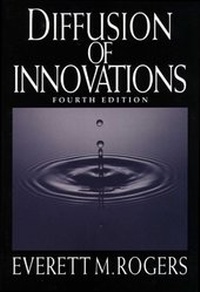
Diffusion of Innovations, 4th Edition
4. Auflage
Erschienen am 6. Juli 2010
518 Seiten
978-1-4516-0247-0 (ISBN)
Beschreibung

Since the first edition of this landmark book was published in 1962,
Everett Rogers's name has become "virtually synonymous with the study
of diffusion of innovations," according to Choice. The second and
third editions of Diffusion of Innovations became the standard
textbook and reference on diffusion studies. Now, in the fourth
edition, Rogers presents the culmination of more than thirty years of
research that will set a new standard for analysis and inquiry.
The fourth edition is (1) a revision of the theoretical framework and
the research evidence supporting this model of diffusion, and (2) a
new intellectual venture, in that new concepts and new theoretical
viewpoints are introduced. This edition differs from its predecessors
in that it takes a much more critical stance in its review and
synthesis of 5,000 diffusion publications. During the past thirty
years or so, diffusion research has grown to be widely recognized,
applied and admired, but it has also been subjected to both
constructive and destructive criticism. This criticism is due in large
part to the stereotyped and limited ways in which many diffusion
scholars have defined the scope and method of their field of study.
Rogers analyzes the limitations of previous diffusion studies,
showing, for example, that the convergence model, by which
participants create and share information to reach a mutual
understanding, more accurately describes diffusion in most cases than
the linear model.
Rogers provides an entirely new set of case examples, from the
Balinese Water Temple to Nintendo videogames, that beautifully
illustrate his expansive research, as well as a completely revised
bibliography covering all relevant diffusion scholarship in the past
decade. Most important, he discusses recent research and current
topics, including social marketing, forecasting the rate of adoption,
technology transfer, and more. This all-inclusive work will be
essential reading for scholars and students in the fields of
communications, marketing, geography, economic development, political
science, sociology, and other related fields for generations to come.
Everett Rogers's name has become "virtually synonymous with the study
of diffusion of innovations," according to Choice. The second and
third editions of Diffusion of Innovations became the standard
textbook and reference on diffusion studies. Now, in the fourth
edition, Rogers presents the culmination of more than thirty years of
research that will set a new standard for analysis and inquiry.
The fourth edition is (1) a revision of the theoretical framework and
the research evidence supporting this model of diffusion, and (2) a
new intellectual venture, in that new concepts and new theoretical
viewpoints are introduced. This edition differs from its predecessors
in that it takes a much more critical stance in its review and
synthesis of 5,000 diffusion publications. During the past thirty
years or so, diffusion research has grown to be widely recognized,
applied and admired, but it has also been subjected to both
constructive and destructive criticism. This criticism is due in large
part to the stereotyped and limited ways in which many diffusion
scholars have defined the scope and method of their field of study.
Rogers analyzes the limitations of previous diffusion studies,
showing, for example, that the convergence model, by which
participants create and share information to reach a mutual
understanding, more accurately describes diffusion in most cases than
the linear model.
Rogers provides an entirely new set of case examples, from the
Balinese Water Temple to Nintendo videogames, that beautifully
illustrate his expansive research, as well as a completely revised
bibliography covering all relevant diffusion scholarship in the past
decade. Most important, he discusses recent research and current
topics, including social marketing, forecasting the rate of adoption,
technology transfer, and more. This all-inclusive work will be
essential reading for scholars and students in the fields of
communications, marketing, geography, economic development, political
science, sociology, and other related fields for generations to come.
Weitere Details
Weitere Ausgaben
Andere Ausgaben

Everett M. Rogers
Diffusion of Innovation
Buch
02/1995
4. Auflage
The Free Press
48,34 €
Artikel ist vergriffen; siehe andere Ausgabe
Person
Dr. Everett M. Rogers is Distinguished Professor in the Department of Communication and Journalism at the University of New Mexico (UNM), where he teaches and conducts research on the diffusion of innovations.
Inhalt
Preface
CHAPTER 1. ELEMENTS OF DIFFUSION
CHAPTER 2. A HISTORY OF DIFFUSION RESEARCH
CHAPTER 3. CONTRIBUTIONS AND CRITICISMS OF DIFFUSION RESEARCH
CHAPTER 4. THE GENERATION OF INNOVATIONS
CHAPTER 5. THE INNOVATION-DECISION PROCESS
CHAPTER 6. ATTRIBUTES OF INNOVATIONS AND THEIR RATE OF ADOPTION
CHAPTER 7. INNOVATIVENESS AND ADOPTER CATEGORIES
CHAPTER 8. DIFFUSION NETWORKS
CHAPTER 9. THE CHANGE AGENT
CHAPTER 10. INNOVATION IN ORGANIZATIONS
CHAPTER 11. CONSEQUENCES OF INNOVATIONS
Bibliography
Name Index
Subject Index
About the Author
CHAPTER 1. ELEMENTS OF DIFFUSION
CHAPTER 2. A HISTORY OF DIFFUSION RESEARCH
CHAPTER 3. CONTRIBUTIONS AND CRITICISMS OF DIFFUSION RESEARCH
CHAPTER 4. THE GENERATION OF INNOVATIONS
CHAPTER 5. THE INNOVATION-DECISION PROCESS
CHAPTER 6. ATTRIBUTES OF INNOVATIONS AND THEIR RATE OF ADOPTION
CHAPTER 7. INNOVATIVENESS AND ADOPTER CATEGORIES
CHAPTER 8. DIFFUSION NETWORKS
CHAPTER 9. THE CHANGE AGENT
CHAPTER 10. INNOVATION IN ORGANIZATIONS
CHAPTER 11. CONSEQUENCES OF INNOVATIONS
Bibliography
Name Index
Subject Index
About the Author
