

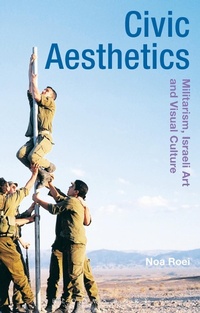
Civic Aesthetics
Militarism, Israeli Art and Visual Culture
1. Auflage
Erschienen am 17. November 2016
240 Seiten
978-1-4742-5318-5 (ISBN)
Beschreibung

Awarded an Honourable Mention by the Association for Israeli Studies.
Exploring the politics of the image in the context of Israeli militarized visual culture, Civic Aesthetics examines both the omnipresence of militarism in Israeli culture and society and the way in which this omnipresence is articulated, enhanced, and contested within local contemporary visual art. Looking at a range of contemporary artworks through the lens of "civilian militarism", Roei employs the theory of various fields, including memory studies, gender studies, landscape theory, and aesthetics, to explore the potential of visual art to communicate military excesses to its viewers.
This study builds on the specific sociological concerns of the chosen cases to discuss the complexities of visuality, the visible and non-visible, arguing for art's capacity to expose the scopic regimes that construct their visibility. Images and artworks are often read either out of context, on purely aesthetic or art-historical ground, or as cultural artefacts whose aesthetics play a minor role in their significance. This book breaks with both traditions as it approaches all art, both high and popular art, as part of the surrounding visual culture in which it is created and presented. This approach allows a new theory of the image to come forth, where the relation between the political and the aesthetic is one of exchange, rather than exclusion.
Exploring the politics of the image in the context of Israeli militarized visual culture, Civic Aesthetics examines both the omnipresence of militarism in Israeli culture and society and the way in which this omnipresence is articulated, enhanced, and contested within local contemporary visual art. Looking at a range of contemporary artworks through the lens of "civilian militarism", Roei employs the theory of various fields, including memory studies, gender studies, landscape theory, and aesthetics, to explore the potential of visual art to communicate military excesses to its viewers.
This study builds on the specific sociological concerns of the chosen cases to discuss the complexities of visuality, the visible and non-visible, arguing for art's capacity to expose the scopic regimes that construct their visibility. Images and artworks are often read either out of context, on purely aesthetic or art-historical ground, or as cultural artefacts whose aesthetics play a minor role in their significance. This book breaks with both traditions as it approaches all art, both high and popular art, as part of the surrounding visual culture in which it is created and presented. This approach allows a new theory of the image to come forth, where the relation between the political and the aesthetic is one of exchange, rather than exclusion.
Weitere Details
Reihe
Auflage
1. Auflage
Sprache
Englisch
Verlagsort
London
Großbritannien
Verlagsgruppe
Bloomsbury Publishing PLC
Zielgruppe
Für höhere Schule und Studium
Illustrationen
25 bw illus
ISBN-13
978-1-4742-5318-5 (9781474253185)
Copyright in bibliographic data and cover images is held by Nielsen Book Services Limited or by the publishers or by their respective licensors: all rights reserved.
Schweitzer Klassifikation
Weitere Ausgaben
Andere Ausgaben
Buch
11/2016
Bloomsbury Academic
53,32 €
Versand in 15-20 Tagen
Person
Noa Roei is Assistant Professor in the Comparative Literature and Cultural Analysis department at the University of Amsterdam, the Netherlands and a research fellow at the Amsterdam School of Cultural Analysis.
Inhalt
List of Illustrations
Acknowledgements
Introduction
In Search of a Civic Aesthetics
Between Critique and Complicity
Showing Seeing: The Critical Image
Chapter 1: Can(n)ons of Israeli Society
Frames and Set-Ups
Soldier Figures, Civilian Militarism, and Israeli Art
Taking Sides: Exhibitions as Framing Agents
Visual Performatives
Critical Frictions
Chapter 2: Bodies of the Nation: Eroticized Soldiers
Serial Quotations
National Bodies
Rewriting the Jewish Body, Again
Women Soldiers
Queer Dreams of the Nation
Chapter 3: Looking Through Landscape
The Landscape Way of Seeing
The "Stifling of the Gaze"
Israeli Mindscapes
Chapter 4: Kebab in Theory: Mapping Vision
Zooming in on the Thinking Image
Contesting Mis/interpretations
The Archaeology of the Still Life: Bringing back the Anti-Image
Distortion and Desire: The Mapping Impulse
Seeing Green: Shaping Emplacement
Chapter 5: Greetings to the Soldier-Citizen: Consuming Nostalgia
Peace, Security, and Sparkles
From Guns to Cream Cheese
The Politics of Nostalgia
Preposterous Postcards
The Limits of Critical Discourse
Chapter 6: Fence Art: Re/Framing Politics
Bil'in and Beyond: Aesthetics of Disagreement
Redistributing Visibility
Changing Contexts, Shifting Frames
Conclusion: the Work, the World, and the Critical Image
Works Cited
Index
Acknowledgements
Introduction
In Search of a Civic Aesthetics
Between Critique and Complicity
Showing Seeing: The Critical Image
Chapter 1: Can(n)ons of Israeli Society
Frames and Set-Ups
Soldier Figures, Civilian Militarism, and Israeli Art
Taking Sides: Exhibitions as Framing Agents
Visual Performatives
Critical Frictions
Chapter 2: Bodies of the Nation: Eroticized Soldiers
Serial Quotations
National Bodies
Rewriting the Jewish Body, Again
Women Soldiers
Queer Dreams of the Nation
Chapter 3: Looking Through Landscape
The Landscape Way of Seeing
The "Stifling of the Gaze"
Israeli Mindscapes
Chapter 4: Kebab in Theory: Mapping Vision
Zooming in on the Thinking Image
Contesting Mis/interpretations
The Archaeology of the Still Life: Bringing back the Anti-Image
Distortion and Desire: The Mapping Impulse
Seeing Green: Shaping Emplacement
Chapter 5: Greetings to the Soldier-Citizen: Consuming Nostalgia
Peace, Security, and Sparkles
From Guns to Cream Cheese
The Politics of Nostalgia
Preposterous Postcards
The Limits of Critical Discourse
Chapter 6: Fence Art: Re/Framing Politics
Bil'in and Beyond: Aesthetics of Disagreement
Redistributing Visibility
Changing Contexts, Shifting Frames
Conclusion: the Work, the World, and the Critical Image
Works Cited
Index
