

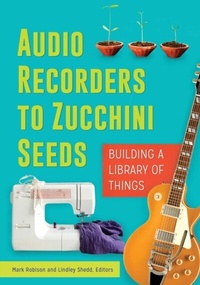
Audio Recorders to Zucchini Seeds
Building a Library of Things
1. Auflage
Erschienen am 30. Mai 2017
280 Seiten
978-1-4408-5020-2 (ISBN)
Beschreibung
This exploration of the range of options for a "library of things" collection demonstrates what has been implemented successfully and offers practical insights regarding these nontraditional projects, from the development of concepts to the everyday realities of maintaining these collections.
What services libraries provide and how they function in their communities is constantly being reconsidered and redefined. One example of this is the trend of experimenting with building circulating collections of nonliterary "things"-such as tools, seeds, cooking equipment, bicycles, household machinery, and educational materials-by drawing on traditional library functions and strengths of acquisition, organization, and circulation. Audio Recorders to Zucchini Seeds: Building a Library of Things enables you to consider the feasibility of creating a specific type of "thing" collection in your library and get practical advice about the processes necessary to successfully launch and maintain it, from planning and funding to circulation, promotion, and upkeep.
This contributed volume provides a survey of "library of things" projects within the United States, from both public and academic libraries, offering real-world lessons learned from these early experiments with nontraditional collections. The authors offer practical insights from their projects, from the development of their initial ideas to the everyday realities of maintaining and circulating these collections, including cataloging, space needs, safety concerns, staff training, circulation, marketing, and assessment. The contributed chapters are organized thematically, covering "things" collections that encompass a wide variety of objects first, followed by collections with a community-building focus (seeds, recreation, tools) and those that serve an educational purpose, such as curriculum centers, children's toys, or collections that support a university curriculum. The last section addresses collections that support media production.
What services libraries provide and how they function in their communities is constantly being reconsidered and redefined. One example of this is the trend of experimenting with building circulating collections of nonliterary "things"-such as tools, seeds, cooking equipment, bicycles, household machinery, and educational materials-by drawing on traditional library functions and strengths of acquisition, organization, and circulation. Audio Recorders to Zucchini Seeds: Building a Library of Things enables you to consider the feasibility of creating a specific type of "thing" collection in your library and get practical advice about the processes necessary to successfully launch and maintain it, from planning and funding to circulation, promotion, and upkeep.
This contributed volume provides a survey of "library of things" projects within the United States, from both public and academic libraries, offering real-world lessons learned from these early experiments with nontraditional collections. The authors offer practical insights from their projects, from the development of their initial ideas to the everyday realities of maintaining and circulating these collections, including cataloging, space needs, safety concerns, staff training, circulation, marketing, and assessment. The contributed chapters are organized thematically, covering "things" collections that encompass a wide variety of objects first, followed by collections with a community-building focus (seeds, recreation, tools) and those that serve an educational purpose, such as curriculum centers, children's toys, or collections that support a university curriculum. The last section addresses collections that support media production.
Weitere Details
Auflage
1. Auflage
Sprache
Englisch
Verlagsort
USA
Verlagsgruppe
Bloomsbury Publishing Plc
Zielgruppe
Interest Age: From 7 to 17 years
Illustrationen
18 bw illus
ISBN-13
978-1-4408-5020-2 (9781440850202)
Copyright in bibliographic data and cover images is held by Nielsen Book Services Limited or by the publishers or by their respective licensors: all rights reserved.
Schweitzer Klassifikation
Weitere Ausgaben
Personen
Mark Robison is assistant professor of library services at Valparaiso University in Indiana.
Lindley Shedd is associate professor and media services coordinator at The University of Alabama Libraries, where she manages the unit that circulates multimedia production gear, such as camcorders, lighting, and audio gear.
Lindley Shedd is associate professor and media services coordinator at The University of Alabama Libraries, where she manages the unit that circulates multimedia production gear, such as camcorders, lighting, and audio gear.
Inhalt
Acknowledgments
Introduction
PART I: HISTORY
1-A History of Things Collections: From Specialized Precursors to Present-Day Diversity
Mark Robison and Lindley Shedd
PART II: THINGS COLLECTIONS IN PUBLIC LIBRARIES
2-Measure Twice, Cut Once: A Long-Lasting Tool Lending Library in Berkeley
Adam Broner
3-Book-a-Bike: Increasing Access to Physical Activity with a Library Card
James Hill
4-The LibraryFarm
Jill Youngs
5-Seed Libraries: Lend a Seed, Grow a Community
René Tanner and Betsy Goodman
6-The Real Toy Story: A Toy Lending Collection
Sue Kirschner
7-Create, Share, Play: Sacramento's Library of Things
Michelle Coleman Alvarado, Justin Azevedo, and Amy Calhoun
PART III: THINGS COLLECTIONS IN ACADEMIC LIBRARIES
8-Technology and Small College Libraries: Trying to Be Everything to Everyone
Brian Burns
9-Providing Hands-On Teacher Preparation: Collecting and Maintaining Curriculum Materials
Jennifer Harvey and Rochelle Hunt Krueger
10-Loaning Technology and Media Production Equipment
Shelly McCoy
11-Faculty/Librarian Collaboration in the Age of Media: Building a Collection of Media Services to Support the Integration of Video Production into the Curriculum
Mitchell Shuldman
12-Going Beyond Books: Lendable Technology, Interdisciplinary Innovation, and the Revitalization of an Academic Library
Tara Radniecki and Patrick "Tod" Colegrove
13-Building Game Collections in Academic Libraries: A Case Study at the University of North Texas
Diane Robson, Sue Parks, and Erin DeWitt Miller
14-Seeing and Hearing the World in New Ways: VCU's Collection of Scopes and Other Instruments
Eric D. M. Johnson
PART IV: SPECIAL LIBRARIES
15-Things Collections, Alaska-Style: Furs, Skulls, Mounts
Celia Rozen, Helen Woods, and Ed Kazzimir
PART V: BEST PRACTICES
16-Best Practices: Building Your Own Library of Things
Lindley Shedd and Mark Robison
Appendix A: General Maintenance of Hand and Electric Tools
Appendix B: Book-a-Bike Lending Agreement
Appendix C: Book-a-Bike Parental or Legal Guardian Consent
Appendix D: Book-a-Bike Safety Inspection Checklist
Appendix E: Seed Return Form
Appendix F: Draft Agreement for Housing, Maintenance, and Circulation of Collection of Skulls, Furs, and Bird Mounts
Appendix G: Catalog Information for Furs, Mounts, and Skulls Collection
Appendix H: Furs, Mounts, and Skulls Collection/Educational Science Kits Statement of Responsibility
About the Editors and Contributors
Index
Introduction
PART I: HISTORY
1-A History of Things Collections: From Specialized Precursors to Present-Day Diversity
Mark Robison and Lindley Shedd
PART II: THINGS COLLECTIONS IN PUBLIC LIBRARIES
2-Measure Twice, Cut Once: A Long-Lasting Tool Lending Library in Berkeley
Adam Broner
3-Book-a-Bike: Increasing Access to Physical Activity with a Library Card
James Hill
4-The LibraryFarm
Jill Youngs
5-Seed Libraries: Lend a Seed, Grow a Community
René Tanner and Betsy Goodman
6-The Real Toy Story: A Toy Lending Collection
Sue Kirschner
7-Create, Share, Play: Sacramento's Library of Things
Michelle Coleman Alvarado, Justin Azevedo, and Amy Calhoun
PART III: THINGS COLLECTIONS IN ACADEMIC LIBRARIES
8-Technology and Small College Libraries: Trying to Be Everything to Everyone
Brian Burns
9-Providing Hands-On Teacher Preparation: Collecting and Maintaining Curriculum Materials
Jennifer Harvey and Rochelle Hunt Krueger
10-Loaning Technology and Media Production Equipment
Shelly McCoy
11-Faculty/Librarian Collaboration in the Age of Media: Building a Collection of Media Services to Support the Integration of Video Production into the Curriculum
Mitchell Shuldman
12-Going Beyond Books: Lendable Technology, Interdisciplinary Innovation, and the Revitalization of an Academic Library
Tara Radniecki and Patrick "Tod" Colegrove
13-Building Game Collections in Academic Libraries: A Case Study at the University of North Texas
Diane Robson, Sue Parks, and Erin DeWitt Miller
14-Seeing and Hearing the World in New Ways: VCU's Collection of Scopes and Other Instruments
Eric D. M. Johnson
PART IV: SPECIAL LIBRARIES
15-Things Collections, Alaska-Style: Furs, Skulls, Mounts
Celia Rozen, Helen Woods, and Ed Kazzimir
PART V: BEST PRACTICES
16-Best Practices: Building Your Own Library of Things
Lindley Shedd and Mark Robison
Appendix A: General Maintenance of Hand and Electric Tools
Appendix B: Book-a-Bike Lending Agreement
Appendix C: Book-a-Bike Parental or Legal Guardian Consent
Appendix D: Book-a-Bike Safety Inspection Checklist
Appendix E: Seed Return Form
Appendix F: Draft Agreement for Housing, Maintenance, and Circulation of Collection of Skulls, Furs, and Bird Mounts
Appendix G: Catalog Information for Furs, Mounts, and Skulls Collection
Appendix H: Furs, Mounts, and Skulls Collection/Educational Science Kits Statement of Responsibility
About the Editors and Contributors
Index
