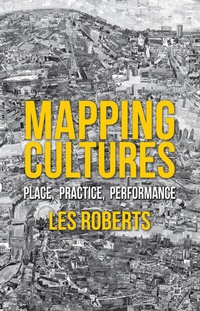
Mapping Cultures
Beschreibung

Rezensionen / Stimmen
"This collection gives a widely spread voice to the widening acknowledgement of what maps mean and do; how and where they occur. Comprising a series of related but distinctive, lively, well worked and critically engaging chapters, the book will find readers across a range of disciplines and subjects." - David Crouch, University of Derby, UK
"Mapping Cultures offers a collection of innovative studies and theoretical essays, each confronting the diffusion of cartographic method and rhetoric throughout humanities and social science research over the past two decades. . . . [the book] is brimming with insight into the emergent mapping practices and vocabularies by which we might better resist authoritarian, anti-democratic practices, which themselves do work through mapping. And it helps clear a path by which researchers in the humanities and social sciences alike might better understand and express that ''it is not so much what people do with maps as it is what maps do with people'' (Wood, p. 300). For this alone, the book is an important bridge between the relatively recent innovations of critical cartography, in particular, and a host of other fields just as recently innovated by the methods and metaphors of cartography in general." - Cartographica 48 (2), 2013.
"The book closes with a call for a more explicit critical reorientation towards mapping, and map use a project of the anthropology of cartography (D. Wood). This call seems to be still valid andone can admit that Mapping Cultures is a significant step towards achieving the goal. Readers from different disciplines will find valuable contributions both theoretical and empirical in the collection. For a tourism researcher or student, the book is thought-provoking for several reasons, not only because of the enhancing awareness of cartography in relation to areas such as cinema, music, travel..." - Tourism, Culture and Communication 12, 2013.
Weitere Details
Weitere Ausgaben
Andere Ausgaben