

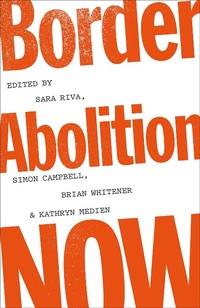
Border Abolition Now
1. Auflage
Erschienen am 20. Juli 2024
272 Seiten
978-0-7453-4899-5 (ISBN)
Beschreibung

'Outstanding ... A rich, hopeful guide that shows us how the world could be borderless, flourishing, free' - Luke de Noronha, co-author, Against Borders
Borders must be abolished. Borders produce and are produced by carceral, racist, classist, sexist, and xenophobic regimes. Border Abolition Now demands transformative politics to dismantle these systems of oppression.
Taking the key tenets of abolitionism and applying them to the debate around borders, the contributors bring a rich understanding of the history and context of carceral and policing systems. Heralding from different countries, disciplines, and activist struggles, they show how their theories are being realized through feminist decolonial praxis, and how personal experiences of borders and organizing against them inform abolition.
Expanding the debate to areas including asylum, detention camps, mobility, and climate change, Border Abolition Now offers new tools for anyone working to defend freedom of movement for all.
Borders must be abolished. Borders produce and are produced by carceral, racist, classist, sexist, and xenophobic regimes. Border Abolition Now demands transformative politics to dismantle these systems of oppression.
Taking the key tenets of abolitionism and applying them to the debate around borders, the contributors bring a rich understanding of the history and context of carceral and policing systems. Heralding from different countries, disciplines, and activist struggles, they show how their theories are being realized through feminist decolonial praxis, and how personal experiences of borders and organizing against them inform abolition.
Expanding the debate to areas including asylum, detention camps, mobility, and climate change, Border Abolition Now offers new tools for anyone working to defend freedom of movement for all.
Rezensionen / Stimmen
'This groundbreaking collection shows us, analytically and in practice, how no borders and prison and police abolition are shared political projects. It is learning at its most powerful, reframing thinking and activism with the aim of building justice. A must read.' -- Bridget Anderson, Professor of Migration, Mobilities and Citizenship, University of Bristol 'This outstanding collection of essays provides a rich, hopeful, and indispensable guide to border abolition. Written by and for thinkers, dreamers and organisers, this book shows us how the world could be otherwise: borderless, flourishing, free.' -- Luke de Noronha, co-author, <i>Against Borders: The Case For Abolition</i> 'This is an urgent and necessary book to get us from the multiple crises we face to a world made for all. It documents the violence of immigration regimes and border controls while also shining a ray of light to guide us on our paths to a better way of living with one another.' -- Nandita Sharma, Professor of Sociology, University of Hawai'i at Manoa, co-founder of <i>Eating in Public</i>Weitere Details
Auflage
1. Auflage
Sprache
Englisch
Verlagsort
London
Großbritannien
Zielgruppe
Für Beruf und Forschung
Dateigröße
0,99 MB
ISBN-13
978-0-7453-4899-5 (9780745348995)
Copyright in bibliographic data and cover images is held by Nielsen Book Services Limited or by the publishers or by their respective licensors: all rights reserved.
Schweitzer Klassifikation
Weitere Ausgaben
Andere Ausgaben
Sara Riva | Simon Campbell | Brian Whitener
Border Abolition Now
Buch
07/2024
Pluto Press
25,00 €
Sofort lieferbar
Personen
Sara Riva is a Marie Sklodowska-Curie Research Fellow at the Spanish National Research Council and the University of Queensland. She is a feminist whose research looks at the intersections of neoliberalism, migration, humanitarianism and the border. Her work has been published in the Journal of Citizenship Studies, Journal of Immigrant and Refugee Studies, Geopolitics and Journal of Refugee Studies.
Simon Campbell is an activist-researcher focusing on border infrastructures, state violence and abolitionist struggles against the border regime. In recent years, Simon has been part of a number of solidarity groups engaged in documenting pushbacks at European borders, including the Border Violence Monitoring Network. He is reading a joint MA in South Eastern European Studies at the University of Belgrade and University of Graz.
Brian Whitener is an Associate Professor of Spanish at the University at Buffalo and author of Crisis Cultures: The Rise of Finance in Mexico and Brazil. His other projects include The 90s; De gente comun: Practicas esteticas y rebeldia social, co-edited with Lorena Mendez and Fernando Fuentes; and the translation of Grupo de Arte Callejero's Thoughts, Practices, and Actions with the Mareada Translation Collective.
Kathryn Medien is a Lecturer in Sociology at The Open University. Her research draws on feminist and anti-colonial social theory to explore the colonial and imperial politics of state violence and resistance to it. She has been published in the Sociological Review, Theory, Culture and Society, Current Sociology and the International Feminist Journal of Politics.
Simon Campbell is an activist-researcher focusing on border infrastructures, state violence and abolitionist struggles against the border regime. In recent years, Simon has been part of a number of solidarity groups engaged in documenting pushbacks at European borders, including the Border Violence Monitoring Network. He is reading a joint MA in South Eastern European Studies at the University of Belgrade and University of Graz.
Brian Whitener is an Associate Professor of Spanish at the University at Buffalo and author of Crisis Cultures: The Rise of Finance in Mexico and Brazil. His other projects include The 90s; De gente comun: Practicas esteticas y rebeldia social, co-edited with Lorena Mendez and Fernando Fuentes; and the translation of Grupo de Arte Callejero's Thoughts, Practices, and Actions with the Mareada Translation Collective.
Kathryn Medien is a Lecturer in Sociology at The Open University. Her research draws on feminist and anti-colonial social theory to explore the colonial and imperial politics of state violence and resistance to it. She has been published in the Sociological Review, Theory, Culture and Society, Current Sociology and the International Feminist Journal of Politics.
Inhalt
Introduction by Sara Riva, Simon Campbell, Brian Whitener, and Kathryn Medien
1. Women in Exile's story by Elizabeth Ngari and Doris Dede
CONSTELLATION I: ABOLITIONIST THEORIES IN BORDER CONTEXTS
2. Unfolding and flourishing: strategies of border abolition feminism by Leah Cowan, Francesca Esposito, Sarah Hopwood, Aminata Kalokoh, Vania Martins, and Elahe Zivardar
3. Surplus people of the world unite! On borders, policing, and abolition by Vanessa E. Thompson
4. #AbolishICE, #AbolishFrontex, abolish borders: toward an abolitionist border study and struggle by Josue David Cisneros
5. Interview with Black Alliance for Just Immigration (BAJI)
CONSTELLATION II: ABOLITIONISMS AGAINST THE BORDER COMPLEX
6. The place of asylum and empire in contemporary abolition by Jenna M. Loyd
7. Abolition, not relocation: moving from humanitarian containment toward camp abolition by Simon Campbell
8. "Alternatives to detention" and the carceral state in the UK by Lauren Cape-Davenhill
9. Golden Gulag in Italy? For the abolition of the receptionindustrial complex by Francesco Marchi
10. Abolish Frontex and end the EU Border regime by Mark Akkerman
CONSTELLATION III: POLITICAL HORIZONS OF BORDER ABOLITIONISM
11. "Shut them down": non-reformist reforms in anti-detention organizing by Helen Brewer, Tom Kemp, Bobby Phe Amis, and Joel White
12. Abolitionist potential and ambivalences in daily struggles against the border regime by Watch the Med - Alarm Phone
13. Capitalism, mobility, and racialization: abolitionisms at the border by Brian Whitener
14. Rising waters from New York City to Pakistan: abolitionist organizing at the intersection of immigration justice and the climate crisis by Vignesh Ramachandran and Akash Singh
15. Interview with Contra Viento y Marea, El Comedor Comunitario
Afterword by Gracie Mae Bradley
1. Women in Exile's story by Elizabeth Ngari and Doris Dede
CONSTELLATION I: ABOLITIONIST THEORIES IN BORDER CONTEXTS
2. Unfolding and flourishing: strategies of border abolition feminism by Leah Cowan, Francesca Esposito, Sarah Hopwood, Aminata Kalokoh, Vania Martins, and Elahe Zivardar
3. Surplus people of the world unite! On borders, policing, and abolition by Vanessa E. Thompson
4. #AbolishICE, #AbolishFrontex, abolish borders: toward an abolitionist border study and struggle by Josue David Cisneros
5. Interview with Black Alliance for Just Immigration (BAJI)
CONSTELLATION II: ABOLITIONISMS AGAINST THE BORDER COMPLEX
6. The place of asylum and empire in contemporary abolition by Jenna M. Loyd
7. Abolition, not relocation: moving from humanitarian containment toward camp abolition by Simon Campbell
8. "Alternatives to detention" and the carceral state in the UK by Lauren Cape-Davenhill
9. Golden Gulag in Italy? For the abolition of the receptionindustrial complex by Francesco Marchi
10. Abolish Frontex and end the EU Border regime by Mark Akkerman
CONSTELLATION III: POLITICAL HORIZONS OF BORDER ABOLITIONISM
11. "Shut them down": non-reformist reforms in anti-detention organizing by Helen Brewer, Tom Kemp, Bobby Phe Amis, and Joel White
12. Abolitionist potential and ambivalences in daily struggles against the border regime by Watch the Med - Alarm Phone
13. Capitalism, mobility, and racialization: abolitionisms at the border by Brian Whitener
14. Rising waters from New York City to Pakistan: abolitionist organizing at the intersection of immigration justice and the climate crisis by Vignesh Ramachandran and Akash Singh
15. Interview with Contra Viento y Marea, El Comedor Comunitario
Afterword by Gracie Mae Bradley
