

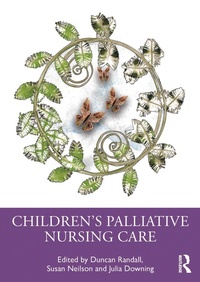
Children's Palliative Nursing Care
1. Auflage
Erschienen am 30. Dezember 2024
396 Seiten
978-1-040-26578-9 (ISBN)
Beschreibung

Nursing is an essential component of children's palliative care and palliative care is an essential aspect of nursing. Yet the complex inter-disciplinary nature of palliative care brings into sharp focus the work nurses undertake with others in delivering palliative care. This is, however, a book by nurses for nurses.
This comprehensive text presents the essential knowledge and skills required by nurses providing this invaluable care to a growing number of children. The chapters are mapped to the Children's Palliative Care Education and Training standards. These are endorsed by the International Children's Palliative Care Network, a major partner with the World Health Organization in the push to make children's palliative care a universal health right. In its three Parts, Children's Palliative Nursing Care covers public and universal care, core nursing and specialist care. The chapters can be read individually or cumulatively to move from engagement in public health and public understanding of palliative care through to delivering nursing care. Topics range from managing symptoms and end-of-life care, to education, research and issues of quality and leadership.
Uniquely each chapter has been written by a team of authors who come from both high-income and low-/middle-income countries. This makes this not just a book by nurses for nurses but a global book for global nursing practice.
This comprehensive text presents the essential knowledge and skills required by nurses providing this invaluable care to a growing number of children. The chapters are mapped to the Children's Palliative Care Education and Training standards. These are endorsed by the International Children's Palliative Care Network, a major partner with the World Health Organization in the push to make children's palliative care a universal health right. In its three Parts, Children's Palliative Nursing Care covers public and universal care, core nursing and specialist care. The chapters can be read individually or cumulatively to move from engagement in public health and public understanding of palliative care through to delivering nursing care. Topics range from managing symptoms and end-of-life care, to education, research and issues of quality and leadership.
Uniquely each chapter has been written by a team of authors who come from both high-income and low-/middle-income countries. This makes this not just a book by nurses for nurses but a global book for global nursing practice.
Weitere Details
Auflage
1. Auflage
Sprache
Englisch
Verlagsort
London
Großbritannien
Verlagsgruppe
Taylor & Francis Ltd
Zielgruppe
Für höhere Schule und Studium
Für Beruf und Forschung
Illustrationen
28 Tables, black and white; 19 Line drawings, black and white; 5 Halftones, black and white; 24 Illustrations, black and white
ISBN-13
978-1-040-26578-9 (9781040265789)
Copyright in bibliographic data and cover images is held by Nielsen Book Services Limited or by the publishers or by their respective licensors: all rights reserved.
Schweitzer Klassifikation
Weitere Ausgaben
Andere Ausgaben
Duncan Randall | Susan Neilson | Julia Downing
Children's Palliative Nursing Care
Buch
12/2024
1. Auflage
Routledge
197,40 €
Versand in 10-20 Tagen
Duncan Randall | Susan Neilson | Julia Downing
Children's Palliative Nursing Care
Buch
12/2024
1. Auflage
Routledge
58,30 €
Versand in 10-20 Tagen
Personen
Duncan Randall has over 20 years' experience in delivering, researching and teaching children's palliative nursing. He has worked on projects such as the Spectrum of Children's Palliative Care, the Involve to Evolve database project, founding the first data group on children's palliative care in the UK. He has also worked extensively with the Children's Palliative Care Education and Training Action Group (CPCET) on the Standards for Education and the Standards for Advanced Care Planning. Duncan has an extensive publication history including his theoretical work using Pragmatics to set out a theory of children's nursing for children and their childhoods.
Susan Neilson has over 30 years' experience in children's palliative nursing care, research and teaching. She is a qualitative methodologist and supervises research students. Sue teaches across undergraduate and post-graduate programmes and also leads interprofessional palliative care workshops. She is Chair of the Royal College of Nursing Children's Palliative Care Community. Her work focuses on education, recently coordinating the Children's Palliative Care Education and Training Action Group and Young Person's Advance Care Plan Collaborative's work on the Education Standard Framework and Standard Framework for Advanced Care Planning.
Julia Downing has over 30 years' experience in palliative care, with more than 20 of those working in children's palliative care and internationally in Uganda, Africa, Eastern Europe and globally. She is an experienced palliative care nurse, advocate, educationalist and researcher. She is the Chief Executive of the International Children's Palliative Care Network (ICPCN) and has various visiting and honorary contracts at universities in Uganda, Serbia and the UK. She was part of the Children's Palliative Care Education and Training Action Group (CPCET), supporting the development of the Standards for Education and the Standards for Advanced Care Planning, as well as the Global Paediatric Standards. She has extensive experience in global palliative care, research and education, and is on the editorial boards of eCancer, APM and the IJPN. She serves on the boards of several international organisations, is regularly invited to speak at conferences and has an extensive publication history on global palliative care and nursing.
Susan Neilson has over 30 years' experience in children's palliative nursing care, research and teaching. She is a qualitative methodologist and supervises research students. Sue teaches across undergraduate and post-graduate programmes and also leads interprofessional palliative care workshops. She is Chair of the Royal College of Nursing Children's Palliative Care Community. Her work focuses on education, recently coordinating the Children's Palliative Care Education and Training Action Group and Young Person's Advance Care Plan Collaborative's work on the Education Standard Framework and Standard Framework for Advanced Care Planning.
Julia Downing has over 30 years' experience in palliative care, with more than 20 of those working in children's palliative care and internationally in Uganda, Africa, Eastern Europe and globally. She is an experienced palliative care nurse, advocate, educationalist and researcher. She is the Chief Executive of the International Children's Palliative Care Network (ICPCN) and has various visiting and honorary contracts at universities in Uganda, Serbia and the UK. She was part of the Children's Palliative Care Education and Training Action Group (CPCET), supporting the development of the Standards for Education and the Standards for Advanced Care Planning, as well as the Global Paediatric Standards. She has extensive experience in global palliative care, research and education, and is on the editorial boards of eCancer, APM and the IJPN. She serves on the boards of several international organisations, is regularly invited to speak at conferences and has an extensive publication history on global palliative care and nursing.
Inhalt
Introduction and categorisation of children's palliative care needs and prevalence
Section 1: Public Health and Universal
1. Building and sustaining compassionate communities with children.
2. Beliefs, attitudes and values in children's palliative care.
3. Public perceptions and participation in children's palliative care: promoting positive cultures of communication.
Section 2: Core
4. Delivery of unwanted news: diagnosis and assessment of needs.
5. Self-care for nurses and nursing teams delivering and evaluating palliative care.
6. Play, education and children and carer coping living with palliative care needs.
7. Symptom management
8. End-of-life care and bereavement
Section 3 Specialist
9. Managing complexity.
10. Learning to design, deliver and evaluate children's palliative care education.
11. Leadership for improvement.
12. Evaluation and quality of care issues.
13. Research readiness, and leadership.
Appendix A: Table of LO for CPCET UK and Ireland Education Standard Framework (including mapping to chapters)
Appendix B: GoPaPAS Standards
Section 1: Public Health and Universal
1. Building and sustaining compassionate communities with children.
2. Beliefs, attitudes and values in children's palliative care.
3. Public perceptions and participation in children's palliative care: promoting positive cultures of communication.
Section 2: Core
4. Delivery of unwanted news: diagnosis and assessment of needs.
5. Self-care for nurses and nursing teams delivering and evaluating palliative care.
6. Play, education and children and carer coping living with palliative care needs.
7. Symptom management
8. End-of-life care and bereavement
Section 3 Specialist
9. Managing complexity.
10. Learning to design, deliver and evaluate children's palliative care education.
11. Leadership for improvement.
12. Evaluation and quality of care issues.
13. Research readiness, and leadership.
Appendix A: Table of LO for CPCET UK and Ireland Education Standard Framework (including mapping to chapters)
Appendix B: GoPaPAS Standards
