

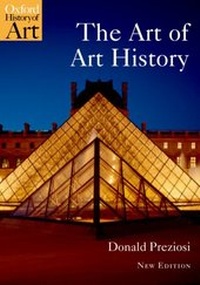
The Art of Art History
A Critical Anthology
1. Auflage
Erschienen am 26. Februar 2009
600 Seiten
978-0-19-155202-1 (ISBN)
Beschreibung

What is art history? Why, how, and where did it originate, and how have its methods changed over time? The history of art has been written and rewritten since classical antiquity. Since the foundation of the modern discipline of art history in Germany in the late eighteenth century, debates about art and its histories have intensified. Historians, philosophers, psychologists, and anthropologists among others have changed our notions of what art history has been, is, and might be.
This anthology is a guide to understanding art history through critical reading of the field's most innovative and influential texts, focusing on the past two centuries.
Each section focuses on a key issue: art as history; aesthetics; form, content, and style; anthropology; meaning and interpretation; authorship and identity; and the phenomenon of globalization. More than thirty readings from writers as diverse as Winckelmann, Kant, Mary Kelly, and Michel Foucault are brought together, with editorial introductions to each topic providing background information, bibliographies, and critical elucidations of the issues at stake.
This updated and expanded edition contains sixteen newly included extracts from key thinkers in the history of art, from Giorgio Vasari to Walter Benjamin and Satya Mohanty; a new section on globalization; and also a new concluding essay from Donald Preziosi on the tasks of the art historian today.
Weitere Details
Weitere Ausgaben
Andere Ausgaben
Buch
02/2009
Oxford University Press
33,50 €
Versand in 15-20 Tagen
Person
Author of a dozen books on art, architecture, museology, and critical and cultural theory, Donald Preziosi received his doctorate in art history from Harvard and has been a professor of art history at Yale, MIT, UCLA, and Oxford, where he was the Slade Professor of Fine Art in 2000-2001. He is a member of the History Faculty at Oxford University and Emeritus Professor of Art History and Critical Theory at UCLA. In 2005-2006 he was an Andrew Mellon Foundation Distinguished Emeritus Faculty Fellow and in 2007 a MacGeorge Fellow at the University of Melbourne, Australia. He is currently working on a study of the complex relations between art and religion in the Western tradition.
Inhalt
- Introduction to the New Edition
- Art History: Making the Visible Legible
- 1. Art as History
- Introduction
- Preface to Part III of 'The Lives'
- Reflections on the Imitation of Greek Works in Painting and Sculpture
- Winckelmann Divided: Mourning the Death of Art History
- Patterns of Intention
- 2. Aesthetics
- Introduction
- What is Enlightenment?
- Philosophy of Fine Art
- Impure Mimesis, or the Ends of the Aesthetic
- Fetish
- 3. Form, Content, and Style
- Introduction
- Principles of Art History
- Style
- 'Form', Nineteenth-Century Metaphysics, and the Problem of Art Historical Description
- 'Style'
- 4. Anthropology and/or Art History
- Introduction
- Leading Characteristics of the Late Roman 'Kunstwollen'
- Images from the Region of the Pueblo Indians of North America
- Warburg's Concept of 'Kunstwissenschaft' and its Meaning for Aesthetics
- Silent Moves: On Excluding the Ethnographic Subject from the Discourse of Art History
- 5. Mechanisms of Meaning
- Introduction
- Iconography and Iconology: An Introduction to the Study of Renaissance Art
- Semiotics and Iconography
- Semiotics and Art History: A Discussion of Contexts and Senders
- Meaning/Interpretation
- 6. The Limits of Interpretation
- Introduction
- The Temptation of New Perspectives
- The Origin of the Work of Art
- The Still Life as a Personal Object - a Note on Heidegger and van Gogh
- Restitutions of the Truth in Pointing [Pointure]
- 7. Authorship and Identity
- Introduction
- What is an Author?
- The Discourse of Others: Feminists and Postmodernism
- Re-Viewing Modernist Criticism
- Performative Acts and Gender Constitution: An Essay in Phenomenology and Feminist Theory
- Postmodern Automatons
- 'Every Man Knows How Beauty Gives Him Pleasure': Beauty Discourse and the Logic of Aesthetics
- Queer Wallpaper
- 8. Globalization and its Discontents
- Introduction
- Orientalism and the Exhibitionary Order
- The Museum as Ritual
- The Work of Art in the Age of its Technological Reproducibility (Third Version)
- Can Our Values be Objective? On Ethics, Aesthetics, and Progessive Politics
- Visual Culture Studies: Questions of History, Theory, and Practice
- 'Life-Like': Historicizing Process in Digital Art
- Epilogue: The Art of Art History
- Coda: Plato's Dilemma and the Tasks of the Art Historian Today
