

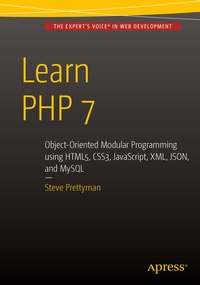
Learn PHP 7
Beschreibung
This new book on PHP 7 introduces writing solid, secure, object-oriented code in the new PHP 7: you will create a complete three-tier application using a natural process of building and testing modules within each tier. This practical approach teaches you about app development and introduces PHP features when they are actually needed rather than providing you with abstract theory and contrived examples.
In Learn PHP 7, programming examples take advantage of the newest PHP features, including enhanced password encryption using password_hash. This book takes a learn-by-doing approach, providing you with complete coding examples.
"Do It" exercises in each chapter provide the opportunity to make adjustments to the example code. The end of chapter programming exercises allow you to develop your own applications using the algorithms demonstrated in the chapter. Each tier is logically and physically separated using object-oriented and dependency injection techniques, thus allowing independent tiers that can be updated with little or no effect on the other tiers. In addition to teaching good programming practices through OOP, there is a strong emphasis on creating secure code. As each chapter is completed, the reader is provide the opportunity to design and create an application reinforcing the concepts learned.
