

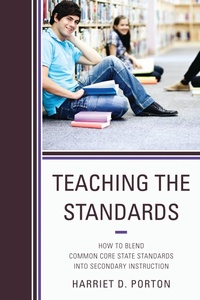
Teaching the Standards
How to Blend Common Core State Standards into Secondary Instruction
1. Auflage
Erschienen am 9. April 2013
192 Seiten
979-8-216-32667-0 (ISBN)
Beschreibung

With the upcoming implementation of CCSS in E/LA and mathematics in 2014, and the expected implementation in science, history/social studies, and technical subjects, educators need a grounded, specific text on how to scaffold students from where they are to where they need to be according to the Common Core State Standards. The CCSS assume that students already have more skills, prior knowledge, and motivation than may be real. Therefore, teachers and administrators require some assistance for helping all students reach the rigorous demands of CCSS. This text provides specific, successful strategies that are targeted for each of the secondary content areas. This text is designed to help all educators translate the CCSS so that it can become a guiding force, not a stumbling block.
Weitere Details
Weitere Ausgaben
Andere Ausgaben
Harriet D. Porton
Teaching the Standards
How to Blend Common Core State Standards into Secondary Instruction
Buch
04/2013
Rowman & Littlefield Education
100,50 €
Versand in 10-20 Tagen
Person
Harriet D. Porton is a veteran teacher and administrator with over 45 years of experience, has taught every grade from first through graduate school. Her primary interests include helping at-risk learners succeed and demystifying curricular plans and policies for educators.
Inhalt
SECTION ONE
Chapter One- How will the Common Core State Standards affect teaching/learning? *
What are they?How did we get here?What is cooperative learning and how does it improve instruction?Chapter Two- How learning happens*
Theories of learningNeuroscience and learningSchemaAttachmentChapter Three- Reflections: How do we know what we know?*
What have we learned about how children learn? What have we learned about the upcoming CCSS?
SECTION TWO
Chapter Four- CCSS and English/Language Arts
Understanding the theories behind CCSS in literacyTeaching reading in English/Language Arts and CCSSTeaching writing in English/Language Arts and CCSSTeaching listening in English/Language Arts and CCSSTeaching speaking in English/Language Arts and CCSSDeveloping effective vocabulary acquisition and language usage strategiesChapter Five - CCSS and math
Blending CCSS into the current mathematics curriculum- an overviewTeaching reading in math using CCSSTeaching writing in math using CCSSDeveloping effective vocabulary acquisition strategies in mathChapter Six- CCSS and social studies
CCSS and the current thinking about history/social studies Using a matrix for rigor to develop social studies lesson plansWhat is history? How do historians read history?How can educators help develop mature historical thinking?History is an enigmatic subjectChapter Seven - CCSS and science
Blending CCSS into the current science curriculum- an overviewTeaching reading in science using CCSSTeaching writing in science using CCSSDeveloping effective vocabulary acquisition strategies in science
SECTION THREE
Chapter Eight- Reflections: How will we use what we know now?*
What do we know and how will we apply what we have learned about CCSS and changes to English Language ArtsMathematicsSocial studies and Science Chapter Nine- At-risk students and CCSS*
What we need to know about engaging discouraged learners What we need to learn about effective instructional and management skills How we can use CCSS to move all students forward?Chapter Ten- CCSS Assessments and rubrics*
What we know about the assessments for the forthcoming CCSSWhat we know about the rubrics used to score student work
Chapter One- How will the Common Core State Standards affect teaching/learning? *
What are they?How did we get here?What is cooperative learning and how does it improve instruction?Chapter Two- How learning happens*
Theories of learningNeuroscience and learningSchemaAttachmentChapter Three- Reflections: How do we know what we know?*
What have we learned about how children learn? What have we learned about the upcoming CCSS?
SECTION TWO
Chapter Four- CCSS and English/Language Arts
Understanding the theories behind CCSS in literacyTeaching reading in English/Language Arts and CCSSTeaching writing in English/Language Arts and CCSSTeaching listening in English/Language Arts and CCSSTeaching speaking in English/Language Arts and CCSSDeveloping effective vocabulary acquisition and language usage strategiesChapter Five - CCSS and math
Blending CCSS into the current mathematics curriculum- an overviewTeaching reading in math using CCSSTeaching writing in math using CCSSDeveloping effective vocabulary acquisition strategies in mathChapter Six- CCSS and social studies
CCSS and the current thinking about history/social studies Using a matrix for rigor to develop social studies lesson plansWhat is history? How do historians read history?How can educators help develop mature historical thinking?History is an enigmatic subjectChapter Seven - CCSS and science
Blending CCSS into the current science curriculum- an overviewTeaching reading in science using CCSSTeaching writing in science using CCSSDeveloping effective vocabulary acquisition strategies in science
SECTION THREE
Chapter Eight- Reflections: How will we use what we know now?*
What do we know and how will we apply what we have learned about CCSS and changes to English Language ArtsMathematicsSocial studies and Science Chapter Nine- At-risk students and CCSS*
What we need to know about engaging discouraged learners What we need to learn about effective instructional and management skills How we can use CCSS to move all students forward?Chapter Ten- CCSS Assessments and rubrics*
What we know about the assessments for the forthcoming CCSSWhat we know about the rubrics used to score student work
