
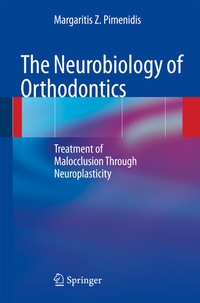
The Neurobiology of Orthodontics
Beschreibung
This book presents the neurobiology of orthodontics according to the most recently acquired knowledge on the interaction of the brain activity with the senses. In particular, it highlights the ability of orofacial sensory input to modulate and change the brain activity underlying functions of the stomatognathic system, such as chewing, biting, speech, and occlusal feedback. The approach adopted thereby represents a significant departure from traditional orthodontics, in which malocclusions of the teeth have been interpreted as deriving from DNA coding errors. The described new conceptualization of the etiology and diagnosis of malocclusions has profound implications for orthodontic therapy, as is clearly explained. Orthodontic therapy in turn has significant effects on the brain, which are documented in a chapter devoted to neuroimaging methods. By opening up new and creative pathways in the world of orthodontics, this book will hopefully both educate and excite the practitioner. It is recommended reading for all orthodontists.

Weitere Details
Weitere Ausgaben
Inhalt
Systemvoraussetzungen
Dateiformat: PDF
Kopierschutz: Wasserzeichen-DRM (Digital Rights Management)
Systemvoraussetzungen:
- Computer (Windows; MacOS X; Linux): Verwenden Sie zum Lesen die kostenlose Software Adobe Reader, Adobe Digital Editions oder einen anderen PDF-Viewer Ihrer Wahl (siehe E-Book Hilfe).
- Tablet/Smartphone (Android; iOS): Installieren Sie bereits vor dem Download die kostenlose App Adobe Digital Editions oder die App PocketBook (siehe E-Book Hilfe).
- E-Book-Reader: Bookeen, Kobo, Pocketbook, Sony, Tolino u.v.a.m.
Das Dateiformat PDF zeigt auf jeder Hardware eine Buchseite stets identisch an. Daher ist eine PDF auch für ein komplexes Layout geeignet, wie es bei Lehr- und Fachbüchern verwendet wird (Bilder, Tabellen, Spalten, Fußnoten). Bei kleinen Displays von E-Readern oder Smartphones sind PDF leider eher nervig, weil zu viel Scrollen notwendig ist. Mit Wasserzeichen-DRM wird hier ein „weicher” Kopierschutz verwendet. Daher ist technisch zwar alles möglich – sogar eine unzulässige Weitergabe. Aber an sichtbaren und unsichtbaren Stellen wird der Käufer des E-Books als Wasserzeichen hinterlegt, sodass im Falle eines Missbrauchs die Spur zurückverfolgt werden kann.
Weitere Informationen finden Sie in unserer E-Book Hilfe.