

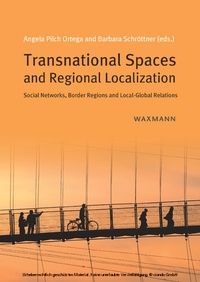
Transnational Spaces and Regional Localization. Social Networks, Border Regions and Local-Global Relations
Social Networks, Border Regions and Local-Global Relations
1. Auflage
Erschienen in 2012
236 Seiten
978-3-8309-7521-2 (ISBN)
Beschreibung

Globalization has encouraged worldwide mobility, intensified migration and supported growing interconnectedness through new technologies; it has therefore substantially contributed to the development of so-called transnational spaces. This volume focuses on transnational spaces which should not be understood as locations on a map or as sealed containers, but instead as relational social areas which are composed of various relationships. Transnationalization increases liberation and/or emancipation from place because social relations overcome physical space and local, regional and national boundaries. As a consequence, a reconfiguration of social, cultural, political and economic scopes of action occurs. This volume reveals that for people in general and for migration movements in particular, new borders have been established in many places all over the world. The biographies of global actors and migrants reference this alteration of space. Additionally this volume calls special attention to border regions and their social configurations. Borders appear as narratives which can have an enormous impact on social structures. This book further deals with different aspects and various tensions having to do with local and global change, interplay and interdependence. Globalization leads to development that often ignores regional needs, supports the continuation of post-colonial power and maintains hegemonic dominance.
Weitere Details
Weitere Ausgaben
Andere Ausgaben
Angela Pilch Ortega | Barbara Schröttner
Transnational Spaces and Regional Localization
Social Networks, Border Regions and Local-Global Relations
Buch
06/2012
1. Auflage
Waxmann
29,90 €
Artikel ist vergriffen; siehe andere Ausgabe
Inhalt
1 - Contents [Seite 6]
2 - Acknowledgements [Seite 8]
3 - Introductory Thoughts on Transnational Spaces and Regional Localization [Seite 10]
4 - (Re)Contextualization of Global and Local Place [Seite 18]
5 - I Transnational Space and Social Networks [Seite 30]
5.1 - Transnational Social Relations - A Challenge of Everyday Life? [Seite 32]
5.2 - Transnational Spaces, Hybrid Identities and New Media [Seite 44]
5.3 - Social Networks and Identity Building Processes through Transnational/Cross Regional Experiences of Experts in Southern Europe [Seite 54]
5.4 - The Role of Transnationalism, Personal Networks and Social Networks in the Migratory Projects of a Small Cameroonian Community in Huelva [Seite 66]
5.5 - How to Share Space? [Seite 82]
6 - II Migration and Border Regions [Seite 92]
6.1 - A Transnational Politics of Mobility [Seite 94]
6.2 - Borders are Narratives [Seite 106]
6.3 - Imagining and Re-imagining Transcultural Spaces - The 'Mitteleuropa' Discourse and Deconstructing the 'British Isles' [Seite 118]
6.4 - Presencia Centroamericana en la Frontera Sur de México: un Espacio en Construcción Transnacional [Seite 128]
6.5 - National Identity Formation in Transnational Spaces: The Case of the Sahrawis of Western Sahara [Seite 146]
6.6 - Migration Moves and Shapes Society [Seite 156]
7 - III Spaces of Tensions: Local - Global [Seite 166]
7.1 - Private Sentiment and Public Issues - Irish Medium Education and Complex Linguistic and Political Identification [Seite 168]
7.2 - Propuesta Teórica en la Reconstrucción de las Cosmovisiones, Lenguas y Conocimientos de los Pueblos Originarios ante la Globalización [Seite 180]
7.3 - The Confluence of Global and Local Currents in Brazil's Municipal Schooling [Seite 206]
7.4 - The Development of Transcultural Third Spaces by International and Transnational Students [Seite 218]
8 - Notes on Contributors [Seite 230]
2 - Acknowledgements [Seite 8]
3 - Introductory Thoughts on Transnational Spaces and Regional Localization [Seite 10]
4 - (Re)Contextualization of Global and Local Place [Seite 18]
5 - I Transnational Space and Social Networks [Seite 30]
5.1 - Transnational Social Relations - A Challenge of Everyday Life? [Seite 32]
5.2 - Transnational Spaces, Hybrid Identities and New Media [Seite 44]
5.3 - Social Networks and Identity Building Processes through Transnational/Cross Regional Experiences of Experts in Southern Europe [Seite 54]
5.4 - The Role of Transnationalism, Personal Networks and Social Networks in the Migratory Projects of a Small Cameroonian Community in Huelva [Seite 66]
5.5 - How to Share Space? [Seite 82]
6 - II Migration and Border Regions [Seite 92]
6.1 - A Transnational Politics of Mobility [Seite 94]
6.2 - Borders are Narratives [Seite 106]
6.3 - Imagining and Re-imagining Transcultural Spaces - The 'Mitteleuropa' Discourse and Deconstructing the 'British Isles' [Seite 118]
6.4 - Presencia Centroamericana en la Frontera Sur de México: un Espacio en Construcción Transnacional [Seite 128]
6.5 - National Identity Formation in Transnational Spaces: The Case of the Sahrawis of Western Sahara [Seite 146]
6.6 - Migration Moves and Shapes Society [Seite 156]
7 - III Spaces of Tensions: Local - Global [Seite 166]
7.1 - Private Sentiment and Public Issues - Irish Medium Education and Complex Linguistic and Political Identification [Seite 168]
7.2 - Propuesta Teórica en la Reconstrucción de las Cosmovisiones, Lenguas y Conocimientos de los Pueblos Originarios ante la Globalización [Seite 180]
7.3 - The Confluence of Global and Local Currents in Brazil's Municipal Schooling [Seite 206]
7.4 - The Development of Transcultural Third Spaces by International and Transnational Students [Seite 218]
8 - Notes on Contributors [Seite 230]
