

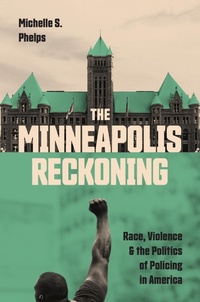
The Minneapolis Reckoning
Race, Violence, and the Politics of Policing in America
1. Auflage
Erschienen am 7. Mai 2024
304 Seiten
978-0-691-24600-0 (ISBN)
Beschreibung
An urgent account of why it's so difficult to reform the police
The eruption of Black Lives Matter protests against police violence in 2014 spurred a wave of police reform. One of the places to embrace this reform was Minneapolis, Minnesota, a city long known for its liberal politics. Yet in May 2020, four of its officers murdered George Floyd. Fiery protests followed, making the city a national emblem for the failures of police reform. In response, members of the Minneapolis City Council pledged to "end" the Minneapolis Police Department. In The Minneapolis Reckoning, Michelle Phelps describes how Minneapolis arrived at the brink of police abolition.
Phelps explains that the council's pledge did not come out of a single moment of rage, but decades of organizing efforts. Yet the politics of transforming policing were more complex than they first appeared. Despite public outrage over police brutality, the council's initiatives faced stiff opposition, including by Black community leaders who called for more police protection against crime as well as police reform. In 2021, voters ultimately rejected the ballot measure to end the department. Yet change continued on the ground, as state and federal investigations pushed police reform and city leaders and residents began to develop alternative models of safety.
The Minneapolis Reckoning shows how the dualized meaning of the police-as both the promise of state protection and the threat of state violence-creates the complex politics of policing that thwart change. Phelps's account of the city's struggles over what constitutes real accountability, justice, and safety offers a vivid picture of the possibilities and limits of challenging police power today.
The eruption of Black Lives Matter protests against police violence in 2014 spurred a wave of police reform. One of the places to embrace this reform was Minneapolis, Minnesota, a city long known for its liberal politics. Yet in May 2020, four of its officers murdered George Floyd. Fiery protests followed, making the city a national emblem for the failures of police reform. In response, members of the Minneapolis City Council pledged to "end" the Minneapolis Police Department. In The Minneapolis Reckoning, Michelle Phelps describes how Minneapolis arrived at the brink of police abolition.
Phelps explains that the council's pledge did not come out of a single moment of rage, but decades of organizing efforts. Yet the politics of transforming policing were more complex than they first appeared. Despite public outrage over police brutality, the council's initiatives faced stiff opposition, including by Black community leaders who called for more police protection against crime as well as police reform. In 2021, voters ultimately rejected the ballot measure to end the department. Yet change continued on the ground, as state and federal investigations pushed police reform and city leaders and residents began to develop alternative models of safety.
The Minneapolis Reckoning shows how the dualized meaning of the police-as both the promise of state protection and the threat of state violence-creates the complex politics of policing that thwart change. Phelps's account of the city's struggles over what constitutes real accountability, justice, and safety offers a vivid picture of the possibilities and limits of challenging police power today.
Weitere Details
Weitere Ausgaben
Person
Michelle S. Phelps is associate professor of sociology at the University of Minnesota, Twin Cities. She is the coauthor of Breaking the Pendulum: The Long Struggle Over Criminal Justice. Her research has been featured in the Washington Post, The New Yorker, Time Magazine, NPR, FiveThirtyEight, The Appeal, and other media outlets, and has informed criminal justice reform efforts by the Human Rights Watch and Pew Charitable Trusts Public Safety Performance Project.
Inhalt
- Cover
- Contents
- Introduction
- Part I: Minnesota Goddamn
- Chapter 1: The Shame of Minneapolis
- Chapter 2: How Minneapolis Activists Fought to Make Black Lives Matter
- Chapter 3: The Residents Left Out / (with Amber Joy Powell and Christopher E. Robertson)
- Part II: In the Wake of Rebellion
- Chapter 4: George Floyd Is Still Dead
- Chapter 5: Seeking Justice: Accountability for "Killer Cops
- Chapter 6: Safety without Police?
- Conclusion
- Author's Note: Everything Is Data
- Acronyms and Key Events Timeline
- Acknowledgments
- Notes
- Index
