

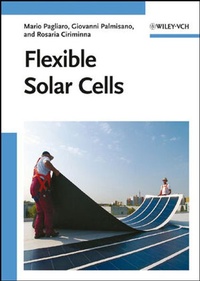
Flexible Solar Cells
1. Auflage
Erschienen am 20. November 2008
XII, 190 Seiten
978-3-527-62379-2 (ISBN)
Beschreibung

With the decline in the world's natural resources, the need for new and cheaper energy sources is evolving. One such source is the sun which generates heat and light which can be harnessed and used to our advantage.
This reference book introduces the topic of photovoltaics in the form of flexible solar cells. There are explanations of the principles behind this technology, the engineering required to produce these products and the future possibilities offered by this technology.
The chemistry and physics of the cells (both organic and inorganic) are clarified as well as production methods, with information how this can then be applied to the nanoscale as well.
A complete guide to this new and exciting way of producing energy which will be invaluable to a variety of people from material scientists, chemists, electrical engineers, to management consultants and politicians.
This reference book introduces the topic of photovoltaics in the form of flexible solar cells. There are explanations of the principles behind this technology, the engineering required to produce these products and the future possibilities offered by this technology.
The chemistry and physics of the cells (both organic and inorganic) are clarified as well as production methods, with information how this can then be applied to the nanoscale as well.
A complete guide to this new and exciting way of producing energy which will be invaluable to a variety of people from material scientists, chemists, electrical engineers, to management consultants and politicians.
Weitere Details
Weitere Ausgaben
Andere Ausgaben
Mario Pagliaro | Giovanni Palmisano | Rosaria Ciriminna
Flexible Solar Cells
Buch
10/2008
1. Auflage
Wiley-VCH
105,00 €
Artikel ist vergriffen; siehe andere Ausgabe
Personen
Mario Pagliaro has received his PhD in chemistry in 1998 from the University of Palermo. He works at the Palermo National Research Center where he heads the Organic Solar Sicily's Research Pole and the Institute for Scientific Methodology. Mario Pagliaro has conducted research at prestigious institutions including the University of Leiden, the CNRS in Grenoble, the RWTH Aachen and the Ecole Nationale Superieure de Chimie in Montpellier. He maintains fruitful international collaborations which have resulted in several innovations and patents. Besides his academic work Mario Pagliaro is active in management education and in promoting the role of science in society.
Rosaria Ciriminna is a research chemist at the Palermo National Research Center in the Institute of Nanostructured Materials. Her research focuses on design, preparation and characterization of multifunctional materials. After she had received her chemistry degree in 1995 from the University of Palermo, she was visiting scientist at the Universities of Reading, York and Padua and at the Ecole Nationale Superieure de Chimie in Montpellier.
Giovanni Palmisano is currently PhD student in Chemical and Materials Engineering at the University of Palermo under the supervision of Vincenzo Augugliaro and Mario Pagliaro. He received his MSc in Chemical Engineering in 2005 and currently works on sol-gel materials for selective photo- and electrocatalytic processes.
Rosaria Ciriminna is a research chemist at the Palermo National Research Center in the Institute of Nanostructured Materials. Her research focuses on design, preparation and characterization of multifunctional materials. After she had received her chemistry degree in 1995 from the University of Palermo, she was visiting scientist at the Universities of Reading, York and Padua and at the Ecole Nationale Superieure de Chimie in Montpellier.
Giovanni Palmisano is currently PhD student in Chemical and Materials Engineering at the University of Palermo under the supervision of Vincenzo Augugliaro and Mario Pagliaro. He received his MSc in Chemical Engineering in 2005 and currently works on sol-gel materials for selective photo- and electrocatalytic processes.
Inhalt
TOWARDS A SOLAR ENERGY REVOLUTION
Flexible Solar Cells
Why We are Entering the Solar Age
Capturing Solar Light and Transferring Energy Efficiently
Three Waves of Innovation
Solar Design
New Solar Companies
PHOTOVOLTAICS
How a Solar Cell Works
The Solar Cell: A Current Generator
Efficiency Limits of the Photovoltaic Conversion
Multiple Junction Cells
Solar Cell Applications
Brief History of Modern Photovoltaics
INORGANIC THIN FILMS
Thin Film PV: Technology for the Future
Amorphous Si Thin Films
CIGS Thin Films on Metal Foil
CdTe Thin Films
CIS Thin Films
Environmental and Economic Concerns
ORGANIC THIN FILM SOLAR CELLS
Organic Solar Cells
Bulk Heterojunction Solar Cells
Optimization of Organic Solar Cells
Printed Plastic Solar Cells
Brushing Plastic Solar Cells
Power Plastic
ORGANIC-INORGANIC THIN FILMS
Dye Cells: A Versatile Hybrid Technology
DSC Working Principles
A Roadmap for Dye Solar Cells
Building-Integrated PV with Colored Solar Cells
Personalizing Solar Power
EMERGING TECHNOLOGIES
The Solar Paradox
Quantum Well Solar Cells
Nanostructured Solar Cells
Graphene Solar Cells
Nanorectennas
HELIONOMICS
Oil Peak Meets Climate Change
Solar Energy. Rewarding People, Rewarding Capital Markets
Zero Emissions, Lean Production
The Solar Energy Market
PV Technology Trend
Grand Solar Plans
A New Manhattan Project?
Flexible Solar Cells
Why We are Entering the Solar Age
Capturing Solar Light and Transferring Energy Efficiently
Three Waves of Innovation
Solar Design
New Solar Companies
PHOTOVOLTAICS
How a Solar Cell Works
The Solar Cell: A Current Generator
Efficiency Limits of the Photovoltaic Conversion
Multiple Junction Cells
Solar Cell Applications
Brief History of Modern Photovoltaics
INORGANIC THIN FILMS
Thin Film PV: Technology for the Future
Amorphous Si Thin Films
CIGS Thin Films on Metal Foil
CdTe Thin Films
CIS Thin Films
Environmental and Economic Concerns
ORGANIC THIN FILM SOLAR CELLS
Organic Solar Cells
Bulk Heterojunction Solar Cells
Optimization of Organic Solar Cells
Printed Plastic Solar Cells
Brushing Plastic Solar Cells
Power Plastic
ORGANIC-INORGANIC THIN FILMS
Dye Cells: A Versatile Hybrid Technology
DSC Working Principles
A Roadmap for Dye Solar Cells
Building-Integrated PV with Colored Solar Cells
Personalizing Solar Power
EMERGING TECHNOLOGIES
The Solar Paradox
Quantum Well Solar Cells
Nanostructured Solar Cells
Graphene Solar Cells
Nanorectennas
HELIONOMICS
Oil Peak Meets Climate Change
Solar Energy. Rewarding People, Rewarding Capital Markets
Zero Emissions, Lean Production
The Solar Energy Market
PV Technology Trend
Grand Solar Plans
A New Manhattan Project?
