

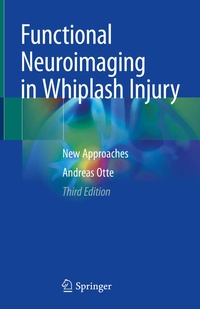
Functional Neuroimaging in Whiplash Injury
Beschreibung

This book, now in its third, completely revised and updated edition, offers a critical approach to the challenging interpretation of the latest research data obtained using functional neuroimaging in whiplash injury. Such a comprehensive guide to recent and current international research in the field is more necessary than ever, given that the confusion regarding the condition and the medicolegal discussions surrounding it have increased further despite the publication of much literature on the subject. In recent decades especially the functional imaging methods - such as single-photon emission tomography, positron emission tomography, functional MRI, and hybrid techniques - have demonstrated a variety of significant brain alterations. Functional Neuroimaging in Whiplash Injury - New Approaches covers all aspects, including the imaging tools themselves and the various methods of image analysis. Details on biomechanics, including the finite element method and facts on historical whiplash experiments and crash tests have now been added to this new edition. The book will continue to help physicians, patients and their relatives and friends, and others to understand this condition as a disease.
Weitere Details
Weitere Ausgaben
Andere Ausgaben
Vorauflage
Person
Andreas Otte, MD, is a board-certified specialist in Nuclear Medicine and Professor of Biomedical Engineering in the Peter Osypka Institute of Medical Engineering, Department of Electrical Engineering, Medical Engineering and Computer Science, Offenburg University, Germany. Prof. Otte received his graduate and post-graduate medical education at the University Hospitals Freiburg, Germany, and Basle, Switzerland, and at the Paul Scherrer Research Institute in Villigen, Switzerland. Thereafter he held various leading positions in clinical research with Pfizer in Freiburg, Germany (International Medical Research, Pfizer Global Pharmaceuticals) and at the University Hospital Freiburg. From 2002 to 2009 he was Visiting Professor of Nuclear Medicine in the Medical Faculty of the University of Ghent in Belgium. He took up his present position in 2010. Andreas Otte is the author of many peer-reviewed journal articles and the author or editor/co-editor of a number of books. His research focusis on neurosciences including functional neuroimaging, brain-machine-interfaces, and intelligent neuroprosthetics. Awarded a series of international scientific prizes, he was nominated Editor of the Board of the European Journal of Nuclear Medicine (1998-2003), the Hellenic Journal of Nuclear Medicine (since 2003), Archiv für Kriminologie [Archives of Criminology] (since 2020), and Prosthesis (since 2020).
