

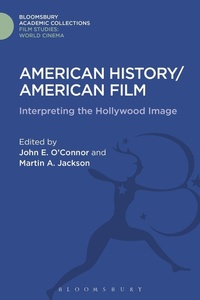
American History/American Film
Interpreting the Hollywood Image
1. Auflage
Erschienen am 6. Oktober 2016
352 Seiten
978-1-4742-8190-4 (ISBN)
Beschreibung
In this pioneering work, sixteen historians analyse individual films for deeper insight into US institutions, values and lifestyles. Linking all of the essays is the belief that film holds much of value for the historian seeking to understand and interpret American history and culture. This title will be equally valuable for students and scholars in history using film for analysis as well as film students and scholars exploring the way social and historical circumstances are reflected and represented in film.
Weitere Details
Reihe
Auflage
1. Auflage
Sprache
Englisch
Verlagsort
London
Großbritannien
Verlagsgruppe
Bloomsbury Publishing PLC
Zielgruppe
Für Beruf und Forschung
ISBN-13
978-1-4742-8190-4 (9781474281904)
Copyright in bibliographic data and cover images is held by Nielsen Book Services Limited or by the publishers or by their respective licensors: all rights reserved.
Schweitzer Klassifikation
Weitere Ausgaben
Personen
John E. O'Connor is former Professor of History at the New Jersey Institute of Technology, USA.
Martin A. Jackson is co-founder of the Historians Film Committee and taught history and film studies at the State University of New York and the New Jersey Institute of Technology, USA.
Martin A. Jackson is co-founder of the Historians Film Committee and taught history and film studies at the State University of New York and the New Jersey Institute of Technology, USA.
Inhalt
Foreword by Arthur M. Schlesinger, Jr
Introduction
1. The New Woman and Twenties America: Way down East (1920) June Sochen
2. The Great War Viewed From the Twenties: The Big Parade (1925) Michael T. Isenberg
3. 'Race Movies' as Voices of the Black Bourgeoisie: The Scar of Shame (1927) Thomas Cripps
4. Bullets, Beer and the Hays Office: Public Enemy (1931) Garth Jowett
5. Will Rogers and the Relevance of Nostalgia: Steamboat 'Round the Bend (1935) Peter C. Rollins
6. A Reaffirmation of the American Ideals: Drums Along the Mohawk (1939) John E. O'Connor
7. Our Awkward Ally: Mission to Moscow (1943) David Culbert
8. The Uncertain Peace: The Best Years of Our Lives (1946) Martin A. Jackson
9. Empire to the West: Red River (1948) Robert Sklar
10. An American Cold Warrior: Viva Zapata! (1952) Paul J. Vanderwood
11. The Age of Conspiracy and Conformity: Invasion of the Body Snatchers (1956) Stuart Samuels
12. The Pentagon and Hollywood: Dr Strangelove or: How I learned to Stop Worrying and Love the Bomb (1964) Lawrence Suid
13. Hollywood, Nihilism and the Youth Culture of the Sixties: Bonnie and Clyde (1967) Lawrence L. Murray
14. The Blue Collar Ethnic in Bicentennial America: Rocky (1976) Daniel J. Leab
15. Fragments of War: Platoon (1986) Lawrence W. Lichty and Raymond L. Carroll
Notes on Contributors
Films
Further Reading
Index
Introduction
1. The New Woman and Twenties America: Way down East (1920) June Sochen
2. The Great War Viewed From the Twenties: The Big Parade (1925) Michael T. Isenberg
3. 'Race Movies' as Voices of the Black Bourgeoisie: The Scar of Shame (1927) Thomas Cripps
4. Bullets, Beer and the Hays Office: Public Enemy (1931) Garth Jowett
5. Will Rogers and the Relevance of Nostalgia: Steamboat 'Round the Bend (1935) Peter C. Rollins
6. A Reaffirmation of the American Ideals: Drums Along the Mohawk (1939) John E. O'Connor
7. Our Awkward Ally: Mission to Moscow (1943) David Culbert
8. The Uncertain Peace: The Best Years of Our Lives (1946) Martin A. Jackson
9. Empire to the West: Red River (1948) Robert Sklar
10. An American Cold Warrior: Viva Zapata! (1952) Paul J. Vanderwood
11. The Age of Conspiracy and Conformity: Invasion of the Body Snatchers (1956) Stuart Samuels
12. The Pentagon and Hollywood: Dr Strangelove or: How I learned to Stop Worrying and Love the Bomb (1964) Lawrence Suid
13. Hollywood, Nihilism and the Youth Culture of the Sixties: Bonnie and Clyde (1967) Lawrence L. Murray
14. The Blue Collar Ethnic in Bicentennial America: Rocky (1976) Daniel J. Leab
15. Fragments of War: Platoon (1986) Lawrence W. Lichty and Raymond L. Carroll
Notes on Contributors
Films
Further Reading
Index
