

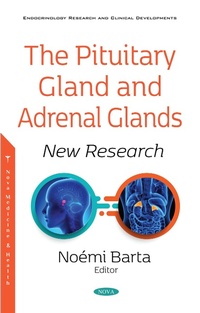
Pituitary Gland and Adrenal Glands: New Research
Erschienen am 20. August 2020
222 Seiten
978-1-5361-7606-3 (ISBN)
Beschreibung

In The Pituitary Gland and Adrenal Glands: New Research, the authors first discuss pituicytomas, rare primary glial neoplasms that arise in the neurohypophysis (or posterior portion) of the pituitary gland. They typically present with signs and symptoms of a slow growing, non-hormonally active mass of the sellar and suprasellar region, compressing adjacent structures. Following this, the clinical and pathologic features of spindle cell oncocytomas are discussed. Spindle cell oncocytomas are rare tumors, accounting for less than 0.5% of sellar masses. Tumors typically present in adults and most commonly manifest with visual disturbances and pituitary hypofunction. Additionally, the authors review the clinical and pathological features of gangliocytomas, rare benign tumors of the neuroaxis. They are most commonly seen in children and young adults, and most often arise in the cerebellum as part of Cowden's disease, or in the sellar region. The clinicopathologic features of granular tumors, rare neoplasms that most commonly arise in the neurohypophysis or posterior portion of the pituitary gland, are also discussed. This compilation goes on to examine the adrenal glands, paired structures located superior to the kidneys in the retroperitoneal space. Mineralocorticoids, glucocorticoids and adrenal androgens are synthesized respectively in the zona glomerulosa, zona fasciculatis and zona reticularis that make up the cortex, while the inner adrenal medulla produces the catecholamines and peptides. The risk of developing adrenal insufficiency among glucocorticoid users is assessed, and risk factors are identified. Glucocorticoids are widely used for the treatment of various inflammatory conditions and malignancies, as well as after organ transplantation. The closing study explores hypothalamic-pituitary-adrenal axis activation, a potent and complex response to heat stress in domestic livestock. The hypothalamic-pituitary-adrenal axis is activated during stress, which leads to the secretion of cortisol and aldosterone from the adrenal gland.
Weitere Details
Weitere Ausgaben
Andere Ausgaben
Buch
04/2020
Nova Science Publishers Inc
210,36 €
Versand in 15-20 Tagen
Inhalt
- Intro
- Contents
- Preface
- Chapter 1
- Pituicytoma: A Clinicopathologic Review of a Rare Glial Neoplasm of the Pituitary
- Abstract
- Introduction
- Pathogenesis
- Clinical and Imaging Features
- Histopathology
- Immunophenotype
- Molecular Features
- Differential Diagnosis
- Adenoma
- Pilocytic Astrocytoma
- Meningioma
- Schwannoma
- Metastatic Tumors
- Other TTF-1 Positive Lesions
- Treatment
- Conclusion
- References
- Chapter 2
- Spindle Cell Oncocytomas of the Pituitary Gland
- Abstract
- Introduction
- Clinical Presentation
- Pathology
- Differential Diagnosis
- Treatment and Prognosis
- References
- Chapter 3
- Mixed Gangliocytoma-Pituitary Adenoma of the Pituitary Gland
- Abstract
- Introduction
- Clinical Presentation
- Pathology
- Differential Diagnosis
- Treatment
- Histogenesis
- References
- Chapter 4
- Granular Cell Tumor of the Pituitary Gland
- Abstract
- Introduction
- Clinical Presentation
- Pathology
- Differential Diagnosis
- Treatment and Prognosis
- References
- Chapter 5
- The Adrenal Glands: Function, Regulation and Disorders
- Abstract
- Introduction
- Surgical Anatomy
- Physiology
- Function
- Mineralocorticoids
- Glucocorticoids
- Androgens
- Catecholamines
- Mechanism
- Clinical Significance
- Regulation
- The Hypothalic-Pituitary-Adrenal Axis
- Renin-Angiotensin-Aldosterone System
- Adrenal Medulla
- The CRF Family of Peptides
- Vasopressin
- Adrenocorticotropic Hormone
- Endocrine Regulation of the HPA Axis
- Glucocorticoid Negative Feedback
- Neuronal Regulation of the HPA Axis
- Brain Stem Neurons
- The Lamina Terminals
- Hypothalamus
- Disorders
- Tumors of the Adrenal Gland with Imaging Features
- Adenoma
- Hyperplasia
- Myelolipoma
- Pheochromocytoma
- Uncommon Benign Adrenal Lesions
- Cyst
- Lipoma
- Hemangioma
- Lymphangioma
- Schwannoma
- Ganglioneuroma
- Adenomatoid Tumor
- Oncocytoma
- Other Conditions Affecting the Adrenal Glands
- Adrenal Infection
- Adrenal Hemorrhage
- Malignant Adrenal Tumors
- Metastases
- Neuroblastoma
- Rare Malignant Adrenal Tumors
- Lymphoma
- Cortical Carcinoma
- Cushing's Syndrome
- Screening Tests for Cushing's Syndrome
- Recent Changes in the Management of Cushings's Syndrome
- General Considerations
- Causes of Cushing's Syndrome
- Alternatives to Surgical Removal of Tumor
- Steroidogenesis Inhibitors and Glucocorticoid Antagonists
- Subclinical Cushing's Syndrome (SCS)
- Dexamethasone-Suppression Testing
- Corticotropin (Adrenocorticotropic Hormone)
- Dehydroepiandrosterone Sulfate
- Urinary Free Cortisol
- Midnight Cortisol
- Approach to SCS Diagnosis in Adrenal Incidentaloma
- Adrenal Scintigraphy
- Indications for Surgery in SCS
- Congenital Adrenal Hyperplasia
- Prenatal and Neonatal Diagnosis
- Mineralocorticoid Excess Syndromes
- The Syndrome of Apparent Mineralocorticoid Excess (AME)
- Clinical Manifestations
- Diagnosis
- Differential Diagnosis
- Treatment
- Licorice Ingestion
- Ectopic ACTH Syndrome
- Primary Aldosteronism (Conn's Syndrome)
- The Diagnosis of Primary Aldosteronism
- Other Causes of Hypertension and Hypokalemia
- Secondary Hyperaldosteronism
- Causes of Secondary Hyperaldosteronism
- Nonaldosterone Mineralocorticoid Excess
- 24-Hour Urine Collection
- Oral Sodium Loading
- Saline Infusion Test
- Adrenal CT
- Limitations of CT
- Adrenal Vein Sampling (AVS)
- Indications
- Procedure
- Confirming Successful Catheterization
- Cortisol-Corrected Ratios
- Results
- Familial Hyperaldosteronism
- Pregnancy
- Adrenal Insufficiency (AI)
- Diagnosis
- Laboratory Diagnosis
- Basal Morning Serum Cortisol Concentrations
- Morning Salivary Cortisol Concentration
- Urinary Cortisol Measurements
- Basal Plasma ACTH, Renin and Aldosterone Concentrations
- Short ACTH Stimulation Tests
- Standard High-Dose Test (250 mcg)
- Low-Dose Test (1 mcg)
- Prolonged ACTH Stimulation Tests
- Adrenal Crisis
- Basal Plasma ACTH, Renin, and Aldosterone Concentration
- Metyrapone Tests
- Insulin-Induced Hypoglycemia Test
- Corticotropin-Releasing Hormone Test
- Autoantibody Screen
- Imaging
- Treatment of Chronic Adrenal Insufficiency
- Mineralocorticoid Replacement Therapy
- Treatment of Adrenal Crisis
- Treatment of Chronic Secondary and Tertiary AI
- AI in Critically Ill Patients
- AI during Pregnancy
- AI in Infancy and Childhood
- Adrenal Surgery
- Surgical Approach According to Adrenal Lesions
- Adrenocortical Carcinoma (ACC)
- Pheochromocytoma
- Adrenal Incidentaloma
- Bilateral Adrenalectomy
- Adrenal Metastasis
- Retroperitoneoscopic Adrenalectomy
- Open Transabdominal Adrenalectomy
- Novel Techniques
- Robotic-Assisted Adrenalectomy
- Single-Access Retroperitoneoscopic Adrenalectomy
- Partial Adrenalectomy
- Postoperative Management
- Mortality and Mortality
- Conclusion
- References
- Biographical Sketch
- Chapter 6
- Glucocorticoid-Induced Adrenal Insufficiency: Potential Risk Predictors and Diagnosis
- Abstract
- Introduction
- Frequency of Hypothalamic-Pituitary-Adrenal Suppression and Glucocorticoid Therapy
- Predicting the Hypothalamic- Pituitary-Adrenal Axis Suppression
- Assessment of Adrenal Insufficiency before Glucocorticoid Withdrawal
- Withdrawing Glucocorticoid Therapy
- Conclusion
- References
- Chapter 7
- Significance of Adrenal Gland for Heat Stress Amelioration in Livestock
- Abstract
- 1. Introduction
- 2. Heat Stress Impact on Livestock
- 3. Biological Mechanisms of Livestock to Cope with Heat Stress
- 4. Economic Consequences of HS on Livestock Production
- 5. Pathways Associated with HS in Livestock
- 6. Pathways Associated with Adrenal Gland for HS Relief in Livestock
- 7. Products of Adrenal Gland for Regulation of HEAT Stress in Livestock
- 8. Functions of Adrenal Gland during Heat Stress in Livestock
- 9. Glucocorticoids Action on Various Tissues in Livestock during Heat Stress
- 10. Regulators of Adrenal Gland and of HPA Axis
- Conclusion
- Future Perspectives
- References
- Index
- Blank Page
- Blank Page
