

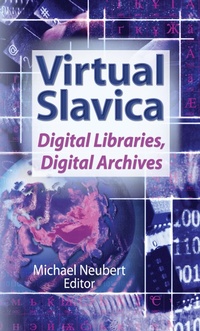
Virtual Slavica
Digital Libraries, Digital Archives
Erschienen am 11. Januar 2013
244 Seiten
978-1-136-43108-1 (ISBN)
Beschreibung

Get an inside view of producing digital information projects
Digital technology has provided great opportunities as well as colossal challenges for information professionals at Slavic libraries, collections, and archives. Virtual Slavica: Digital Libraries, Digital Archives presents leading information experts exploring the monumental task of converting Slavic manuscripts and books for presentation in the digital realm. Readers get a clear inside view of how to conquer the various challenges that arise within digital library and archive projects through detailed descriptions of specific projects discussed in easy-to-understand language.
Slavic studies present innate problems when attempts are made to allow access to the material over the Internet. The Cyrillic alphabet is just one of the huge stumbling blocks standing in the way of universal access to this important material. Virtual Slavica: Digital Libraries, Digital Archives provides practical strategies for anyone looking for answers to problems within their own virtual information project. Copyright issues, digital reference, text encoding, online translation, presentation issues, and use of grant funding are some the topics comprehensively discussed to give information professionals clear solutions to the issues they may be facing. The book is carefully referenced.
Virtual Slavica: Digital Libraries, Digital Archives examines:
the persistence of multiple standards for digitally handling the Cyrillic alphabet
presenting the Comintern archives online
FEB-webits structure, the creation of digital editions, its plans for the future
copyright issues in the twenty-first century
Meeting of Frontiersthe reorganization of the text content of the international collaborative digital library project at the Library of Congress
standardized encoding
practical and theoretical programming issues
the unforeseen difficultiesand solutionsto complete a grant-funded digital Slavic project
and more
Virtual Slavica: Digital Libraries, Digital Archives is of keen interest to librarians, archivists, Slavic studies academics, and library and information science educators and students.
Digital technology has provided great opportunities as well as colossal challenges for information professionals at Slavic libraries, collections, and archives. Virtual Slavica: Digital Libraries, Digital Archives presents leading information experts exploring the monumental task of converting Slavic manuscripts and books for presentation in the digital realm. Readers get a clear inside view of how to conquer the various challenges that arise within digital library and archive projects through detailed descriptions of specific projects discussed in easy-to-understand language.
Slavic studies present innate problems when attempts are made to allow access to the material over the Internet. The Cyrillic alphabet is just one of the huge stumbling blocks standing in the way of universal access to this important material. Virtual Slavica: Digital Libraries, Digital Archives provides practical strategies for anyone looking for answers to problems within their own virtual information project. Copyright issues, digital reference, text encoding, online translation, presentation issues, and use of grant funding are some the topics comprehensively discussed to give information professionals clear solutions to the issues they may be facing. The book is carefully referenced.
Virtual Slavica: Digital Libraries, Digital Archives examines:
the persistence of multiple standards for digitally handling the Cyrillic alphabet
presenting the Comintern archives online
FEB-webits structure, the creation of digital editions, its plans for the future
copyright issues in the twenty-first century
Meeting of Frontiersthe reorganization of the text content of the international collaborative digital library project at the Library of Congress
standardized encoding
practical and theoretical programming issues
the unforeseen difficultiesand solutionsto complete a grant-funded digital Slavic project
and more
Virtual Slavica: Digital Libraries, Digital Archives is of keen interest to librarians, archivists, Slavic studies academics, and library and information science educators and students.
Weitere Details
Sprache
Englisch
Verlagsort
London
Großbritannien
Verlagsgruppe
Taylor & Francis Ltd
Zielgruppe
Für höhere Schule und Studium
Dateigröße
1,62 MB
ISBN-13
978-1-136-43108-1 (9781136431081)
Copyright in bibliographic data and cover images is held by Nielsen Book Services Limited or by the publishers or by their respective licensors: all rights reserved.
Schweitzer Klassifikation
Weitere Ausgaben
Andere Ausgaben
Buch
04/2006
1. Auflage
Routledge
136,28 €
Versand in 10-20 Tagen
Buch
03/2006
1. Auflage
Routledge
52,09 €
Artikel z.Zt. nicht lieferbar
Person
Michael Neubert, MLS, MAIS, is Digital Projects Coordinator at the Library of Congress, and Team Leader for the Digital Conversion Team whose staff produce American Memory, Global Gateway, and other digital conversion projects.
Inhalt
Introduction; Chapter 1 Frequently Asked Questions and Selected Resources on Cyrillic Multilingual Computing, Kevin S.Hawkins; Chapter 2 The Comintern Archives Database: Bringing the Archives to Scholars, Ronald D.Bachman; Chapter 3 The Comintern Archives Online, TatyanaDoorn-Moisseenko; Chapter 4 Academic Digital Libraries Russian Style: An Introduction to The Fundamental Digital Library of Russian Literature and Folklore, JosephPeschio, IgorPil'shchikov, KonstantinVigurskii; Chapter 5 The Central Eurasian Interactive Atlas Project: A Progress Report, AlexanderPerepechko, EileenLlona, DmitrySharkov, MichaelHunt, MichaelBiggins; Chapter 6 Collision or Coexistence? Copyright Law in the Digital Environment, Janice T.Pilch; Chapter 7 Organizing Interpretive Text for a Digital Library: How User Testing Found the Lost Frontier, Sandra J.Bostian; Chapter 8 Making the Cyrillic OPAC a Reality, Jane W.Jacobs, DasMalabika; Chapter 9 Adding Value to Slavic Electronic Texts:Approaches for Scholars and Librarians, MirandaRemnek; Chapter 10 No Free Lunch:Grant Adventures in the Digital Frontier, Bradley L.Schaffner; Chapter 11 Digital Reference in Slavic and East European Studies with an Examination of Practice at the University of Illinois and the Library of Congress, AngelaCannonAngela;
